What are the implications of the Jamaat-led alliance taking oath amid the Constitutional Reform dispute in Bangladesh?

Synopsis
In a significant political event, newly elected parliament members from the Jamaat-led alliance and others took their oaths amidst ongoing disputes over constitutional reforms. This ceremony has raised questions about the future political landscape in Bangladesh, especially with the BNP's strategic decisions influencing participation in the Constitutional Reform Council.
Key Takeaways
Political Transition: Bangladesh is witnessing a significant political shift with new MPs taking oaths.
Constitutional Reform Dispute: Ongoing debates and decisions regarding the Constitutional Reform Council are critical.
BNP's Position: The BNP's decisions are influencing the political landscape and participation in reforms.
Expert Concerns: There are warnings about potential unrest amid these changes.
Impact of Elections: The recent elections have set the stage for future governance challenges.
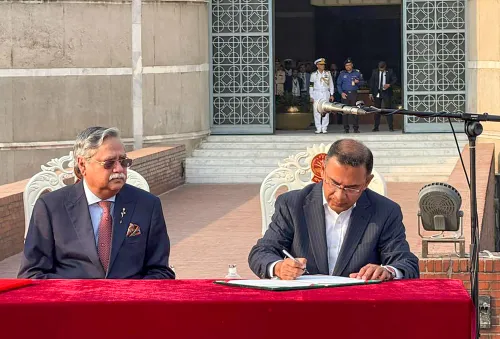
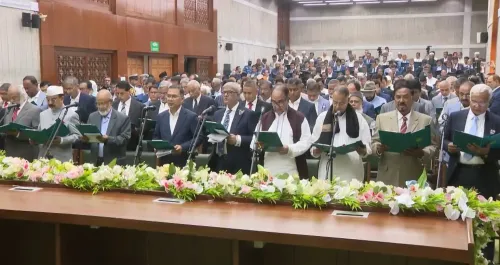
Dhaka, Feb 17 (NationPress) As Bangladesh gears up for a political shift, the recently elected parliament members from the Jamaat-led alliance, independent candidates, and Islami Andolan Bangladesh took their oaths on Tuesday afternoon at the National Parliament in Dhaka, according to local media sources.
The oath was administered by Chief Election Commissioner AMM Nasir Uddin on Tuesday morning, in compliance with the nation’s Constitution.
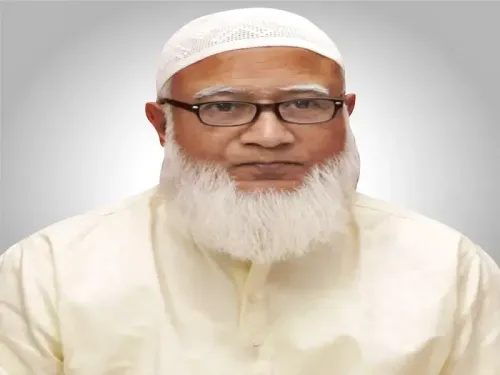
Informed sources indicated that two sentences of the oath were read following discussions with Jamaat chief Shafiqur Rahman.
It has been reported that the six members of the National Citizen Party (NCP) were absent during the oath-taking process.
Once the initial signing was completed, the second oath, pertaining to the Constitutional Reform Council, was said to have begun.
During this second oath, independent MP Rumeen Farhana and BNP’s Ishraque Hossain were observed leaving the room, as captured in televised coverage of the ceremony, as reported by The Daily Star.
The oath-taking event occurred within the parliament complex amidst ongoing political discussions regarding involvement in the Constitutional Reform Council.
Earlier that day, newly elected MPs from the 11-party alliance, which includes Jamaat-e-Islami and National Citizen Party (NCP), opted not to take their parliamentary oaths.
This decision reportedly followed the Bangladesh Nationalist Party's (BNP) choice to abstain from the constitutional reform council oath.
In contrast, BNP's newly elected representatives took their parliamentary oaths but abstained from the Constitutional Reform Council oath.
At the ceremony's outset, BNP leader Salauddin Ahmed stated that as per instructions from party chief Tarique Rahman, all newly elected BNP MPs were directed not to sign the Constitutional Reform Council document, as they were not elected as council members.
Further clarifying the party's position, BNP leader Salahuddin remarked, “None of us was elected as a member of the Constitutional Reform Council. If the matter is constitutionally adopted in parliament, steps can be taken accordingly.”
With BNP’s chairman Tarique Rahman poised to lead Bangladesh following his party's significant win in the 13th parliamentary elections, experts caution that the nation is likely to encounter increasing unrest and escalating political tensions during this transition.
Point of View
It's essential to recognize that this oath-taking ceremony is more than a procedural formality; it signifies a crucial juncture in Bangladesh's political narrative. The actions of the BNP and the Jamaat-led alliance will undoubtedly shape the discourse around constitutional reforms and governance in the coming months, reflecting the dynamic nature of our democracy.
NationPress
26 Sept 2026
Frequently Asked Questions
What was the main event in Bangladesh on February 17?
The newly elected members of parliament from the Jamaat-led alliance, independent candidates, and Islami Andolan Bangladesh took their oaths at the National Parliament amid ongoing constitutional reform disputes.
Who administered the oath to the parliament members?
The oath was administered by Chief Election Commissioner AMM Nasir Uddin.
Why did some MPs refuse to take their oaths?
MPs from the 11-party alliance, including the Jamaat-e-Islami, abstained from taking their parliamentary oaths in response to the BNP's decision to not participate in the constitutional reform council.
What stance did the BNP take during the oath-taking ceremony?
BNP leaders instructed their members not to sign the Constitutional Reform Council form, emphasizing they were not elected as council members.
What are the potential consequences of this political situation?
Experts warn of increasing unrest and political conflict in Bangladesh as the country navigates these transitions.