What Inspired Jamie Campbell Bower's Vecna in ‘Stranger Things 5’?
Synopsis
Explore the intriguing inspirations behind Jamie Campbell Bower's portrayal of Vecna in 'Stranger Things 5'. Discover how childhood nostalgia and iconic figures shaped his character in this thrilling series. Don't miss out on this fascinating insight!
Key Takeaways
Jamie Campbell Bower draws from diverse inspirations for Vecna.
The influence of Fred Rogers adds a unique layer to the character.
Bower's preparation involves extensive practice and character exploration.
The Creel family home symbolizes lost innocence and safety.
Music plays a significant role in shaping Vecna's eerie presence.
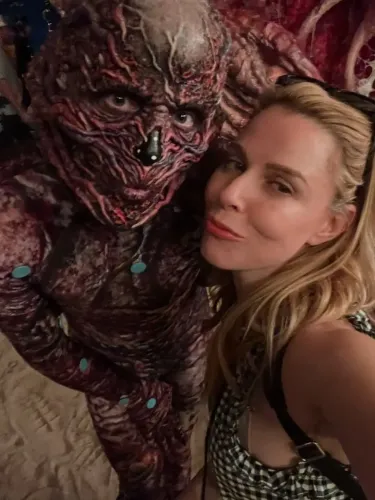
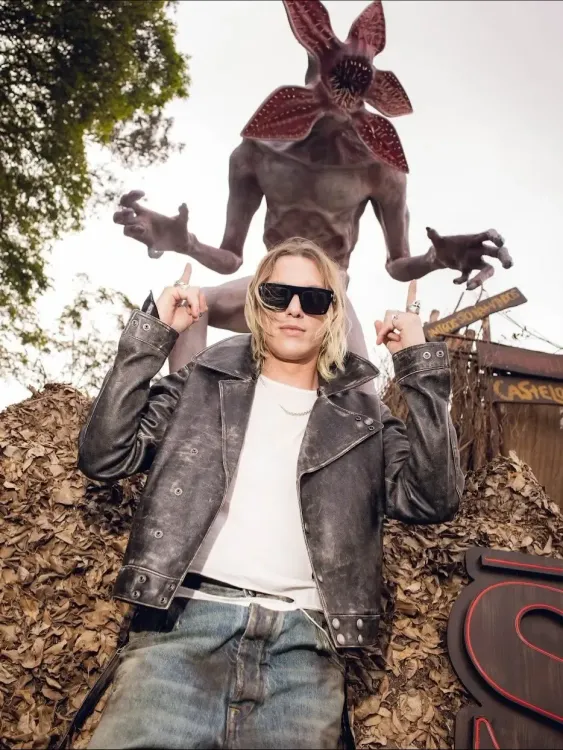
Los Angeles, Dec 26 (NationPress) Actor Jamie Campbell Bower, known for his role as Vecna in “Stranger Things 5”, disclosed that earlier he drew heavily from Dracula and various gothic vampire motifs for his character. However, this season, he incorporated more distinct influences, notably Fred Rogers from “Mister Rogers' Neighborhood”.
"I utilized The Shining, and the Kubrick-esque gaze was something I was particularly keen to explore, even back in season 4," he shared with Entertainment Weekly.
Bower elaborated: "For season 4, Funny Games — specifically the American remake — was a reference point, especially the demeanor of Brady (Corbet) and Michael (Pitt). I certainly borrowed from that. Acknowledging sources is crucial."
In terms of season 5, Bower mentioned the 2020 horror movie Alone, which centers around a woman fleeing from a murderous psychopath in the wilderness, along with the actor Van Johnson in the 1957 film The Pied Piper of Hamelin as key inspirations.
Moreover, the legendary children's television host also played a pivotal role in shaping his portrayal.
"Mr. Rogers served as an intriguing reference point, and this influence even extended to the music," Bower remarked.
"I drew from Tom Hanks in A Beautiful Day In the Neighborhood, which has an eerily haunting score that features some genuinely chilling moments."
Bower reflected on reviewing videos of himself on set, prepping for the “Shock Jock” scene as he descends the staircase, according to Entertainment Weekly.
"I found clips of myself...before arriving, practicing, experimenting, and figuring out what techniques to use. I approached it with two characters but aimed for consistent body movement to ensure a seamless splice together," he explained.
He perceives Vecna as a distinct entity, representing resentment, or what he describes as a "vine around love".
Bower questioned, "Why recreate the house out of all possible things?" in reference to the Creel family home, the site where young Henry murdered his mother and sister and drove his father into insanity.
"What significance does it hold for him? What does 'home' signify? What was his experience as a child in a place that should have been a sanctuary, but wasn't? This might represent a chance for him to recreate that sense of safety," he elaborated.
Bower continued: "If he rests, where does he go? Does he sleep in his old room? The attic? Or in a rather unsettling manner, his parents' bedroom? With the Henry aspect, it draws back to that innocence, reflecting a development of lost innocence."
Point of View
Jamie Campbell Bower's reflections on his role as Vecna in 'Stranger Things 5' offer a compelling glimpse into the intersection of acting and cultural references. His creative process not only highlights the depth of his character but also underscores the broader artistic influences that shape modern storytelling. This narrative enriches the ongoing discourse around character development in contemporary series.
NationPress
17 Aug 2026
Frequently Asked Questions
What inspired Jamie Campbell Bower's portrayal of Vecna?
Jamie Campbell Bower drew inspiration from various sources, including gothic vampire imagery, classic horror films like 'The Shining' and 'Funny Games', and surprisingly, the iconic children's show host Fred Rogers from 'Mister Rogers' Neighborhood'.
How did Bower prepare for his role in 'Stranger Things 5'?
Bower prepared for his role by practicing various techniques on set, ensuring consistent body movement to create a seamless performance, particularly for the 'Shock Jock' scene.
What significance does the Creel family home hold for Vecna?
The Creel family home represents a place of lost safety and childhood trauma for Vecna, serving as a manifestation of his resentment and the longing for a secure environment.
Which films did Bower reference for his performance?
Bower referenced films such as 'The Shining', 'Funny Games', and the 2020 horror movie 'Alone', among others, to shape his portrayal of Vecna.
What role did music play in Bower's character development?
Bower indicated that music, particularly from 'A Beautiful Day In the Neighborhood', influenced his interpretation of Vecna, adding an eerie quality to his performance.