Japan's New Arms Export Policy Sparks Controversy Amid Protests

Synopsis
In a historic shift, Japan has revised its defense export policies to allow arms sales, including lethal weapons, despite significant public protests. This move raises concerns about the nation's long-standing pacifist stance.
Key Takeaways
Japan has amended its arms export policy to allow the sale of weapons abroad.
Protests have erupted nationwide against this shift in policy.
The new policy categorizes defense equipment into lethal and non-lethal categories.
Parliamentary approval for arms exports is no longer required.
This move is seen as a significant change in Japan's long-held pacifist stance.
Tokyo, April 21 (NationPress) The Japanese government has officially amended the three principles governing the transfer of defense equipment and technology along with their implementation guidelines on Tuesday, permitting the export of weapons, including those with lethal capabilities, amid significant protests, according to local media reports.
This revision eliminates prior regulations that restricted Japan's defense exports to five non-combat categories: rescue, transport, warning, surveillance, and minesweeping.
Now, defense equipment will be classified into "weapons" and "non-weapons" categories, depending on their lethality or destructive potential, as reported by Xinhua and cited by Kyodo News.
The update allows for unrestricted exports of non-weapons, such as warning and control radar systems, while enabling the sale of previously banned weapons, including destroyers and missiles, to nations that have agreements with Japan concerning the protection of classified defense information.
According to Kyodo News, this adjustment signifies a major transformation in Japan's defense policy, a nation that has branded itself a "peace-loving country" under its war-renouncing Constitution since its defeat in World War II.
While the revisions generally forbid the export of arms to nations engaged in active conflicts, they provide for exceptions in "special circumstances" that consider Japan's security requirements.
Under the new guidelines, arms exports will no longer require prior approval from Parliament. The National Security Council will handle the decisions, with the Diet being informed only after the fact.
This lack of parliamentary involvement has faced backlash from opposition parties, which argue that prior approval is crucial to avoid Japan becoming entangled in escalating conflicts or arms races.
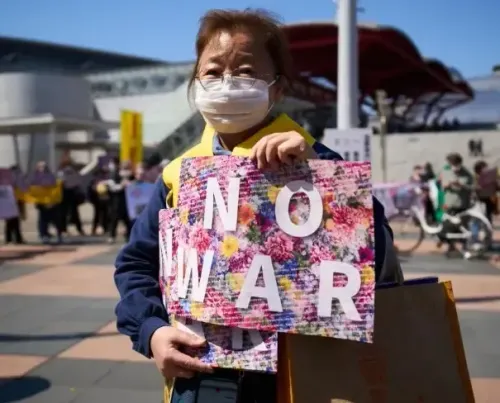
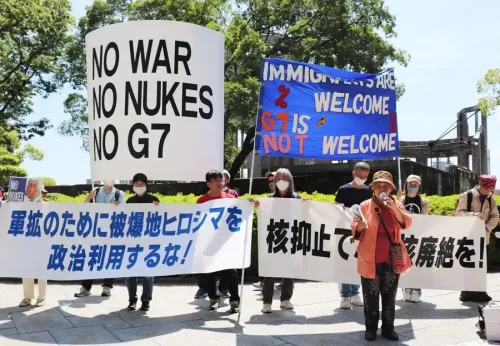
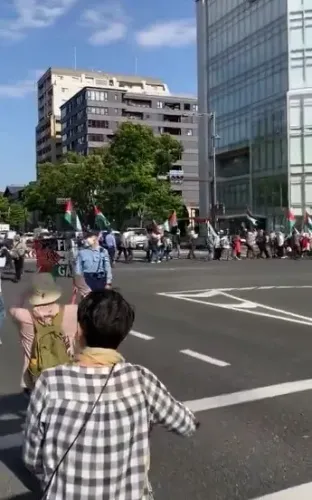
Since the announcement of this revision, there has been widespread concern and backlash across Japan, leading to massive protests.
During a rally on April 16 in front of the Prime Minister's office in Tokyo, demonstrators displayed signs stating "Oppose lifting the five-category restriction," "No to arms exports," and "Japan must not become a merchant of death," while chanting slogans like "No repeating past mistakes" and "We reject war." Participants voiced serious concerns, warning that this shift could represent a drastic move away from Japan's long-held pacifist principles.
The changes, sanctioned by the Cabinet and the National Security Council, align with the commencement of a three-day spring festival at the controversial Yasukuni Shrine, a symbol of Japan's militarism and wartime aggression.
Takaichi delivered a ritual "masakaki" tree offering to the contentious shrine, which honors 14 convicted Class-A Japanese war criminals from World War II.
Point of View
It's essential to acknowledge the complexities of Japan's new arms export policy. While the government seeks to enhance national security through strategic partnerships, the concerns raised by citizens reflect a deeply rooted commitment to peace. Balancing these interests will be crucial in the coming times.
NationPress
19 Sept 2026
Frequently Asked Questions
What are the new arms export rules in Japan?
Japan has revised its defense export policy to allow the sale of weapons, including lethal arms, to countries with agreements on protecting classified defense information.
What categories of defense equipment are affected?
The new policy categorizes defense equipment into 'weapons' and 'non-weapons,' eliminating previous restrictions limiting exports to non-combat categories.
What prompted the protests against the new policy?
Many citizens and opposition parties are concerned that the new policy represents a significant departure from Japan's long-standing pacifist stance and could lead to involvement in conflicts.
Will parliamentary approval be required for arms exports?
No, under the new guidelines, arms exports will not require prior parliamentary approval; decisions will be made by the National Security Council.
What is the historical context of Japan's defense policy?
Since its defeat in World War II, Japan has characterized itself as a peace-loving nation, reflected in its war-renouncing Constitution.