Sacred Thread Row Returns: Karnataka CET Student Forced to Remove Janeu in Bengaluru
Synopsis
For the second consecutive year, a Karnataka CET student has been forced to remove his sacred Janeu thread at a Bengaluru exam centre despite no rule banning it. BJP's R. Ashoka accuses the Congress government of selectively targeting Hindu religious symbols while staying silent on similar rules for other faiths.
Key Takeaways
A CET student in Koramangala, Bengaluru was allegedly forced to remove his Janeu sacred thread before entering the exam hall on April 24, 2025 .
The CET hall ticket and official guidelines contain no rule prohibiting the wearing of a sacred thread during examinations.
A near-identical incident occurred in 2024 during CET and NEET exams after which the Karnataka government suspended responsible officials .
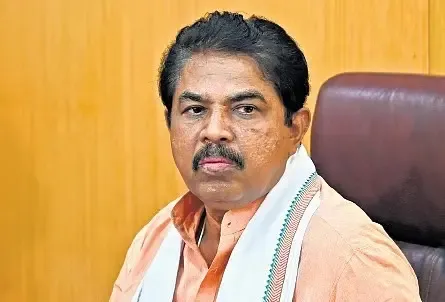
BJP Leader of Opposition R.
Ashoka accused the Congress government of systematically targeting Hindu religious symbols while remaining silent on similar enforcement for other faiths.
Ashoka drew a direct comparison with the hijab controversy of 2022 noting Congress leaders supported hijab rights but have stayed silent on Janeu removals.
The Karnataka Examination Authority and Chief Minister Siddaramaiah had not issued any official response as of the time of reporting.
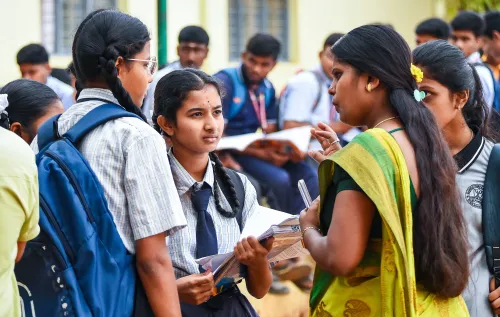
A fresh Janeu controversy has erupted in Karnataka after a student appearing for the Common Entrance Test (CET) at an examination centre in Koramangala, Bengaluru was allegedly compelled to remove his sacred thread before being permitted to enter the hall on April 24, 2025. The incident has reignited a politically charged debate over religious freedom, exam regulations, and what the opposition calls a pattern of targeting Hindu religious symbols under the Congress-led Karnataka government.
What Is the Janeu and Why Does It Matter
The Janeu, also known as Yagyopaveet or Janivara, is a sacred thread worn by Hindu males, particularly from Brahmin communities, across the left shoulder and under the right arm. It symbolises a young mans formal initiation into education, spiritual responsibility, and adulthood — a deeply personal and religious rite of passage.
Crucially, there is no mention in the official CET hall ticket or in any published government guidelines prohibiting students from wearing the sacred thread during examinations. This legal and procedural vacuum has become the central point of contention in the ongoing row.
This Is Not the First Time — A Disturbing Pattern
This incident is not isolated. A near-identical controversy erupted in 2024 when multiple students appearing for CET and NEET examinations across Karnataka reported being asked to remove their sacred threads at examination centres. The Congress government had subsequently ordered the suspension of officials responsible for enforcing the removal — an acknowledgment that the action was improper.
Adding to the pattern, during Karnataka Public Service Commission (KPSC) examinations, women candidates were reportedly asked to remove their mangalsutras before being allowed to write the exam. These back-to-back incidents have fuelled opposition claims of systematic targeting of Hindu religious practices in the state.
BJP Condemns Congress Government, Raises Accountability Questions
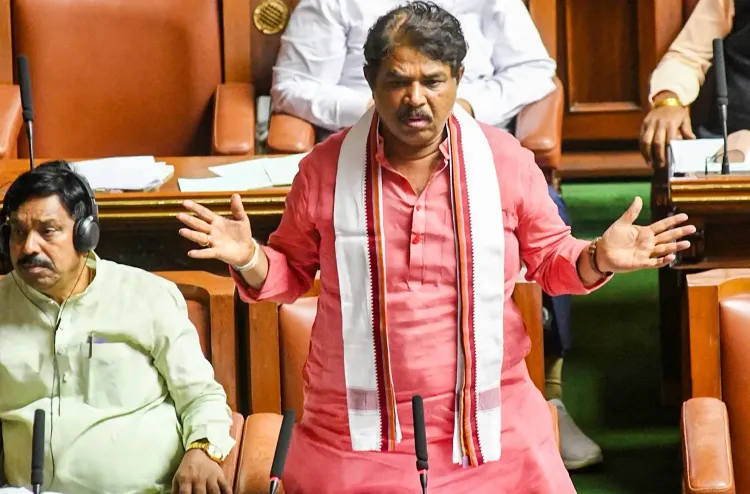
Leader of Opposition R. Ashoka sharply criticised the state government on Friday, stating that the anti-Hindu actions of the Congress government, such as forcing the removal of mangalsutra and sacred thread, are continuing.
Ashoka drew a pointed comparison with the hijab controversy, noting that when Congress leaders were asked why the hijab was not removed under the same exam rules, their response was no comments — while they had previously justified the removal of the sacred thread and mangalsutra as compliance with rules.
He directly challenged Chief Minister Siddaramaiah, asking whether the CM — who frequently invokes the Constitution — acknowledges that the religious freedom of a student wearing a sacred thread has been violated. Ashoka further accused the government of implementing practices that selectively target Hindu customs while accommodating other religious symbols.
Contradictions, Double Standards, and the Hijab Parallel
The BJP critique gains traction when viewed through the lens of Karnataka own recent history. During the hijab controversy of 2022, senior Congress leaders including Siddaramaiah publicly supported students right to wear religious attire and even participated in protests. Yet the same leadership has remained largely silent as sacred threads and mangalsutras are removed at exam venues — a contradiction that critics argue reveals a selective approach to religious accommodation.
Notably, no court ruling or government circular currently prohibits Hindu religious threads or ornaments at examination centres in Karnataka, making the repeated enforcement of such removals legally questionable and procedurally unjustified.
Political Fallout and What Comes Next
The fresh Janeu incident arrives at a politically sensitive time, with the Karnataka government already navigating controversies over minority appeasement allegations and administrative accountability. The BJP is expected to escalate the issue in the Karnataka Legislative Assembly and use it as a mobilisation tool ahead of future electoral cycles.
Ashoka concluded his remarks with a historical reference, warning that just as the Nanda dynasty fell after disrespecting Chanakyas tuft, the Congress government in Karnataka would face a similar political downfall for repeatedly offending Hindu religious sentiments.
With no official response yet from the Karnataka Examination Authority (KEA) or the state government on the latest Koramangala incident, pressure is mounting for a formal inquiry, suspension of responsible officials, and clear written guidelines that explicitly protect students rights to wear religious symbols during examinations. The coming days will test whether the government acts swiftly or repeats the delayed response pattern of 2024.
Point of View
The question shifts from incompetence to intent. What makes this politically explosive is the asymmetry: the Congress leadership that marched for hijab rights in 2022 has produced only silence when sacred threads are cut. A government that selectively enforces religious neutrality is not secular — it is communally partisan in a different direction.
NationPress
28 Sept 2026
Frequently Asked Questions
What happened in the Janeu row at Karnataka CET 2025?
A student appearing for the Karnataka Common Entrance Test at an examination centre in Koramangala, Bengaluru was allegedly forced to remove his sacred Janeu thread before entering the exam hall on April 24, 2025. There is no official rule or guideline in the CET hall ticket that prohibits wearing the sacred thread.
Did a similar Janeu controversy happen in Karnataka before?
Yes. In 2024, multiple students appearing for CET and NEET exams in Karnataka reported being asked to remove their sacred threads at exam centres. The Congress government had ordered the suspension of officials responsible, acknowledging the action was improper.
What is the Janeu or Yagyopaveet?
The Janeu, also called Yagyopaveet or Janivara, is a sacred thread worn by Hindu males especially Brahmins across the left shoulder and under the right arm. It marks a young mans initiation into education, spiritual life, and adulthood and holds deep religious significance.
What did BJP's R. Ashoka say about the Janeu incident?
Leader of Opposition R. Ashoka condemned the incident calling it part of a pattern of anti-Hindu actions by the Congress government. He questioned why the sacred thread is removed in the name of rules while the hijab is treated differently and demanded accountability from Chief Minister Siddaramaiah.
Is wearing a sacred thread banned during Karnataka CET exams?
No. There is no mention in the official CET hall ticket or any published government guideline that prohibits students from wearing a sacred thread during the examination. The legal basis for enforcing its removal remains unclear and contested.