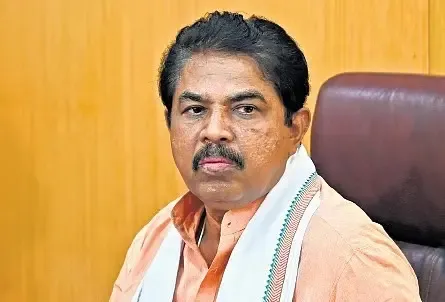
Janeu Row: Karnataka Minister Vows Strict Action After CET Incident
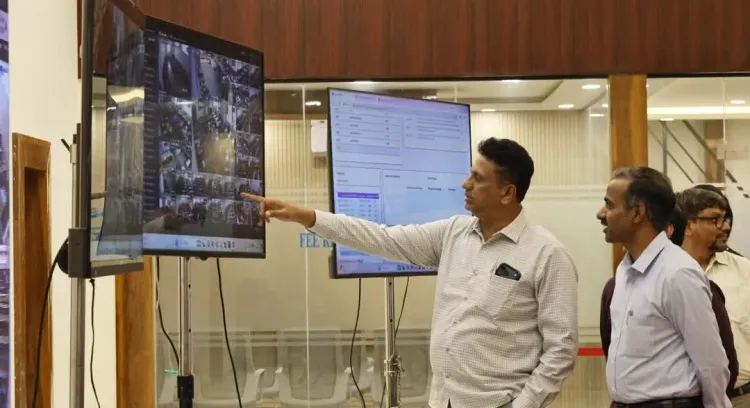
Synopsis
A student at a Bengaluru CET centre was allegedly forced to remove his sacred 'janeu' before entering the exam hall. Karnataka Higher Education Minister M.C. Sudhakar has promised strict action but says no official report has reached KEA yet — raising questions about institutional accountability and religious sensitivity at exam centres.
Key Takeaways
A CET student in Koramangala, Bengaluru was allegedly forced to remove his sacred 'janeu' before entering the examination hall during Karnataka CET 2025 .
Higher Education Minister M.C.
Sudhakar confirmed on Friday, April 25 that no official report has yet reached the Karnataka Examination Authority (KEA) .
The minister promised strict action within the legal framework if the allegations are substantiated after investigation.
Karnataka has 745 CET examination centres statewide, staffed by personnel from government and private institutions.
Sudhakar did not rule out the possibility that some incidents may be staged , raising concerns about the government's approach to accountability before any probe begins.
The incident echoes the 2022 Karnataka hijab controversy , highlighting a recurring pattern of religious sensitivity disputes in the state's educational sector.
Bengaluru, April 25: The Karnataka Common Entrance Test (CET) janeu controversy escalated on Friday, April 25, after Higher Education Minister M.C. Sudhakar acknowledged the incident and promised strict action, even as he confirmed that no official report has yet reached the Karnataka Examination Authority (KEA). The controversy erupted after a student was allegedly forced to remove his sacred 'janeu' — a thread worn by Hindu males — before being permitted to enter an examination hall at a CET centre in Koramangala, Bengaluru.
What Happened at the Koramangala CET Centre
A student appearing for the Karnataka CET 2025 was reportedly denied entry into the examination hall unless he removed his janeu, a sacred thread traditionally worn by Hindu males, particularly Brahmins, across the left shoulder and under the right arm. The thread holds deep religious and spiritual significance, symbolising initiation into education and spiritual life.
The incident has triggered outrage among Hindu organisations, student groups, and opposition politicians, who have condemned the alleged act as an attack on religious freedom and cultural identity. The episode has reignited a broader debate about the treatment of religious symbols and attire at competitive examination centres across Karnataka.
What the Karnataka Government Said
Speaking to reporters in Bengaluru, Minister M.C. Sudhakar said, "The infrastructure of both government and private colleges is utilised while conducting the CET. The services of staff from various institutions are also used on a large scale. If any staff member of any institution has acted in an extreme or inappropriate manner, action will be taken."
The minister clarified that no formal report regarding the incident had reached the authorities. "We do not have any information at present. It is also unclear whether the issue was resolved at the centre level. If we receive any information in this regard, strict action will definitely be taken," he stated.
Sudhakar also drew a pointed analogy: "There are 745 examination centres across the state. Just as the traffic police continuously create awareness about wearing helmets to save lives, yet violations still occur, similar issues arise during examinations as well." He added that he could not determine whether the behaviour stemmed from a particular mindset, was deliberate provocation, or an attempt to create controversy.
Notably, the minister did not rule out the possibility of the incident being staged. "Some incidents may even be staged. We will not allow such practices. If anything of this sort has happened, we will take strict action within the legal framework," he said.
Pattern of Religious Sensitivity at Exam Centres
This is not the first time that examination centres in India have found themselves at the centre of disputes involving religious attire or symbols. In 2022, the Karnataka hijab controversy — which eventually reached the Supreme Court of India — set a precedent for how state authorities handle religious expression in educational settings. Critics argue that the current janeu incident reflects an institutional insensitivity that persists despite clear constitutional protections for religious freedom under Article 25.
The National Testing Agency (NTA) and various state examination bodies have faced recurring criticism for ambiguous dress code guidelines that often leave invigilators to exercise unchecked discretion. This discretion, observers note, frequently results in incidents that carry communal undertones, regardless of intent.
Opposition and Public Reaction
Several BJP leaders and Hindu religious organisations have demanded immediate accountability, calling for the suspension of the examination staff allegedly responsible. They argue that while anti-cheating measures are necessary, they must be implemented with sensitivity toward students' constitutional rights to practise their religion freely.
Student welfare advocates have also pointed out that such incidents — occurring during high-stakes examinations — can cause significant psychological distress, potentially affecting a student's performance at a critical juncture in their academic career.
What Happens Next
The Karnataka Examination Authority (KEA) is expected to initiate a formal inquiry once an official complaint is received. Minister Sudhakar has indicated that the state government will act decisively within the legal framework if the allegations are substantiated. With the CET 2025 examination process ongoing across 745 centres statewide, all eyes are now on whether the government will proactively issue updated guidelines to prevent recurrence — or wait for formal complaints to trigger action.
The incident is likely to intensify political pressure on the Congress-led Karnataka government, which has been navigating a delicate balance between minority rights and majority religious sensitivities since coming to power in 2023. A transparent and time-bound investigation will be crucial to restoring student trust in the examination system.
Point of View
Enforceable guidelines on religious expression at state-run competitive examinations. The fact that Minister Sudhakar simultaneously promised strict action and hinted the incident may have been 'staged' reveals a troubling tendency to deflect accountability before any investigation has even begun. Coming just three years after the Karnataka hijab controversy consumed the state's educational discourse, this incident exposes a government that has learned little about proactive policy-making. If Karnataka cannot protect students' constitutional rights inside exam halls, its promise of educational equity rings hollow.
NationPress
6 Oct 2026
Frequently Asked Questions
What is the Karnataka CET janeu row about?
A student appearing for the Karnataka Common Entrance Test (CET) 2025 at a centre in Koramangala, Bengaluru, was allegedly forced to remove his 'janeu' — a sacred Hindu thread — before being allowed to enter the examination hall. The incident has sparked outrage over religious insensitivity at exam centres.
What action has the Karnataka government taken on the janeu incident?
Higher Education Minister M.C. Sudhakar has promised strict action if the allegations are found to be true. However, as of April 25, no formal report has reached the Karnataka Examination Authority (KEA), and an inquiry is yet to be officially initiated.
What is a 'janeu' and why is it significant?
A 'janeu' is a sacred thread worn by Hindu males, especially Brahmins, across the left shoulder and under the right arm. It symbolises initiation into education and spiritual life, and is considered a deeply personal religious symbol protected under India's constitutional right to religious freedom.
How many CET exam centres are there in Karnataka in 2025?
There are 745 CET examination centres across Karnataka in 2025. Staff from both government and private institutions are deployed at these centres to conduct the Common Entrance Test.
Has Karnataka faced similar religious controversies at exam or educational centres before?
Yes. In 2022, Karnataka was at the centre of the nationwide hijab controversy, which escalated to the Supreme Court of India. Critics argue that recurring incidents reflect a systemic failure to establish clear, sensitive guidelines on religious attire at educational institutions.