How is Karnataka's CM Addressing Dam Safety as a National Security Concern?

Synopsis
Karnataka's Chief Minister Siddaramaiah inaugurated the International Conference on Dam Safety, highlighting the critical need for a national security approach to water infrastructure amidst climate change and technological threats. The three-day conference aims to tackle global best practices and innovative solutions for dam safety.
Key Takeaways
Dam safety is a national security imperative.
Collaboration among various stakeholders is crucial.
Addressing climate change impacts is essential for dam resilience.
Regular inspections and safety audits are vital components.
Karnataka’s historical contributions to irrigation are significant.
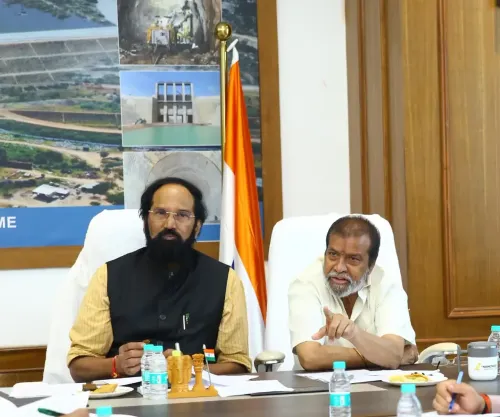
Bengaluru, Feb 13 (NationPress) The Chief Minister of Karnataka, Siddaramaiah, officially opened the International Conference on Dam Safety (ICDS) on Friday, underscoring the necessity of viewing dam safety as a national security concern in the face of climate change, deteriorating infrastructure, and new technological challenges.
This conference, hosted at the J.N. Tata Auditorium of the Indian Institute of Science (IISc), is a collaborative effort involving the Union Jal Shakti Ministry, the state’s Water Resources Department, the Central Water Commission (CWC), IISc Bengaluru, and the World Bank.
Spanning three days, the conference aims to explore global best practices, necessary policy reforms, and innovative technologies to enhance dam safety and resilience not only in India but globally.
In his address to an audience of international experts, policymakers, and practitioners, the Chief Minister asserted that the theme “Safe & Secure Dams” is critically relevant as dam safety is central to sustainable water governance.
He warned that climate-induced hydrological extremes, seismic risks, sedimentation in reservoirs, and ageing infrastructures generate complex and interconnected threats. “Dam safety is no longer just a technical consideration; it is a national security necessity,” he emphasized.
The Chief Minister also raised alarming issues such as cybersecurity threats to digitally managed dams, the susceptibility of essential water infrastructure to terrorist acts, methane emissions from reservoirs, and the urgent need for transparent rehabilitation frameworks for affected communities.
He called for a comprehensive response founded on scientific principles and institutional resilience. Governments should transcend basic compliance to foster a robust safety culture, ensuring that regular inspections, safety audits, and Emergency Action Plans serve as vital tools for risk governance.
Regulatory agencies must adopt risk-informed decision-making by incorporating data from instrumentation, remote sensing, and structural health monitoring into real-time dashboards. Academic institutions should strengthen multidisciplinary collaborations to tackle the compounded risks from climate variability and aging infrastructure, he stated.
Reaffirming Karnataka’s dedication to cooperative federalism in water governance, the Chief Minister noted that water transcends political boundaries, and safety standards should do the same. He highlighted the collaboration among the central and state governments, the Central Water Commission, the World Bank, IISc, and international partners as a commitment to public safety above political agendas.
In his opening remarks, he stated, “The true measure of development is not how high we build, but how safely we sustain.”
Currently, India boasts 6,628 specified dams, ranking as the third-largest dam-owning country globally, while Karnataka, with 231 specified dams, stands at sixth nationally. Approximately 70 percent of these dams are over 25 years old, underscoring the pressing need for systematic safety assessments, modernization, and risk-informed management.
The Chief Minister acknowledged Karnataka’s historical contributions to irrigation development, attributing efforts to the Mysuru Maharajas, notably Nalvadi Krishnaraja Wadiyar, whose visionary support for irrigation transformed arid areas into fertile grounds. Subsequent administrations, including that of Chief Minister D. Devaraj Urs, further advanced irrigation to foster equitable regional growth.
Karnataka currently has an installed hydropower capacity of nearly 4,800 MW, and its reservoirs provide substantial live storage, supporting irrigation and urban water supply statewide. Major dam initiatives in the Krishna, Cauvery, and other river basins have stabilized agriculture, fulfilled water demands, and spurred industrial and livelihood advancements in various districts, CM Siddaramaiah noted.
“Only through the convergence of policy, science, engineering, finance, and community involvement can we ensure our dams remain lasting pillars of national prosperity and public trust,” he concluded.
Point of View
It is essential to recognize the significance of Karnataka's initiative in addressing dam safety as a national security issue. The implications of climate change and aging infrastructure cannot be overlooked, and it is crucial for all stakeholders, from government to community, to prioritize safety and resilience in our water management strategies.
NationPress
8 Oct 2026
Frequently Asked Questions
Why is dam safety considered a national security issue?
Dam safety is regarded as a national security issue due to the potential risks associated with climate change, aging infrastructure, and technological vulnerabilities that could lead to catastrophic failures, impacting lives and economies.
What is the significance of the International Conference on Dam Safety?
The International Conference on Dam Safety serves as a platform for global experts to share best practices and innovations, aiming to enhance dam safety and resilience in India and worldwide.
How many dams does India have?
India currently has 6,628 specified dams, making it the third-largest dam-owning country globally.
What challenges do ageing dams present?
Ageing dams pose risks such as structural failures, increased maintenance needs, and the potential for disaster due to climate-induced hydrological extremes.
What role does Karnataka play in irrigation development?
Karnataka has a rich legacy in irrigation development, with significant contributions from historical leaders who transformed arid regions into fertile lands, supporting agricultural growth and regional development.