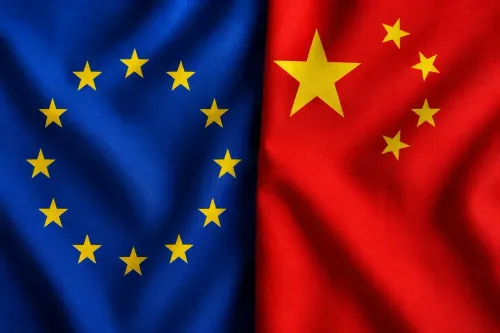
Finland survey: 77% back EU cutting economic reliance on US and China
Synopsis
A fresh Finnish survey lays bare a striking public consensus: three-quarters of Finns want the EU to cut economic and technological ties with both the US and China, and most are willing to pay higher prices and accept slower climate action to get there. It is a clear mandate for European strategic autonomy — from a country that only recently joined NATO.
Key Takeaways
77% of Finnish respondents support the EU reducing economic and technological reliance on the US , even if it affects bilateral ties.
Nearly three-quarters back tighter restrictions on strategic assets such as energy networks and ports.
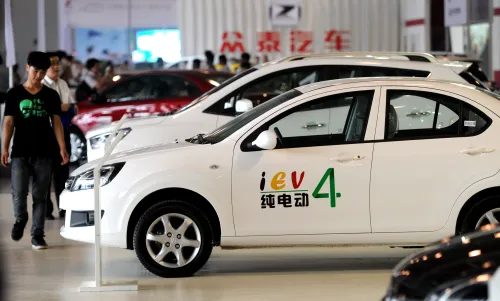
Close to two-thirds support cutting Europe's tech dependence on China , including batteries and EVs, even at the cost of slower climate action.
65% want greater EU emphasis on common defence; only 44% prioritise climate change.
Survey conducted by Taloustutkimus in March 2025 , covering 2,000+ adults and 34 EU experts; margin of error 2–3 percentage points .
A new survey published on 10 May reveals that 77 per cent of people in Finland support the European Union reducing its economic and technological dependency on both the United States and China, even if doing so strains bilateral ties. The findings, released jointly by the Finnish Innovation Fund (Sitra) and the Finnish Business and Policy Forum (Eva), signal a significant shift in public sentiment at a time of growing geopolitical uncertainty.
Key Survey Findings
Of the 2,000-plus adults surveyed across mainland Finland — along with 34 invited EU experts — only nine per cent opposed reducing reliance on the US. The researchers were careful to contextualise the result:
Point of View
And favouring European firms in procurement risks WTO friction. The climate trade-off is the sharpest contradiction — Finland has been a green-policy leader, yet its public is now willing to slow decarbonisation for security. That tension will define EU industrial strategy for years.
NationPress
24 Sept 2026
Frequently Asked Questions
What did the Finland survey on EU dependency reveal?
The survey found that 77% of Finnish respondents support the EU reducing its economic and technological reliance on the US, even if it affects bilateral ties, while nearly two-thirds backed cutting dependence on China in sectors like batteries and EVs. The survey was published jointly by the Finnish Innovation Fund (Sitra) and the Finnish Business and Policy Forum (Eva).
Who conducted the Finland EU dependency survey?
The survey was conducted by research firm Taloustutkimus in March 2025, commissioned by Sitra and Eva. It covered more than 2,000 adults in mainland Finland and 34 invited EU experts, with a margin of error of 2–3 percentage points.
Why do Finns want to reduce EU reliance on the US despite security ties?
Researchers noted this is not anti-Americanism: Finns appear to distinguish between security cooperation — which they broadly support, especially post-NATO accession — and economic or technological dependence. The concern is about supply-chain and industrial vulnerability, not alliance politics.
What alternatives to China and the US do Finnish respondents favour?
Nearly three out of four respondents supported developing partnerships with emerging economies such as India, Brazil, and Vietnam to reduce dependence on Chinese supply chains in areas like batteries and electric vehicles.
How do Finnish respondents balance security and climate goals?
The majority said security should take priority over climate goals when the two conflict. As many as 65% called for greater EU emphasis on common defence, compared to 44% who prioritised climate action — a notable shift for a country with strong environmental commitments.