Will 2026 Heighten Trade Tensions Between EU and China?
Synopsis
The European Union is strategically moving away from China in its trade relationships. With tensions rising, experts predict that the year 2026 will exacerbate the current climate. What are the implications of this shift for global trade dynamics? Read on to find out more about the future of EU-China trade relations.
Key Takeaways
EU is moving to diversify trade partnerships away from China .
Trade relations are currently experiencing a standstill.
China's response includes imposing tariffs on EU products.
Protectionist policies in the U.S. are complicating trade dynamics.
Experts foresee an escalation of tensions by 2026.
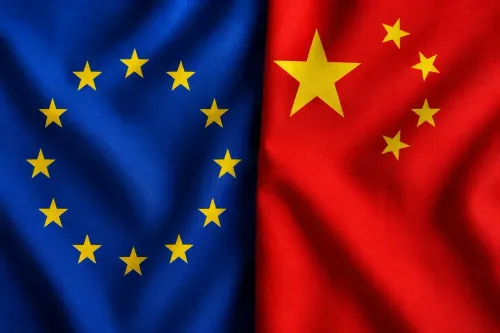
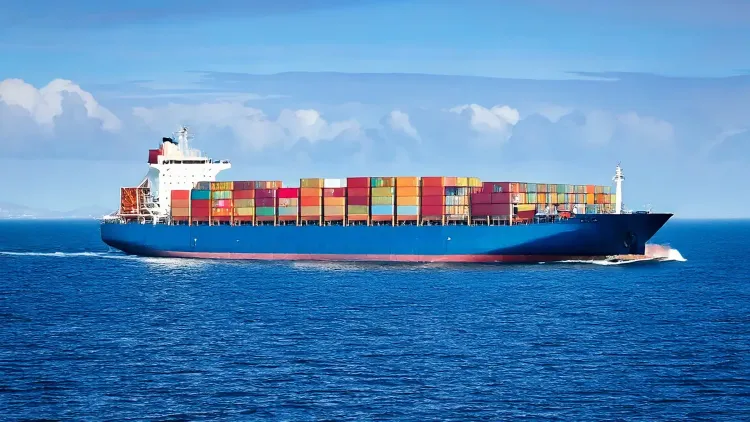
New Delhi, Jan 10 (NationPress) The European Union (EU) is poised to continue its strategy of diversifying trading partnerships away from China, while also enhancing its trade defense mechanisms, which were primarily designed with China in mind. However, Beijing appears largely indifferent to these developments, as reported by a recent analysis.
As outlined in a report by Politico, the trade relations between the EU and China are currently “at a standstill.” This comes ahead of German Chancellor Friedrich Merz's anticipated visit to China next month.
“The trade deficit isn't expected to improve in the near future; China is unlikely to increase consumption of our goods. Such hopes are merely optimistic,” stated Alicia Garcia-Herrero, the chief economist for Asia-Pacific at French investment bank Natixis and a senior fellow at the think tank Bruegel.
In December of the previous year, Beijing responded to EU duties on Chinese-made electric vehicles imposed in 2024 by announcing punitive provisional tariffs on dairy products.
Furthermore, China expressed dissatisfaction regarding German auto manufacturer Volkswagen's attempts to seek an exemption from these EV duties.
The shift towards protectionism in the U.S. under President Donald Trump has disrupted trade flows, complicating the resolution of challenges like market access and state subsidies. Chinese exports to Europe are once again increasing, and they now exceed Europe’s exports to China, which are in decline.
Recently, French President Emmanuel Macron articulated in an op-ed for the Financial Times that, “We must either rebalance our economic relations collaboratively—engaging China, the U.S., and the EU in a genuine partnership—or risk adopting more protectionist measures in Europe.”
Nevertheless, Chinese President Xi Jinping has yet to respond to calls for trade rebalancing.
Experts caution that existing tensions may escalate further. Francesca Ghiretti, director of the China Europe Initiative at the Rand think tank, noted that “2026 is set to amplify the dynamics and tensions already observable in 2025.”
Point of View
It's crucial to recognize that the evolving trade dynamics between the EU and China will significantly impact global markets. While both sides may adopt protective measures, cooperation remains essential for mutual growth. Our commitment to impartial reporting ensures that we deliver accurate insights into these pressing issues.
NationPress
25 Sept 2026
Frequently Asked Questions
What are the current trade relations between the EU and China?
The trade relations are currently described as being at a standstill, with the EU diversifying its trading partnerships away from China.
How does the U.S. protectionism affect EU-China trade?
U.S. protectionism has disrupted trade flows, complicating issues like market access and state subsidies, thereby impacting EU-China trade dynamics.
What actions has China taken in response to EU tariffs?
China announced punitive provisional tariffs on dairy products as a countermeasure to EU duties on Chinese-made electric vehicles.
What is expected in 2026 regarding EU-China trade tensions?
Experts predict that trade tensions will intensify in 2026, heightening the existing dynamics observed in previous years.
What is the stance of French President Emmanuel Macron on this issue?
Macron emphasized the need for cooperative economic relations, cautioning that Europe may have to adopt more protectionist measures if cooperation fails.