Will the Centre Approve the Mekedatu and Upper Krishna Projects?
Synopsis
Karnataka's Deputy CM D.K. Shivakumar believes the state can initiate the Mekedatu and Upper Krishna projects pending Central government approval. With a commitment to water management and dam safety, he emphasizes the importance of these projects for Bengaluru's water supply and energy generation.
Key Takeaways
Mekedatu and Upper Krishna projects aim to enhance water supply.
Projects await approval from Central government .
Focus on fair compensation for affected farmers.
Emphasis on dam safety and infrastructure improvements.
Karnataka's rich history in water management is notable.
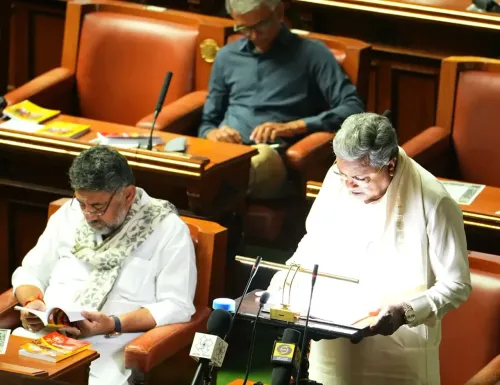
Bengaluru, Feb 13 (NationPress) Karnataka's Deputy Chief Minister D.K. Shivakumar, who also oversees the Water Resources department, is optimistic about moving forward with the delayed Mekedatu and Upper Krishna projects, contingent upon obtaining the necessary approvals from the Central government.
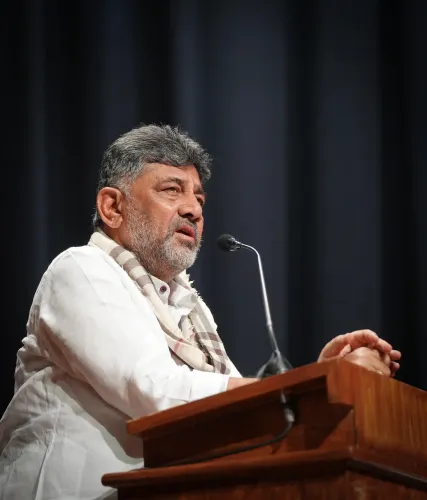
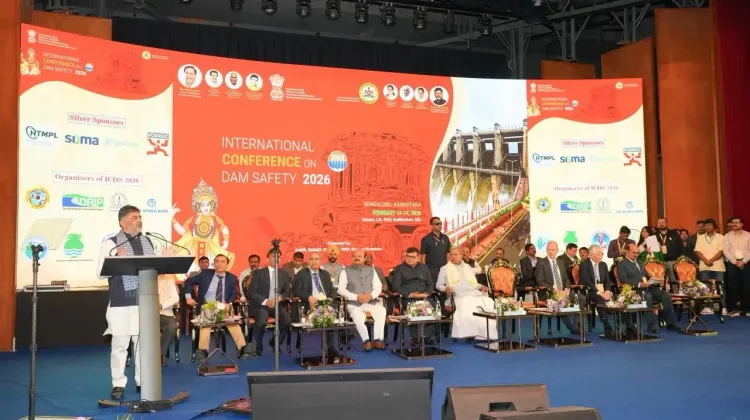
"We are optimistic about receiving cooperation from the Centre," he remarked during the opening session of the International Dam Safety Conference held at the J.N. Tata Auditorium of the Indian Institute of Science.
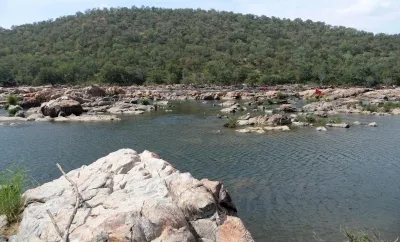
"Bengaluru is home to 1.5 crore people. Industrialists globally are focusing their attention on this city. The world perceives India through Bengaluru, with its appealing climate and culture drawing many. As the population grows, it is our duty to ensure water supply. Hence, we are advancing the construction of a balanced dam project in Mekedatu. The Supreme Court recently ruled in favor of this initiative. We are prepared to implement it and are awaiting the Central government’s nod. This project aims to supply drinking water to Bengaluru and nearby areas while also producing 400 MW of electricity," he added.
Reflecting on the Congress government reaching 1,000 days in power on Friday, Shivakumar noted that the celebration was postponed due to the conference. "It's an honor to host this significant event. Karnataka has a profound history. In 1902, Asia's first hydroelectric power station was established at Shivanasamudra, marking a historic milestone for the continent," he stated.
Regarding the Upper Krishna Project, he mentioned that the government has enacted a transparent policy to ensure fair compensation for farmers whose land is affected, in line with the 2013 Act. "By December 2025, we aim to provide irrigation to 1.72 lakh acres of farmland. We also seek relaxation of the 500-metre restriction around dams under safety regulations, allowing for tourism and bolstering the local economy," he explained.
"Many of our dams are between 60 and 70 years old, necessitating urgent infrastructure repairs. Furthermore, unpredictable climate changes present significant challenges," Shivakumar noted.
“The integrity of a dam is not solely defined by its construction, but also by its maintenance. India ranks third globally in the number of dams, with approximately 6,500 dams, and Karnataka has 232 of them, with a significant portion exceeding 25 years in age. This underscores the urgency for systematic dam safety measures," he emphasized.
"Dam safety has ascended to a national priority. The Dam Rehabilitation and Improvement Project (DRIP), initiated by the Central government with support from the World Bank, is providing essential aid. The second phase of DRIP is currently underway in Karnataka, with an allocation of Rs 1,500 crore for the restoration of 58 dams," he stated.
“Water is an invaluable resource; it represents wealth, energy, and life. The Karnataka government is dedicated to establishing the state as a benchmark in dam safety. We are committed to building, safeguarding, and enhancing our dams," he continued.
“Today, we gather to discuss water management and dam safety. Karnataka has a rich legacy in water management, with thousands of dams constructed post-Independence under the visionary leadership of Pandit Jawaharlal Nehru, who referred to dams as the temples of modern India," Shivakumar remarked.
"Karnataka is the leading producer of engineers in the country, boasting 250 engineering colleges and generating 1.5 lakh engineers annually. This is the strength of our state. Bengaluru, as the Silicon Valley, is home to 25 lakh engineering professionals who significantly contribute to the global technology industry, compared to California's 13 lakh engineers," he concluded.
Point of View
It's crucial to recognize the significance of Karnataka's water projects under Deputy CM Shivakumar's leadership. The Mekedatu and Upper Krishna initiatives not only aim to enhance local water supplies but also address broader issues of infrastructure and climate challenges in India. The focus on dam safety is commendable and aligns with national priorities.
NationPress
29 Sept 2026
Frequently Asked Questions
What are the Mekedatu and Upper Krishna projects?
The Mekedatu and Upper Krishna projects are initiatives aimed at enhancing water supply and irrigation facilities in Karnataka, particularly to benefit Bengaluru and surrounding regions.
What is the status of the approvals for these projects?
As of now, the projects await necessary approvals from the Central government, which Deputy CM Shivakumar is optimistic will be granted.
How will these projects impact local farmers?
The government plans to provide better compensation to farmers affected by the projects, ensuring their livelihoods are supported during the implementation phase.
What is the significance of the International Dam Safety Conference?
The conference emphasizes the importance of dam safety and water management, showcasing Karnataka's commitment to addressing these critical issues.
How many dams are there in Karnataka?
Karnataka has approximately 232 dams, with many being over 25 years old, highlighting the need for systematic safety measures.