Is the Karnataka Government Addressing the Surge in Female Foeticide Cases?
Synopsis
Karnataka's Health Minister reveals alarming statistics on female foeticide, with 46 arrests made and 8 cases registered this year. The government is intensifying inspections and forming a task force to combat this ongoing issue. Explore the steps being taken to tackle this serious social problem and the implications for healthcare in the state.
Key Takeaways
46 arrests made in connection with female foeticide since 2023.
8 cases registered in the same timeframe.
Technology is being used to monitor pregnancy data at the village level.
A State-level task force has been established for enforcing the PC & PNDT Act .
Fines and rewards for information regarding foeticide cases have increased.
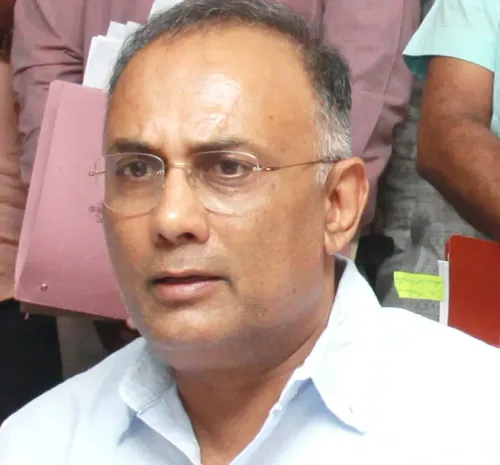
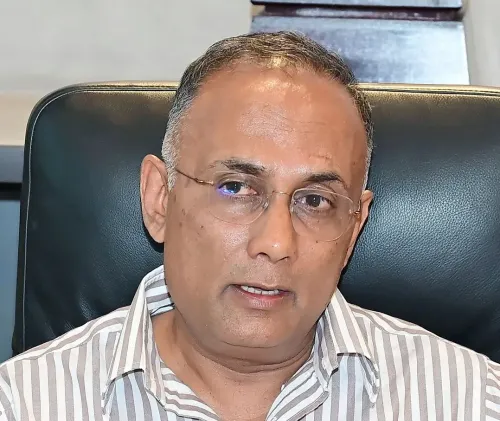
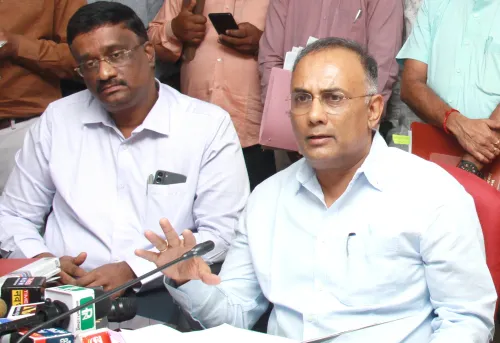
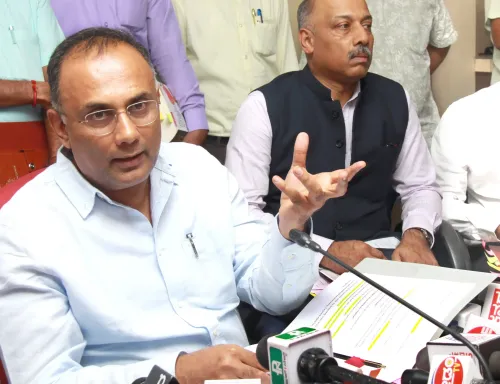
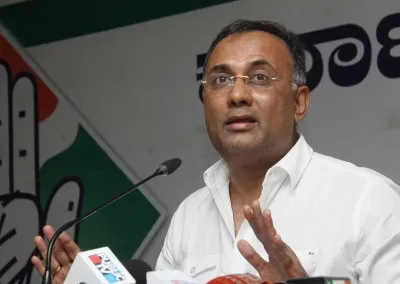
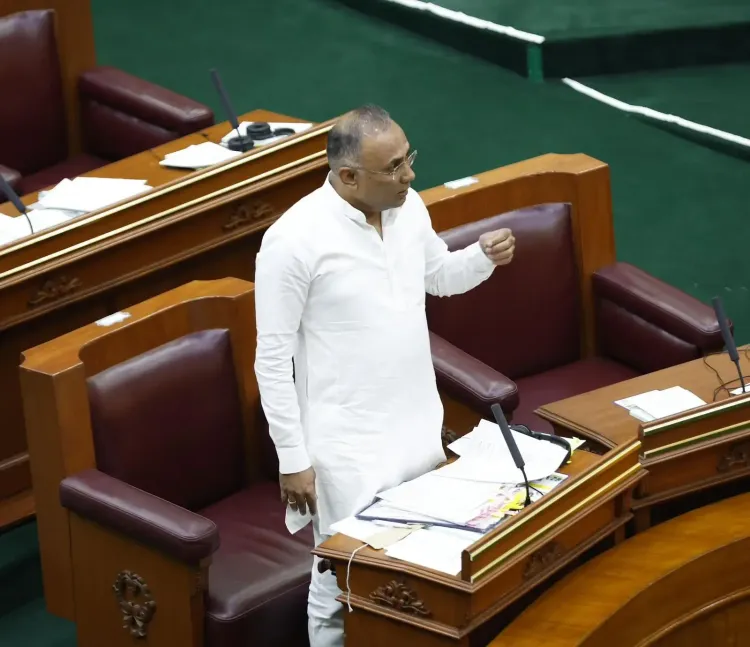
Belagavi (Karnataka), Dec 16 (NationPress) Karnataka's Health and Family Welfare Minister Dinesh Gundu Rao informed the Legislative Council on Tuesday that the State authorities are cognizant of the increasing instances of female foeticide and have commenced stringent measures to address this issue.
He reported that 46 individuals have been apprehended and eight cases have been lodged since the beginning of 2023.
This declaration was made in response to inquiries posed by Congress MLC Jagdev Guttedar and BJP MLC C.T. Ravi.
“No one is coerced into undergoing foeticide; it is a voluntary act. There is a standing prohibition against foeticide, and the new technologies and devices for detecting foetuses are under surveillance. We are engaged in dialogues with the Centre regarding this matter. Female foeticide persists in the State,” the Minister stated.
“In certain taluk hospitals, the ratio of male births is disproportionately high. We are executing inspections in these areas. Covert investigations are ongoing to thwart female foeticide,” he elaborated.
In a written response to MLC Jagdev Guttedar, Minister Rao confirmed that the government is alert to the upward trend in reported female foeticide cases. “Increased inspections of scanning centers and hospitals across the State have resulted in more cases coming to light,” he noted.
“Since 2023, a total of eight cases related to female foeticide have been recorded, leading to the arrest of 46 individuals. The registration of pregnant women has reached 100 percent across the State, and we are leveraging technology to monitor data at the village level,” he added.
He also mentioned that 136 cases have been filed in courts against scanning centers, owners, and doctors under the Pre-Conception and Pre-Natal Diagnostic Techniques (PC & PNDT) Act. “Fines have been imposed in 74 cases, while 65 cases are currently under trial. The reward for information leading to such cases has been increased from Rs 50,000 to Rs 1 lakh. A State-level task force has been established for the effective enforcement of the PC & PNDT Act,” Rao explained.
Previously, BJP MLC C.T. Ravi expressed concerns over the rising female foeticide cases in the State, alleging the complicity of government doctors and nurses and asserting that a sophisticated network is facilitating this illegal practice.
Ravi criticized the ineffective implementation of the current law and urged for more stringent regulations to combat female foeticide. He called for the revocation of licenses for any doctors involved in such activities.
In response to these allegations, Health Minister Dinesh Gundu Rao affirmed that female foeticide remains an ongoing issue in the State and labeled it as a deeply ingrained social problem. He assured that the government is adopting rigorous measures to combat this epidemic.
The Minister announced plans to appoint nodal officers in each district to oversee female foeticide cases. He highlighted that amendments have been made to the law since the current government took office.
“There is an increasing trend of terminating pregnancies using pills, and this practice requires regulation. We are contemplating implementing stronger legal amendments to tackle this challenge,” he concluded.
Point of View
The rise in female foeticide cases in Karnataka highlights a critical issue that transcends state borders. The responsibility lies not only with state authorities but also with society at large to address this deeply ingrained problem. The government's proactive measures to combat this trend are commendable, but a collective effort is essential to change societal attitudes and enforce stricter regulations.
NationPress
30 Sept 2026
Frequently Asked Questions
What actions has the Karnataka government taken against female foeticide?
The Karnataka government has arrested 46 individuals and registered 8 cases since 2023, while also intensifying inspections of scanning centers and hospitals to combat female foeticide.
How is the government monitoring foeticide practices?
The government is utilizing technology for data monitoring at the village level and has formed a State-level task force for effective enforcement of the PC & PNDT Act.
What penalties are in place for those involved in female foeticide?
Fines have been imposed in 74 cases against scanning centers and doctors, with the reward for information leading to such cases raised from Rs 50,000 to Rs 1 lakh.
Why is there a concern over the rising ratio of male births?
An unusually high number of male births in certain taluk hospitals raises concerns about possible female foeticide practices, prompting government inspections and covert investigations.
What future measures are being considered to combat female foeticide?
The government is contemplating stronger legal amendments and regulations concerning the use of pregnancy termination pills to address the ongoing issue of female foeticide.