Karnataka's Fiscal Deficit: A Comparative Analysis by CM Siddaramaiah
Synopsis
In a spirited defense of Karnataka's 2026–27 budget, CM Siddaramaiah asserts that the state's fiscal deficit is well-managed compared to other Southern states. His remarks challenge opposition criticism and highlight the impact of Union policies on revenue collection.
Key Takeaways
Karnataka's fiscal deficit is 2.95% , lower than neighboring states.
The state has seen better revenue collection compared to its counterparts.
GST rate changes negatively impacted monthly revenue growth .
The state urges for a fair tax distribution formula from the Finance Commission.
Challenges include decreasing tax shares and discontinuation of GST compensation .
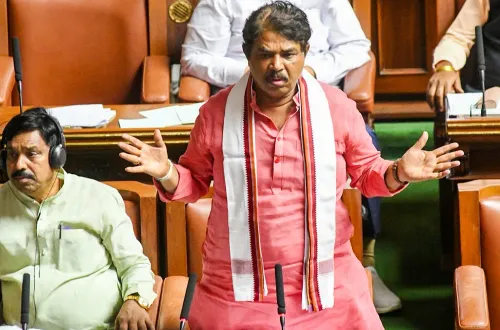
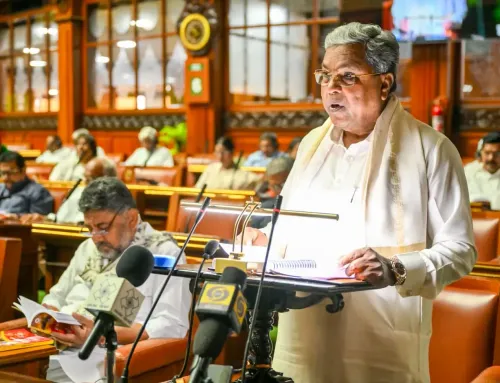
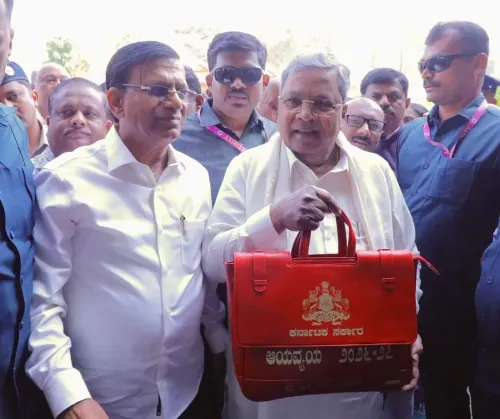
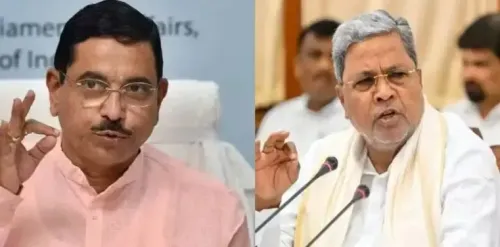
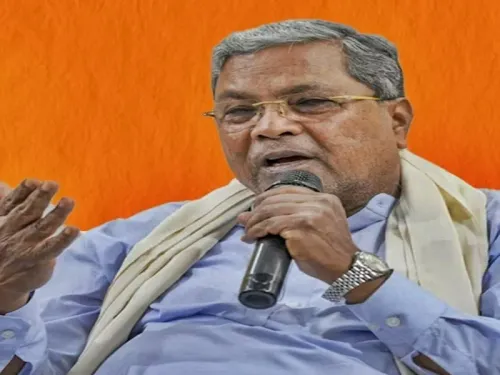
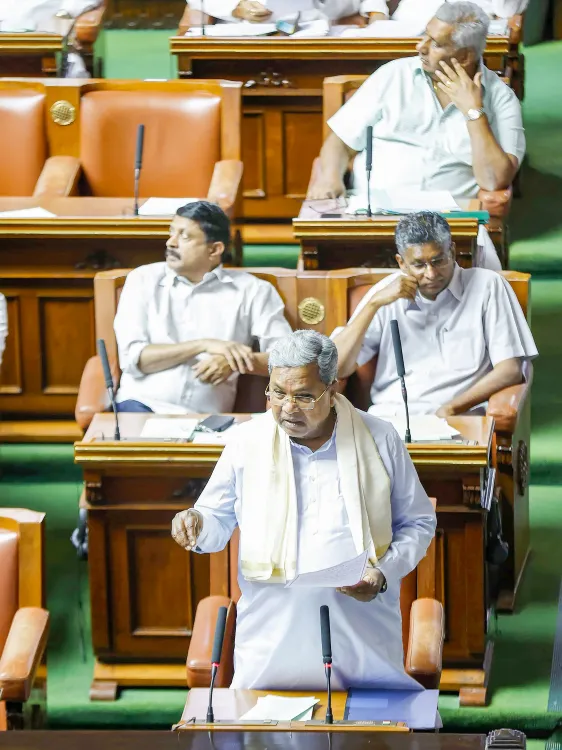
Bengaluru, March 25 (NationPress) In a robust defense of the State Budget for 2026–27, Karnataka Chief Minister Siddaramaiah addressed criticism from the Opposition, asserting, "When compared to our neighboring progressive states in South India, our fiscal deficit is well within the established parameters. Opposition leader R. Ashoka appears to be out of touch with the budget’s details, focusing instead on garnering media attention."
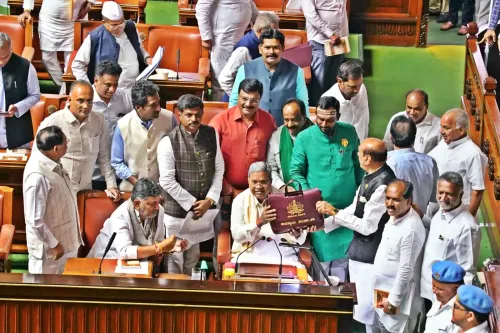
During his address at the Legislative Assembly on Wednesday, CM Siddaramaiah emphasized, "According to the updated estimates for 2025–26, our state’s fiscal deficit is projected to be 2.95 percent. For context, Maharashtra's deficit stands at 3.0 percent, Andhra Pradesh at 4.5 percent, Kerala at 3.8 percent, and Tamil Nadu at 3.5 percent."
He continued, "Ideally, we aim for no revenue deficit; however, this issue is not exclusive to Karnataka but is also present in Maharashtra and other southern states, as well as at the Union government level. Notably, both Karnataka and Maharashtra exhibit relatively lower revenue deficits."
CM Siddaramaiah remarked on claims made by opposition leaders, including BJP State President and MLA B.Y. Vijayendra, who alleged that the budget undergoes yearly revisions due to inadequate revenue collection. He pointed out that the actual or revised revenue collections in neighboring states have been subpar compared to budget projections.
"This challenge is not exclusive to Karnataka; it stems from the Union government's ineffective economic policies. Nevertheless, in comparison with neighboring states, our revenue collection has been commendably higher," he critiqued.
The sudden alteration of GST rates by the Union government last year has negatively impacted the state's economy. Prior to the GST rate changes in 2025–26, Karnataka's average monthly GST revenue was growing at 10 percent. Post-adjustment, this growth rate fell to 4 percent. Projections suggest a revenue shortfall of approximately Rs 10,000 crore for 2025–26, which could escalate to Rs 15,000 crore in 2026–27. Consequently, the revised estimates for 2025–26 indicate a revenue deficit of Rs 22,957 crore, according to the CM.
He further elaborated, "Did the revision of GST rates yield significant benefits for the public? The answer is no. Besides a minor decrease in car and bike prices, there has been minimal advantage. The public and welfare initiatives have gained little, while multinational corporations and big businesses have reaped substantial benefits. Despite these challenges, we project that revenue collection will exceed last year’s figures by approximately Rs 22,573 crore, with the estimate increasing from Rs 2.92 lakh crore last year to Rs 3.15 lakh crore this year."
He also noted that the state’s share in central tax devolution has decreased from 4.713 percent per the 14th Finance Commission to 3.647 percent under the 15th Finance Commission, marking a reduction of about 23 percent.
"We have implored the 16th Finance Commission to adopt a formula that ensures a fair balance of equity and growth in tax distribution. Although the 16th Finance Commission has proposed a 4.131 percent share for Karnataka—a 13 percent increase over the previous recommendation—it still falls short of what is fair," he expressed.
Opposition figures have argued that during the BJP government’s term, the budgets were surplus, while the current administration is presenting deficit budgets with revenue deficiencies.
"I have examined all state budgets since the year 2000. Each budget has experienced fiscal deficits, including during the BJP’s four-year term. The surpluses during that time were largely attributable to one-time GST compensation releases. Opposition members are discussing these matters without a comprehensive understanding of the facts," CM Siddaramaiah criticized.
"According to the Karnataka Fiscal Responsibility Act, the state maintained a revenue surplus. However, challenges arose due to the Union government’s failure to fully compensate for GST-related revenue losses, the exclusion of cesses and surcharges from the divisible tax pool, and the diminishing tax share under the 15th Finance Commission," he stated.
With the cessation of GST compensation from the fiscal year 2023–24, the state’s GST collections fell short of the protected revenue by Rs 30,871 crore in 2023–24 and Rs 40,368 crore in 2024–25. Furthermore, the reduced tax share under the 15th Finance Commission resulted in a loss of Rs 39,500 crore from 2023–24 to 2025–26, leading the state to experience a revenue deficit since 2023–24, as per CM Siddaramaiah.
During the BJP government's tenure (2019–2022), the Union government provided GST compensation totaling Rs 57,351 crore. However, following the change in government, this compensation ceased in 2023, leading to lower revenue collection and subsequent revenue deficits, according to the CM.
Since the introduction of GST in 2017, due to perceived injustices from the 15th Finance Commission, failure to implement recommended grants, denial of GST compensation, and what could be deemed a betrayal by the Union government, the state has incurred losses exceeding Rs 2,00,000 crore, he emphasized.
In light of these circumstances, how can state economies sustain themselves? Despite these hurdles, we continue to manage state affairs efficiently. Meanwhile, Gujarat, which does not invest in welfare schemes like ours, is projected to borrow around Rs 1,00,000 crore this year, CM Siddaramaiah commented.
"It is evident that the revenue deficit has arisen due to several factors: diminished tax devolution under the 15th Finance Commission, denial of recommended grants by the Union government, the discontinuation of GST compensation, GST rate adjustments, and insufficient funding for centrally-sponsored initiatives such as the Jal Jeevan Mission," he concluded.
Point of View
CM Siddaramaiah's arguments underscore the financial challenges faced by Karnataka, particularly regarding fiscal deficits and revenue collection. His focus on comparative analysis with neighboring states reveals a broader narrative about economic management in the region.
NationPress
22 Sept 2026
Frequently Asked Questions
What is the fiscal deficit of Karnataka?
As per the revised estimates for 2025–26, Karnataka's fiscal deficit is projected to be 2.95 percent.
How does Karnataka's fiscal deficit compare to other states?
Karnataka's fiscal deficit is lower than that of Maharashtra (3.0%), Andhra Pradesh (4.5%), Kerala (3.8%), and Tamil Nadu (3.5%).
What are the reasons for Karnataka's revenue deficit?
The revenue deficit is attributed to the Union government's failure to fully compensate for GST revenue losses and other economic policies.
How has GST rate rationalization affected Karnataka?
The rationalization of GST rates has led to a decline in monthly growth of GST collections from 10 percent to 4 percent.
What is the projected revenue collection for Karnataka this year?
Revenue collection is estimated to increase from Rs 2.92 lakh crore to Rs 3.15 lakh crore this year.