Kazind 2026: Indian, Kazakh forces train in Oskemen to boost battlefield skills
Synopsis
India and Kazakhstan are into the thick of Kazind 2026 — their ninth joint military exercise — with live-firing, drone-warfare drills, and heliborne operations in Oskemen. The exercise, framed around UN-mandate counter-terrorism, reflects India's quietly deepening defence footprint in Central Asia and its growing emphasis on Counter-UAS capabilities shaped by lessons from recent global conflicts.
Key Takeaways
The Indian Army and Kazakhstan Armed Forces conducted live-firing, tactical navigation, and combined combat drills on 6 October 2026 under Kazind 2026 at Oskemen, Kazakhstan .
This is the ninth edition of the bilateral exercise; it runs until 11 October 2026 .
A 60-member Indian contingent , led by a Garhwal Rifles battalion and including Indian Air Force personnel, departed on 28 September 2026 .
Training covers Special Heliborne Operations , Air Mobility , UAS , and Counter-UAS capabilities in semi-urban and mountainous terrain.
The exercise is mandated to build counter-terrorism joint capabilities for operations under a United Nations framework.
The opening ceremony was presided over by Major General Zhenis Maralov , Chief of Regional Command East, Kazakhstan Armed Forces.
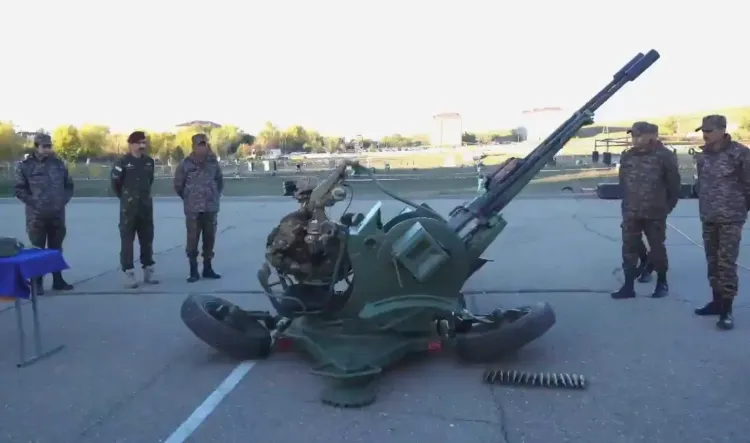
The Indian Army and the Armed Forces of Kazakhstan on Tuesday, 6 October 2026, conducted live-firing drills, tactical navigation exercises, and combined combat operations under the ninth edition of the India-Kazakhstan joint military exercise 'Kazind 2026' at Oskemen, Kazakhstan. The exercise is designed to sharpen battlefield skills, deepen interoperability, and reinforce operational preparedness between the two nations' armed forces.
What the Troops Did on the Ground
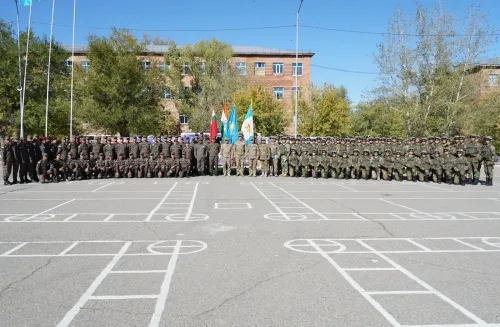
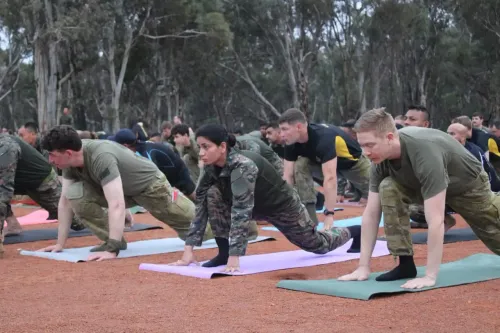
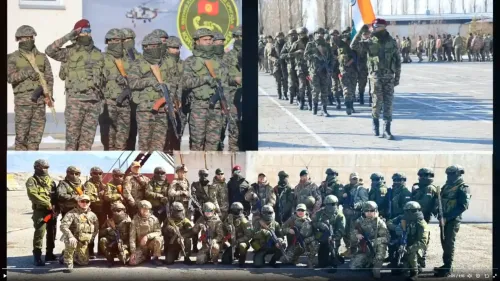
According to the Indian Army, troops navigated the Akhmirovo Training Area through tactical drills, engaged targets during live-firing exercises, and executed combined combat scenarios. The Indian Army stated the joint training is 'fostering the exchange of best practices and further strengthening military cooperation between India and Kazakhstan.'
The training curriculum covers joint tactical operations across semi-urban and mountainous terrain, encompassing Special Heliborne Operations, Air Mobility, and the integrated use of Unmanned Aerial Systems (UAS) and Counter-UAS capabilities — skill sets increasingly relevant to modern warfare.
Exercise Structure and Mandate
The Indian Army clarified that the exercise aims to enhance the joint counter-terrorism capabilities of both forces in a sub-conventional environment under a United Nations mandate. This signals the exercise's strategic orientation beyond bilateral defence optics — it is explicitly framed around multilateral peace-support operations.
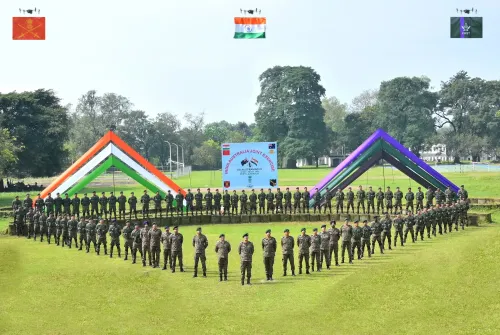
The opening ceremony was held last week at Oskemen, presided over by Major General Zhenis Maralov, Chief of Regional Command East of the Armed Forces of Kazakhstan. The exercise will run until 11 October 2026.
Who Is Participating
A 60-member Indian Armed Forces contingent departed on 28 September 2026 for Oskemen. The Indian contingent is drawn primarily from a battalion of the Garhwal Rifles, supplemented by troops from other arms and services and personnel from the Indian Air Force. Kazakhstan has fielded a contingent of matching strength, comprising mainly personnel from its Land Forces, according to the Ministry of Defence.
Strategic Context
Kazind 2026 is the ninth edition of a bilateral exercise that has grown steadily in scope and complexity. This comes amid India's broader effort to expand defence partnerships across Central Asia — a region that carries weight in India's Connect Central Asia policy and sits at the intersection of Chinese and Russian influence. Notably, Kazakhstan is also a Shanghai Cooperation Organisation (SCO) member, making military-to-military ties with Astana diplomatically significant for New Delhi.
The inclusion of Counter-UAS drills reflects a global shift in military training priorities following the widespread use of drones in recent conflicts, and signals that the India-Kazakhstan exercise is adapting to contemporary threat environments.
What Comes Next
The exercise concludes on 11 October 2026. Both sides are expected to conduct an after-action review and share lessons learned, which could inform future editions and bilateral defence cooperation agreements. The Ministry of Defence has not announced a specific joint statement or communiqué for after the exercise.
Point of View
But the details matter. The explicit framing around UN-mandate counter-terrorism operations — not just bilateral defence — positions the exercise as preparation for multilateral deployments, where India increasingly wants a larger role. The addition of Counter-UAS drills is telling: it signals that both armies are internalising lessons from drone-intensive conflicts in Ukraine and West Asia, areas far removed from the Kazakh steppe but directly relevant to future battlefield realities. For India, Central Asia is not a sideshow — it is a buffer zone between two of its most complex strategic relationships, Russia and China, and Kazind quietly builds credibility in that space year by year.
NationPress
6 Oct 2026
Frequently Asked Questions
What is Exercise Kazind 2026?
Kazind 2026 is the ninth edition of the India-Kazakhstan bilateral joint military exercise, being held at Oskemen, Kazakhstan, from late September to 11 October 2026. It aims to enhance interoperability and build joint counter-terrorism capabilities under a United Nations mandate.
Who is participating in Kazind 2026 from India?
A 60-member Indian Armed Forces contingent is participating, drawn primarily from a battalion of the Garhwal Rifles along with personnel from other arms, services, and the Indian Air Force. The contingent departed for Oskemen on 28 September 2026.
What activities are Indian and Kazakh troops carrying out?
The troops are conducting tactical navigation drills in the Akhmirovo Training Area, live-firing exercises, combined combat drills, Special Heliborne Operations, Air Mobility exercises, and training in UAS and Counter-UAS capabilities across semi-urban and mountainous terrain.
Why does the India-Kazakhstan military exercise matter strategically?
The exercise deepens India's defence engagement in Central Asia, a region central to India's Connect Central Asia policy and significant given Kazakhstan's membership in the Shanghai Cooperation Organisation. It also builds capacities for UN-mandated multilateral peacekeeping and counter-terrorism operations.
When does Kazind 2026 end?
The exercise runs until 11 October 2026. An after-action review is expected after its conclusion, though the Ministry of Defence has not announced a formal joint communiqué.