Exercise AUSTRAHIND 2026: India, Australia showcase joint HADR capabilities in Kerala
Synopsis
Exercise AUSTRAHIND 2026 in Thiruvananthapuram is more than a routine drill — it is the most operationally complex edition yet, integrating naval vessels, helicopters, and ground forces in live coastal HADR scenarios, even as Defence Minister Rajnath Singh and Australian Deputy PM Richard Marles convened at ADMM-Plus. The timing signals a deliberate synchronisation of field-level training with top-tier diplomatic outreach on Indo-Pacific security.
Key Takeaways
The 5th edition of Exercise AUSTRAHIND 2026 is underway at Thiruvananthapuram, Kerala , from 19 October to 1 November 2026 .
Approximately 120 personnel each from the Indian Army and Australian Army are participating.
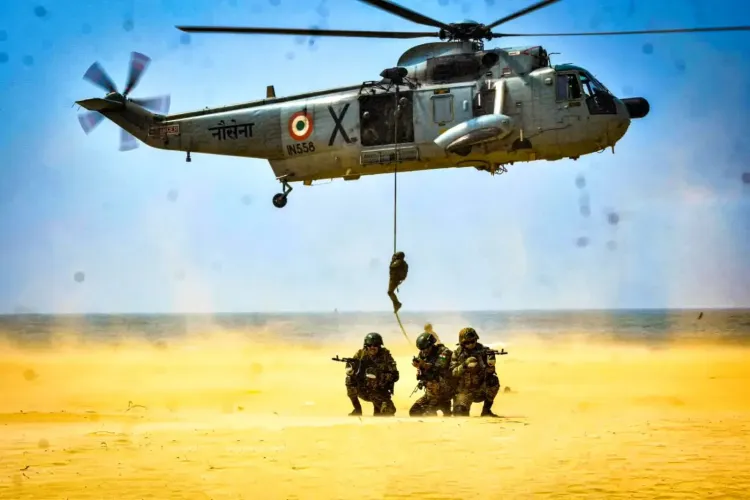
INS Sharda and a Sea King helicopter conducted a ship-to-shore troop insertion, demonstrating tri-service HADR interoperability.
Australian High Commissioner Philip Green attended the exercise and hailed deepening bilateral defence ties on X.
Defence Minister Rajnath Singh met Australian Deputy PM Richard Marles at the ADMM-Plus summit in the Philippines to review defence cooperation and regional security.
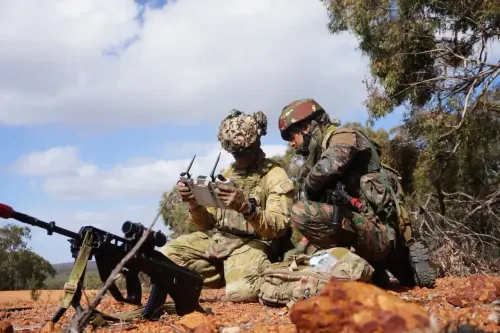
The exercise focuses on coastal and island operations , surveillance, and reconnaissance — key Indo-Pacific capability domains.
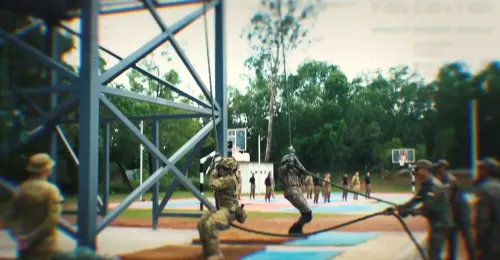
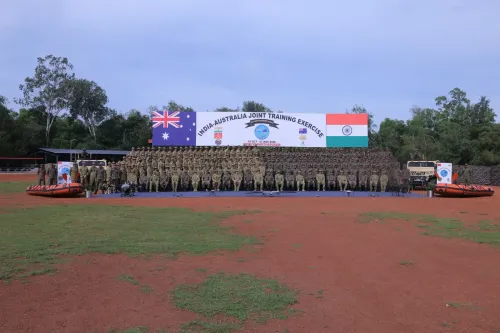
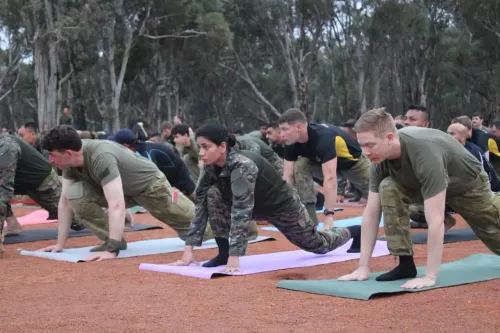
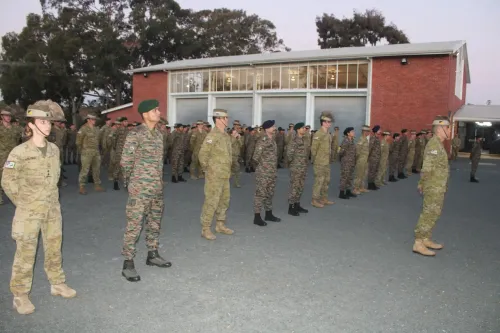
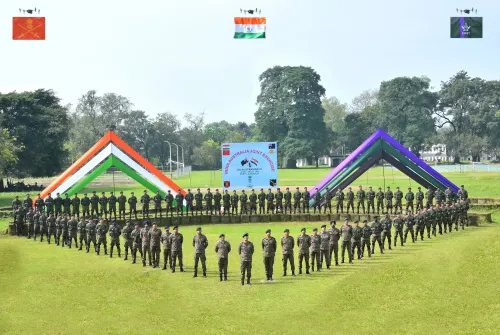
The 5th edition of Exercise AUSTRAHIND 2026, the joint military exercise between India and Australia, demonstrated advanced interoperability and combined operational readiness during a Humanitarian Assistance and Disaster Relief (HADR) training drill in coastal terrain at Thiruvananthapuram, Kerala. The exercise, running from 19 October to 1 November 2026, brought together approximately 120 personnel each from the Indian Army and the Australian Army at the Foreign Training Node, Thiruvananthapuram.
Key Operational Demonstration
In a highlight of the exercise, the Indian Navy's INS Sharda and a Sea King helicopter, operating in close coordination with ground forces from both nations, executed a swift ship-to-shore troop insertion. The manoeuvre demonstrated seamless tri-service integration — land, sea, and air — and underscored the growing depth of operational synergy between the two militaries.
The Indian Navy's Southern Naval Command, sharing details in a post on X on Saturday, stated: 'During AUSTRAHIND2026 at Thiruvananthapuram, Indian Navy's INS Sharda and Sea King helicopter, in close coordination with the Indian Army and Australian Army, executed a swift ship-to-shore troop insertion as part of joint HADR training in coastal terrain.' It added: 'The exercise showcased seamless integration of land, sea and air capabilities, reinforcing jointmanship, interoperability and operational readiness while strengthening India-Australia defence cooperation.'
Australian High Commissioner's Remarks
Australian High Commissioner to India, Philip Green, who was present at the exercise, posted on X: 'I had the privilege of seeing Australia-India troops training side by side at Ex AUSTRAHIND 2026. Bilateral exercises like these strengthen mutual understanding and interoperability, build trust and deepen our defence partnership.'
His presence at a field-level exercise — rather than a diplomatic function — signals the strategic weight Canberra attaches to the bilateral defence relationship, particularly as both nations deepen their Indo-Pacific security posture.
Rajnath Singh–Richard Marles Meeting at ADMM-Plus
The exercise coincided with a high-level diplomatic engagement. Defence Minister Rajnath Singh met Australian Deputy Prime Minister and Defence Minister Richard Marles on the sidelines of the 13th ASEAN Defence Ministers' Meeting-Plus (ADMM-Plus) in the Philippines earlier this week. The meeting focused on reviewing bilateral defence cooperation, boosting military interoperability, and addressing regional security challenges.
Singh posted on X: 'Delighted to meet Australia's Deputy PM and Defence Minister, Mr. Richard Marles, on the sidelines of the ADMM-Plus meeting today. We had productive discussions on reviewing our bilateral defence cooperation, enhancing military interoperability, and addressing regional security challenges. India places great value on its Comprehensive Strategic Partnership with Australia for a free, open, and secure Indo-Pacific.'
Broader Strategic Significance
The Ministry of Defence noted that the exercise, now in its fifth edition, focuses specifically on coordinated operations in coastal and island environments, surveillance, and reconnaissance — domains of growing salience in the Indo-Pacific. This comes amid a broader pattern of India expanding its multilateral defence footprint, with joint exercises this year spanning multiple theatres and partner nations.
Notably, AUSTRAHIND 2026 is the most operationally intensive edition to date, incorporating naval assets alongside army contingents for the first time in coastal HADR scenarios. As both nations converge on shared Indo-Pacific priorities, analysts expect the exercise frequency and complexity to increase in coming editions.
Point of View
Not a coincidence. The inclusion of naval assets in what was previously an army-to-army exercise marks a qualitative step-up in ambition. Yet the real measure of this partnership's depth will be whether it extends from interoperability drills to shared intelligence frameworks and logistics pacts — areas where India has historically moved cautiously with non-Quad treaty allies. The Indo-Pacific framing from both Singh and Green also matters: it places AUSTRAHIND within a broader security architecture conversation, one that Beijing will be watching closely.
NationPress
31 Oct 2026
Frequently Asked Questions
What is Exercise AUSTRAHIND 2026?
Exercise AUSTRAHIND 2026 is the 5th edition of the India-Australia Joint Military Exercise, held at Thiruvananthapuram, Kerala, from 19 October to 1 November 2026. It focuses on Humanitarian Assistance and Disaster Relief (HADR) operations in coastal terrain, with approximately 120 troops from each country participating.
What was demonstrated during AUSTRAHIND 2026?
The Indian Navy's INS Sharda and a Sea King helicopter, coordinating with Indian and Australian army units, executed a ship-to-shore troop insertion, showcasing tri-service integration of land, sea, and air capabilities. The drill reinforced joint operational readiness in coastal and island environments.
What did Defence Minister Rajnath Singh discuss with Australian Deputy PM Richard Marles?
Singh and Marles met on the sidelines of the 13th ADMM-Plus summit in the Philippines to review bilateral defence cooperation, boost military interoperability, and address regional security challenges. Singh reaffirmed India's commitment to its Comprehensive Strategic Partnership with Australia for a free, open, and secure Indo-Pacific.
Why is Australia's High Commissioner's attendance at AUSTRAHIND significant?
Australian High Commissioner Philip Green's presence at a field-level military exercise — rather than a formal diplomatic event — underscores the strategic importance Canberra attaches to the India-Australia defence relationship. Green posted on X that bilateral exercises 'build trust and deepen our defence partnership.'
How does AUSTRAHIND 2026 fit into India's broader Indo-Pacific strategy?
AUSTRAHIND is part of India's expanding multilateral defence exercise calendar, with a specific focus on coastal and island operations relevant to the Indo-Pacific theatre. The 2026 edition is the most operationally complex yet, incorporating naval assets alongside army contingents for the first time in HADR coastal scenarios.