Indian Army Southern Command drills desert combat, coordinates with civil agencies
Synopsis
India's Southern Command combined mechanised desert warfare drills with a high-level civil-military security conference on the same day — and all of this comes just 24 hours before AUSTRAHIND 2026, the India-Australia joint military exercise, kicks off in Thiruvananthapuram. The overlap is deliberate: it signals a force deliberately layering conventional combat readiness with inter-agency coordination and allied interoperability.
Key Takeaways
The Indian Army's Southern Command conducted an integrated desert terrain exercise on 18 October 2026 , involving the Battle Axe Division and Black Mace Brigade .
The exercise focused on mechanised manoeuvres, combat role rehearsals, and synchronised battlefield operations.
Maharashtra Police DGP Sadanand Vasant Date and senior officials from the Maharashtra Home Department and Indian Coast Guard participated in a joint civil-military security conference.
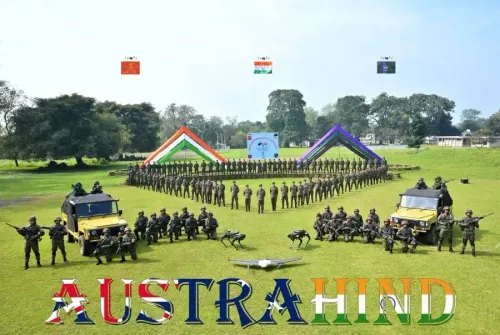
The 5th AUSTRAHIND 2026 India-Australia bilateral military exercise begins on 19 October 2026 and runs until 2 November 2026 in Thiruvananthapuram, Kerala .
AUSTRAHIND focuses on sub-conventional operations in semi-urban and semi-desert environments under Chapter VII of the UN mandate .
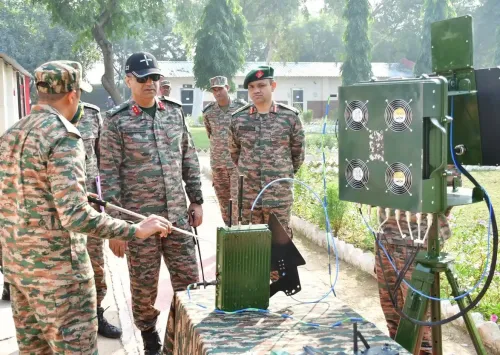
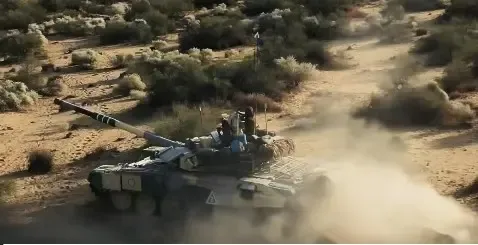
The Southern Command of the Indian Army on Sunday, 18 October 2026, demonstrated operational readiness in an integrated exercise across challenging desert terrain, showcasing mechanised manoeuvres, combat role rehearsals, and inter-agency coordination. The exercise, involving the Battle Axe Division and the Black Mace Brigade, underlined the force's focus on synchronised battlefield operations ahead of a major bilateral drill with Australia.
Desert Manoeuvres and Mechanised Might
The Battle Axe Division and Black Mace Brigade conducted mechanised operations across desert terrain, refining battlefield manoeuvres and rehearsing combat roles. According to the Southern Command's official post on social media platform X, the integrated exercise 'showcased speed, precision and seamless coordination among combat elements, reinforcing operational preparedness and combat effectiveness.'
The drills emphasised joint tactical execution, with units synchronising movement and firepower across varied terrain — a key preparedness metric for potential high-intensity scenarios in India's western and northwestern sectors.
Civil-Military Synergy at the Fore
In a separate but parallel effort, the General Officer Commanding, Headquarters Maharashtra Gujarat and Goa (MG&G) Area, convened a joint security conference in Pune that brought together senior civilian and military officials. Among those present were Maharashtra Police Director General Sadanand Vasant Date, senior officials from the Maharashtra Home Department, and representatives of the Indian Coast Guard.
Deliberations centred on rear area security, swift mobilisation, and integrated contingency response in war-like situations. The Southern Command described the engagement as a step towards 'strengthening a Whole-of-Nation approach to security,' with a focus on inter-agency coordination and collective operational readiness for emerging threats.
Exercise AUSTRAHIND 2026 to Kick Off Monday
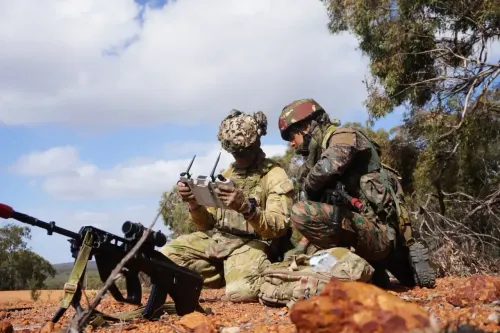
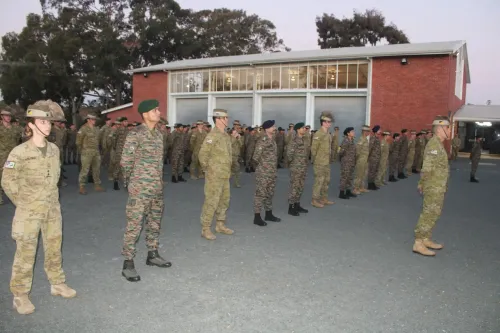
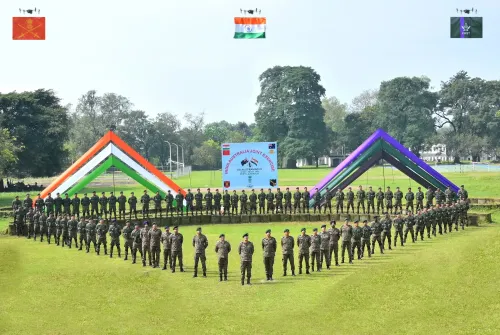
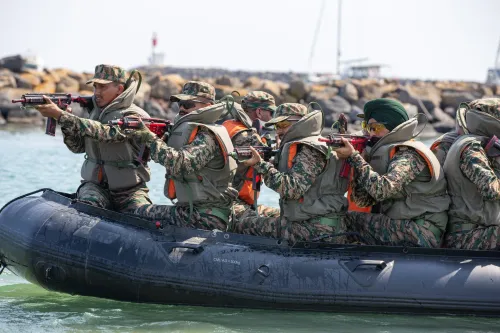
The 5th Annual Joint Bilateral Military Exercise AUSTRAHIND 2026 between the Indian Army and the Australian Army is scheduled to commence on Monday, 19 October 2026, and run through 2 November 2026 in Thiruvananthapuram, Kerala. The exercise focuses on sub-conventional joint operations in semi-urban and semi-desert environments, operating under Chapter VII of the UN mandate.
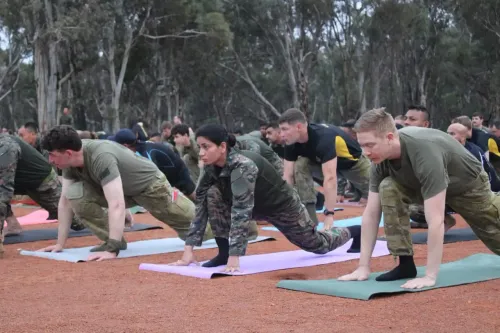
AUSTRAHIND aims to build interoperability, share tactical best practices, and develop camaraderie between the soldiers of both nations. The drill covers high-intensity physical fitness routines, joint planning sessions, and tactical drills aligned to real-world contingency scenarios.
Strategic Context
The convergence of the desert combat exercise, civil-military coordination conference, and the upcoming AUSTRAHIND drill reflects a broader uptick in the Indian Army's operational tempo. This comes amid continued emphasis on integrated theatre-level preparedness, and deepening defence cooperation under the India-Australia Comprehensive Strategic Partnership. Notably, AUSTRAHIND's focus on sub-conventional operations in semi-desert terrain aligns closely with India's operational environment in the western theatre.
The outcomes of AUSTRAHIND 2026 and the lessons drawn from the desert exercise are expected to feed into ongoing capability-building efforts under India's joint warfighting doctrine.
Point of View
A civil-military security conference involving state police and coast guard, and the launch of AUSTRAHIND 2026 is not coincidental — it reflects a deliberate signalling of multi-domain readiness. What mainstream coverage often underplays is the civil-military synergy dimension: looping in the Maharashtra DGP and Home Department into war-preparedness deliberations is a shift toward genuine whole-of-government defence planning. AUSTRAHIND's sub-conventional focus is also worth flagging — in an era of grey-zone threats, that orientation is more operationally relevant than conventional drill optics suggest.
NationPress
19 Oct 2026
Frequently Asked Questions
What is the Indian Army Southern Command desert exercise about?
The Southern Command conducted an integrated desert terrain exercise on 18 October 2026 involving the Battle Axe Division and Black Mace Brigade, focusing on mechanised manoeuvres, combat role rehearsals, and coordinated battlefield operations. The exercise was aimed at reinforcing operational preparedness and combat effectiveness.
What is Exercise AUSTRAHIND 2026?
AUSTRAHIND 2026 is the 5th Annual Joint Bilateral Military Exercise between the Indian Army and the Australian Army, scheduled from 19 October to 2 November 2026 in Thiruvananthapuram, Kerala. It focuses on sub-conventional joint operations in semi-urban and semi-desert environments under Chapter VII of the UN mandate, building interoperability and tactical best-practice sharing.
Who participated in the civil-military security conference in Pune?
The joint conference was convened by the General Officer Commanding, Headquarters Maharashtra Gujarat and Goa Area, and included Maharashtra Police DGP Sadanand Vasant Date, the Principal Secretary of the Maharashtra Home Department, and senior Indian Coast Guard officials. Discussions centred on rear area security, swift mobilisation, and integrated contingency response.
Why is the civil-military coordination exercise significant?
It represents a 'Whole-of-Nation' approach to security preparedness by integrating state police, home department, and coast guard into military contingency planning. This kind of inter-agency coordination is critical for rear area security during war-like situations, an area that has traditionally received less public attention than frontline readiness.
How does AUSTRAHIND 2026 fit into India-Australia defence ties?
AUSTRAHIND is held annually and is one of several defence cooperation initiatives under the India-Australia Comprehensive Strategic Partnership. The exercise builds interoperability for joint sub-conventional operations, while also fostering soldier-level camaraderie — a foundation for deeper bilateral military integration.