What is the significance of the integrated firing drill 'Sentinel Strike' conducted by the Army in Rajasthan?
Synopsis
The recent integrated firing exercise 'Sentinel Strike' in Jaipur showcases the advanced military capabilities of the South Western Command. With innovative strategies and indigenous technology, this exercise highlights the importance of operational readiness in modern warfare. Explore how this event reinforces India's defense strength and strategic prowess.
Key Takeaways
Integrated Firing Drill: 'Sentinel Strike' demonstrated cohesive ground and aerial maneuvers.
Technological Integration: Utilization of modern artillery and counter-drone systems was pivotal.
Operational Readiness: The exercise emphasizes the need for continuous improvement in military capabilities.
Indigenous Platforms: The event highlighted the importance of 'Atmanirbhar Bharat' in enhancing defense strength.
Leadership Praise: High standards of training and coordination among troops were recognized.
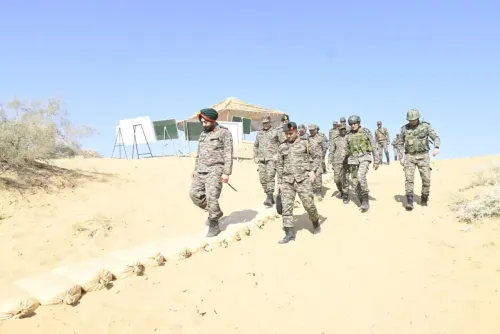
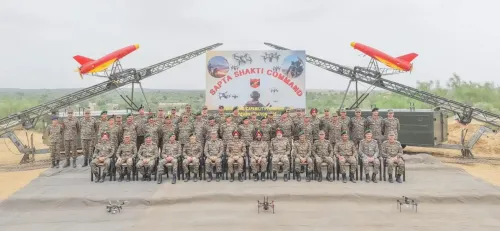
Jaipur, Oct 30 (NationPress) The South Western Command, also known as the Sapta Shakti Command, has successfully executed an integrated fire and maneuver exercise named Sentinel Strike at the Mahajan Field Firing Range located in the Thar Desert of Rajasthan. This exercise, which began on October 28, will conclude on Thursday, according to Army officials.
The integrated firing drill featured a variety of firing platforms working in unison, showcasing ground maneuvers by mechanized units alongside aerial and ground fire support.
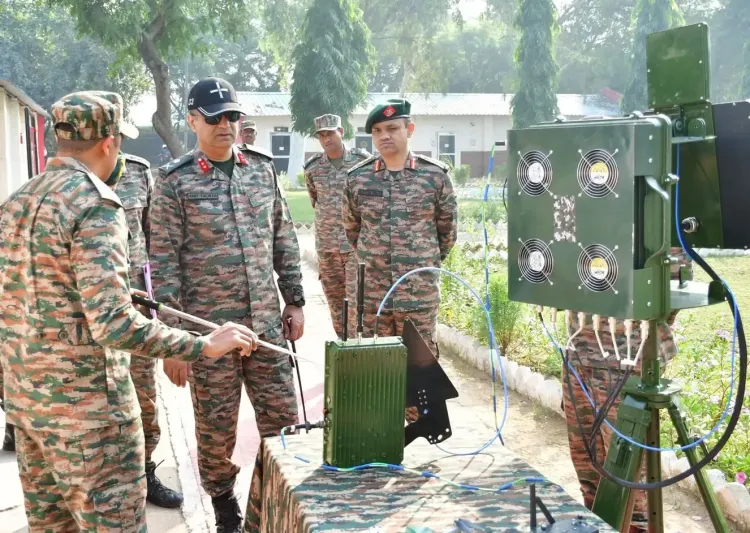
Present at the event was Lieutenant General Manjinder Singh, the Army Commander of the South Western Command, along with senior military commanders from the formation.
This comprehensive exercise involved mission engagements utilizing modern artillery systems and lethal ammunition, showcasing offensive ground maneuvers by mechanized forces, coupled with live firing from both ground and aerial platforms amid a significant drone threat, which included counter-drone and C-UAS operations.
Additionally, the drill required extensive coordination among various combat arms, incorporating cutting-edge technologies in a multi-domain operational environment.
The exercise also validated state-of-the-art surveillance capabilities, enhancing battlefield transparency and fostering a shared operational intelligence picture among various stakeholders.
Numerous versatile and domestically produced long-range aerial and ground vectors participated in the drill, including force multipliers such as attack helicopters, artillery guns, Ajeya (T-72 Tanks), and BMPs, all operating synergistically based on an Intelligence, Surveillance, and Reconnaissance architecture.
The devastating impact of firepower was evident at the target area, and the realistic effects of the counter-UAS grid, which are crucial in modern warfare, were demonstrated through multiple kinetic and non-kinetic measures, as stated by Lieutenant Colonel Nikhil Dhawan, PRO Defence, Rajasthan.
Army Commander Lieutenant General Singh praised the exemplary training standards of the troops and acknowledged the seamless coordination and synergy in mission execution among various combat and support arms.
He further recognized the utilization of technological capabilities from indigenous platforms introduced under the 'Atmanirbhar Bharat' initiative.
He commended all ranks for their professionalism and emphasized the importance of continuously exploring innovative combat methodologies and enhancing operational readiness.
Point of View
It's essential to recognize that such exercises like 'Sentinel Strike' are pivotal for enhancing India's defense capabilities. The seamless integration of technology and military tactics not only showcases our commitment to national security but also emphasizes the need for continuous improvement and adaptation in the face of evolving threats. This event stands as a testament to the dedication of our armed forces towards operational excellence.
NationPress
7 Oct 2026
Frequently Asked Questions
What is 'Sentinel Strike'?
Sentinel Strike is an integrated fire and maneuver exercise conducted by the South Western Command of the Indian Army, showcasing various military capabilities.
Where is the exercise taking place?
The exercise is taking place at the Mahajan Field Firing Range in the Thar Desert of Rajasthan.
What technologies were used during the exercise?
The exercise employed modern artillery systems, aerial platforms, and counter-drone technologies, incorporating cutting-edge surveillance capabilities.
Who oversaw the exercise?
Lieutenant General Manjinder Singh, the Army Commander of the South Western Command, oversaw the exercise along with senior military commanders.
What is the significance of such exercises?
These exercises are crucial for enhancing operational readiness, showcasing military capabilities, and ensuring effective coordination among various combat arms.