Kazind 2026: India-Kazakhstan joint military exercise begins in Oskemen
Synopsis
India and Kazakhstan have launched the ninth edition of Kazind at Oskemen, deploying a 60-member contingent led by the Garhwal Rifles for two weeks of counter-terrorism drills in semi-urban and mountainous terrain. The exercise — the most operationally complex in the series — includes Special Heliborne Operations, UAS integration, and a Joint Command Post, underscoring India's deepening security footprint in Central Asia.
Key Takeaways
The ninth edition of Kazind , the India-Kazakhstan joint military exercise, opened in Oskemen, Kazakhstan on 29 September 2026 .
The exercise runs from 28 September to 11 October 2026 and focuses on counter-terrorism operations under a UN mandate .
A 60-member Indian contingent , drawn primarily from the Garhwal Rifles and the Indian Air Force , is participating.
Training covers Special Heliborne Operations , UAS and Counter-UAS capabilities, and joint tactical drills in semi-urban and mountainous terrain.
A Joint Command Post and Intelligence and Surveillance Centre will be established to support coordinated operations.
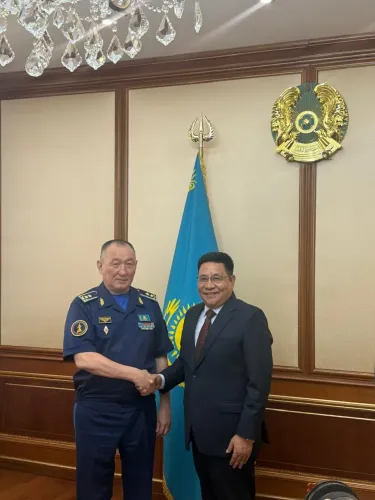
The opening ceremony was presided over by Major General Zhenis Maralov , Chief of Regional Command East, Kazakhstan Armed Forces.
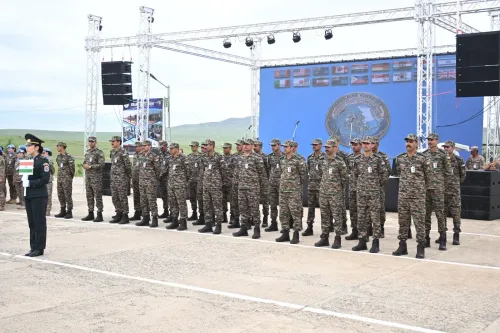
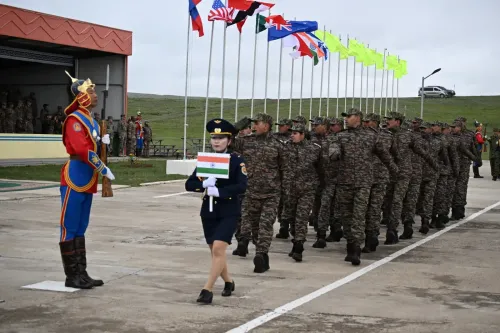
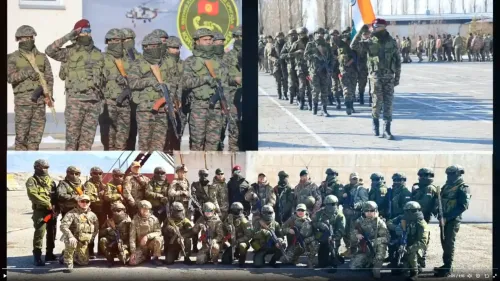
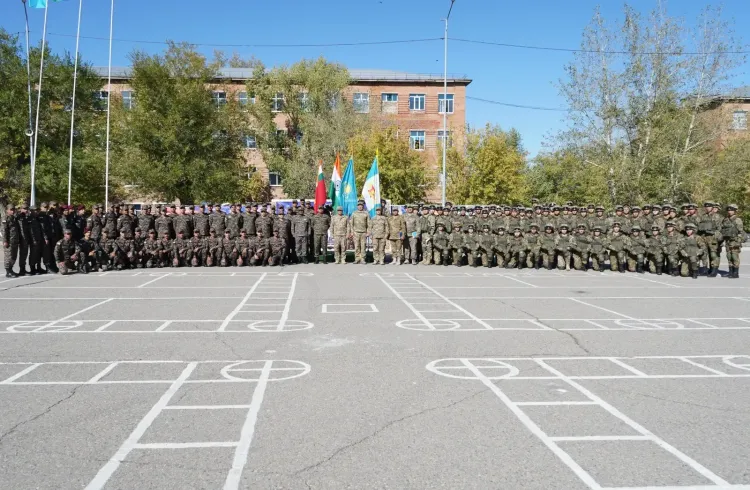
The ninth edition of the India-Kazakhstan joint military exercise 'Kazind 2026' formally commenced at Oskemen, Kazakhstan, on 29 September 2026, with an opening ceremony presided over by Major General Zhenis Maralov, Chief of Regional Command East of the Armed Forces of Kazakhstan. The exercise, running from 28 September to 11 October, brings together armed forces of both nations to sharpen counter-terrorism capabilities under a United Nations mandate.
What the Exercise Involves
According to the Indian Army's Additional Directorate General of Public Information (ADG PI), the exercise is designed to enhance interoperability and strengthen joint capabilities in counter-terrorism operations within a sub-conventional environment. Training will span joint tactical operations across semi-urban and mountainous terrain, covering Special Heliborne Operations, air mobility, and the integrated employment of Unmanned Aerial Systems (UAS) and Counter-UAS capabilities.
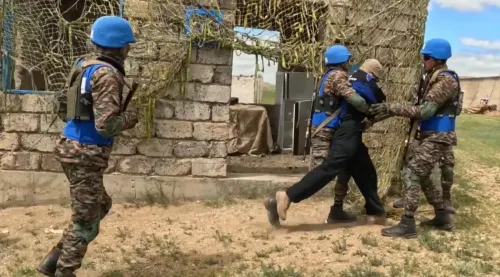
Participating contingents will rehearse joint responses to terrorist actions, including raids, search-and-destroy missions, cordon-and-search operations, and the securing of helipads and landing sites. The training will culminate in a comprehensive validation exercise where both contingents apply rehearsed tactics against a simulated terrorist threat.
Composition of the Indian Contingent
A 60-member Indian Armed Forces contingent departed on Monday, 28 September, for Oskemen. The Indian side is drawn primarily from a battalion of the Garhwal Rifles, supplemented by troops from other arms and services, as well as personnel from the Indian Air Force. Kazakhstan's Armed Forces are fielding a contingent of matching strength, comprising mainly personnel from its Land Forces.
Command Infrastructure and Strategic Objectives
The exercise will also see the establishment of a Joint Command Post and an Intelligence and Surveillance Centre to facilitate coordinated planning and execution between the two forces. According to the Ministry of Defence, the exercise provides both sides an opportunity to draw on each other's operational experience while reinforcing professional bonds and mutual trust.
This is the ninth edition of Kazind, a series that has steadily deepened military-to-military cooperation between the two nations. Notably, the exercise reflects India's broader strategic engagement with Central Asian nations — a priority that has gained momentum through multilateral frameworks such as the Shanghai Cooperation Organisation (SCO).
Broader Significance
The Kazind series sits within India's wider effort to build security partnerships across Central Asia, a region of growing geopolitical relevance. By focusing on counter-terrorism under a UN mandate, the exercise also signals both nations' shared commitment to regional peace and collective security frameworks. With the validation phase set for the final days of the exercise, the outcomes could inform future joint operational doctrines for both armies.
Point of View
China, and resurgent extremism near Afghanistan. The focus on UAS and Counter-UAS integration signals that both armies are updating their counter-terrorism doctrine beyond conventional infantry tactics. What mainstream coverage tends to underplay is the SCO dimension: exercises like Kazind quietly operationalise the political commitments made at summit tables. The real measure of Kazind's value will be whether its joint procedures survive contact with real-world contingencies — something only sustained, multi-year exercises can build.
NationPress
29 Sept 2026
Frequently Asked Questions
What is Exercise Kazind 2026?
Exercise Kazind 2026 is the ninth edition of the annual India-Kazakhstan joint military exercise, held in Oskemen, Kazakhstan, from 28 September to 11 October 2026. It focuses on counter-terrorism operations in semi-urban and mountainous terrain under a United Nations mandate.
Who is participating in Kazind 2026 from India?
A 60-member Indian Armed Forces contingent is participating, drawn primarily from a battalion of the Garhwal Rifles, along with personnel from other arms and services and the Indian Air Force. Kazakhstan is fielding a contingent of matching strength from its Land Forces.
What kind of training will take place during Kazind 2026?
Training will include Special Heliborne Operations, air mobility drills, integrated use of Unmanned Aerial Systems (UAS) and Counter-UAS capabilities, cordon-and-search operations, raids, and search-and-destroy missions. The exercise will culminate in a validation exercise against a simulated terrorist threat.
Why does Kazind 2026 matter for India's strategic interests?
The exercise deepens India's military-to-military ties with Kazakhstan, a key Central Asian partner, and reinforces shared commitments to regional security. It also reflects India's broader engagement with Central Asia through frameworks like the Shanghai Cooperation Organisation (SCO).
What command structures will be set up during the exercise?
Both contingents will establish a Joint Command Post and an Intelligence and Surveillance Centre to enable coordinated planning and execution of joint operations throughout the exercise period.