Is Another Tiger Carcass Discovered in Kaziranga National Park?
Synopsis
The recent discovery of a tiger carcass in Kaziranga National Park raises alarming questions about wildlife safety. With three incidents in a month, the park's management is under scrutiny. What could be causing these fatalities? Read on for details.
Key Takeaways
Three tiger carcasses discovered in Kaziranga National Park within a month.
Infighting suspected as a cause of death for the tigers.
Kaziranga is India's seventh UNESCO World Heritage Site.
The park houses 2,613 greater one-horned rhinoceroses .
Revenue generated from the park exceeded Rs 10.90 crore in 2024-25.
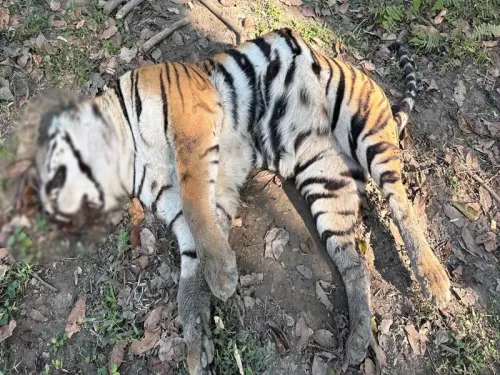
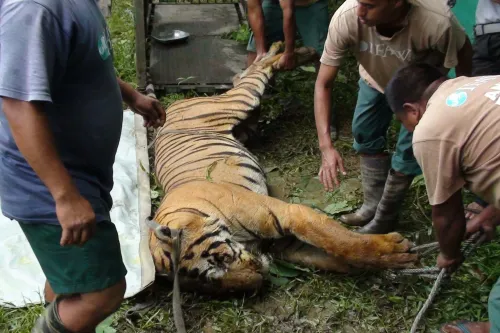
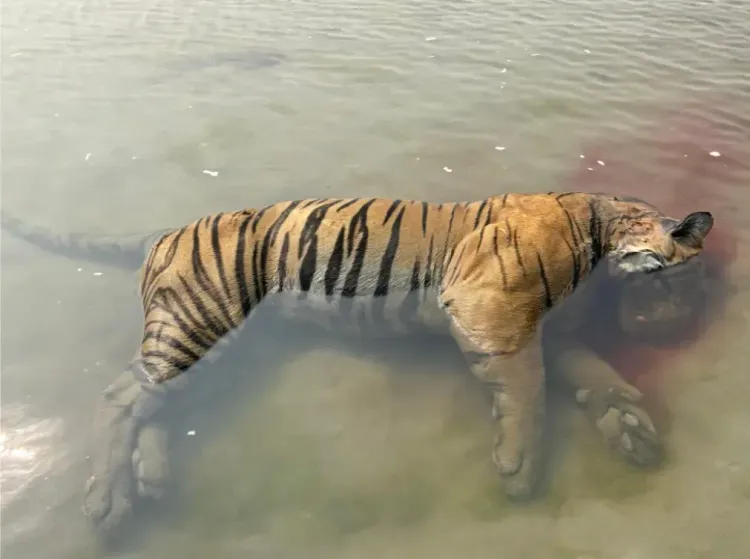
Guwahati, Feb 7 (NationPress) Just weeks after the discovery of two tiger carcasses, yet another deceased tiger has been found in Assam's Kaziranga National Park and Tiger Reserve (KNPTR) on Saturday, as confirmed by officials.
A senior official from KNPTR reported that the carcass of a male tiger, estimated to be around 12 to 13 years old, was located on the western side of the Mandir Baneshwar Anti-Poaching Camp within the Burapahar Range Ghorakati.
A committee has been formed by KNPTR Director Sonali Ghosh to conduct a post-mortem and to dispose of the carcass according to the Standard Operating Procedures (SOP) set by the National Tiger Conservation Authority.
Initial findings from the post-mortem indicate that the tiger's demise was likely due to infighting.
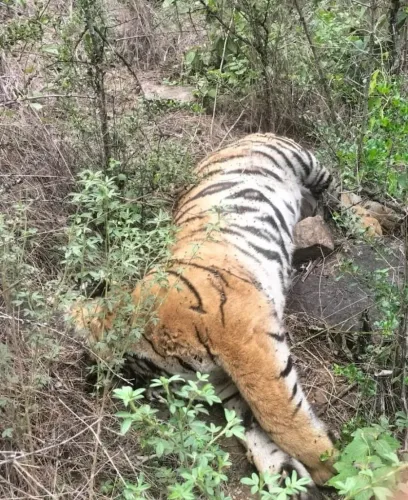
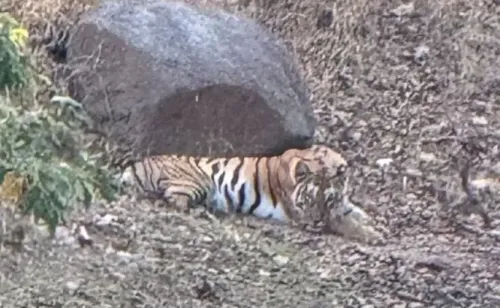
Additionally, the carcass of a female tiger, approximately three to four years old, was uncovered on January 18 in the Kathpora area of the Bagori Western Range. Post-mortem results suggested that her death was also related to infighting.
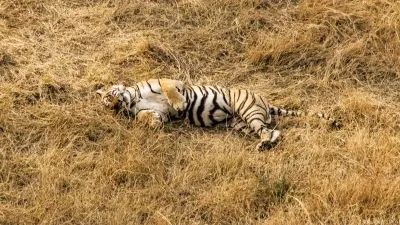
Earlier, on January 14, the remains of a young male Royal Bengal tiger, aged about two to three years, were found at Thute Chapori in the Eastern Range at Gamiri under the Biswanath Wildlife Division of KNPTR. This carcass was discovered by personnel from the Gopaljarani Anti-Poaching Camp during a routine patrol.
In response, the KNPTR Director set up a committee to ensure the proper post-mortem examination and disposal of the carcass following NTCA guidelines. Preliminary veterinary evaluations suggested that the cause of death could be attributed to natural circumstances or infighting.
Kaziranga National Park and Tiger Reserve, recognized as India's seventh UNESCO World Heritage Site, is home to the renowned 'Big Five'.
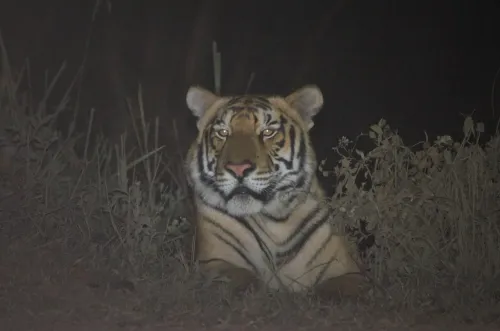
According to the most recent estimates, the park houses 2,613 greater one-horned rhinoceroses (2022 census), 104 Bengal tigers (2022), 1,228 Asian elephants (2024), 2,565 wild water buffaloes (2022), and 1,129 eastern swamp deer (2022).
Covering regions within Golaghat, Nagaon, Sonitpur, and Biswanath districts, the park generated revenues exceeding Rs 10.90 crore in 2024-25 and over Rs 8.81 crore in 2023-24.
The KNPTR is comprised of three forest divisions: Eastern Assam Wildlife Division (Bokakhat), Biswanath Wildlife Division (Biswanath Chariali), and Nagaon Wildlife Division (Nagaon).
Point of View
It's crucial to recognize the urgency of the situations occurring in Kaziranga National Park. The concerning frequency of tiger carcasses being discovered highlights significant threats to wildlife, which must be addressed with urgency and transparency. The national interest lies in safeguarding our natural heritage.
NationPress
19 Sept 2026
Frequently Asked Questions
What caused the recent tiger deaths in Kaziranga National Park?
Preliminary findings suggest that infighting is a key factor in the deaths of three tigers found in the park.
How many tigers are currently in Kaziranga National Park?
As per the latest estimates, Kaziranga National Park is home to approximately 104 Bengal tigers.
What measures are being taken to investigate the tiger carcasses?
A committee has been formed to conduct post-mortem examinations and to follow the guidelines set by the National Tiger Conservation Authority.
What is Kaziranga National Park known for?
Kaziranga National Park is known for its rich biodiversity and is home to the 'Big Five', including the greater one-horned rhinoceros.
What revenue did Kaziranga National Park generate recently?
In the financial year 2024-25, Kaziranga National Park generated over Rs 10.90 crore.