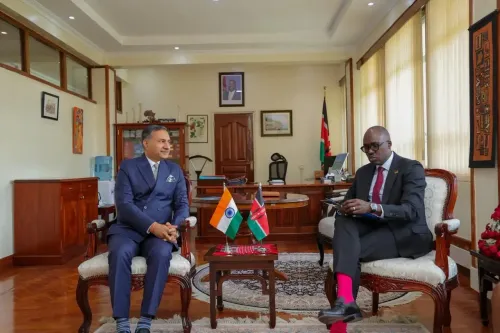
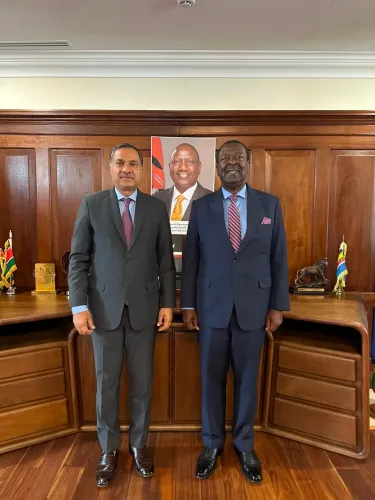
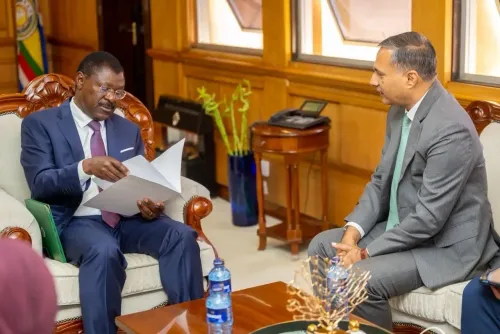
Kenya Speaker Wetang'ula visits India, meets VP Radhakrishnan
Synopsis
Kenya's National Assembly Speaker Moses Wetang'ula landed in New Delhi for an official Lok Sabha visit — and the agenda went well beyond parliamentary pleasantries. From digital governance and the Blue Economy to India's push for a permanent UN Security Council seat, the visit signals that the India-Kenya relationship is being systematically upgraded at the legislative level.
Key Takeaways
Moses Wetang'ula , Speaker of Kenya's National Assembly, arrived in New Delhi on 13 August for an official visit to the Lok Sabha .
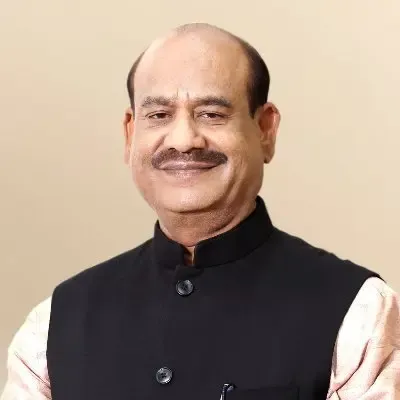
Lok Sabha Speaker Om Birla welcomed the Kenyan delegation and discussed the newly constituted Parliamentary Friendship Groups in both countries.
Talks covered cooperation in technology, AI, education, healthcare, maritime connectivity, the Blue Economy , and digital development .
Radhakrishnan cited India's development projects in Kenya, including the Mahatma Gandhi Graduate Library refurbishment and CT scan infrastructure at Mtongwe Naval Base .
India thanked Kenya for supporting its UN Security Council non-permanent seat bid (2028–29) and sought backing for a permanent seat .
India delivered 4.5 tonnes of medical supplies to Kenya during the Ebola Virus Outbreak, underscoring the depth of the bilateral partnership.
Speaker of the National Assembly of Kenya, Moses Wetang'ula, arrived in New Delhi on an official visit to the Lok Sabha on 13 August, aimed at deepening parliamentary ties between India and Kenya, including through the recently constituted Parliamentary Friendship Groups in both countries. The visit, confirmed by the Indian Embassy in Kenya, marks a fresh push to formalise legislative cooperation between the two democracies.
Wetang'ula's Arrival and Welcome
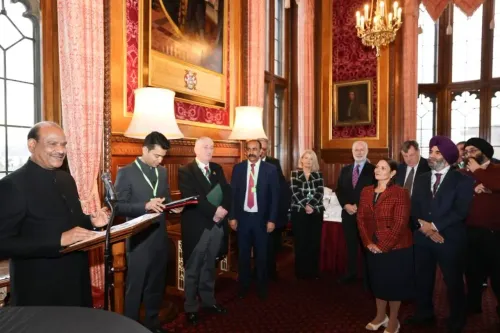
Wetang'ula was received at the airport by H.E. Ambassador Mary Mutuku, Deputy Head of Mission of the Republic of Kenya to India, and Lok Sabha Member Umeshbhai Babubhai Patel. Lok Sabha Speaker Om Birla formally welcomed the Kenyan parliamentary delegation to the Indian Parliament, describing the visit as an opportunity to build on the longstanding friendship between the two nations.
'The meeting provided an opportunity to discuss the longstanding friendship between India and Kenya, rooted in shared democratic values and a common historical legacy,' Birla noted, adding that the newly formed Parliamentary Friendship Groups would serve as an important platform for deepening engagement and strengthening people-to-people connections.
Key Areas of Discussion
Talks between the two sides covered a broad range of cooperation areas, including parliamentary capacity building through the Parliamentary Research and Training Institute for Democracies (PRIDE), technology and artificial intelligence, education, healthcare, infrastructure, maritime connectivity, the Blue Economy, and digital development. Birla underscored that sharing legislative experiences and best practices could further deepen institutional cooperation between the two Parliaments.
Meeting with Vice-President Radhakrishnan
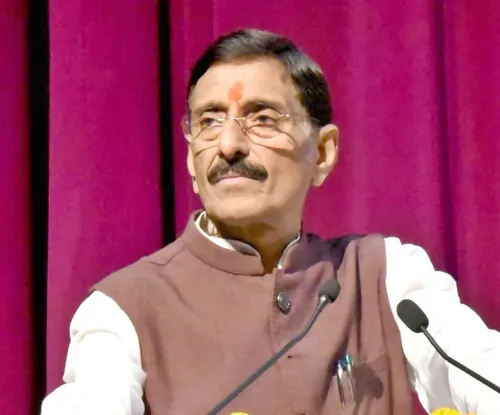
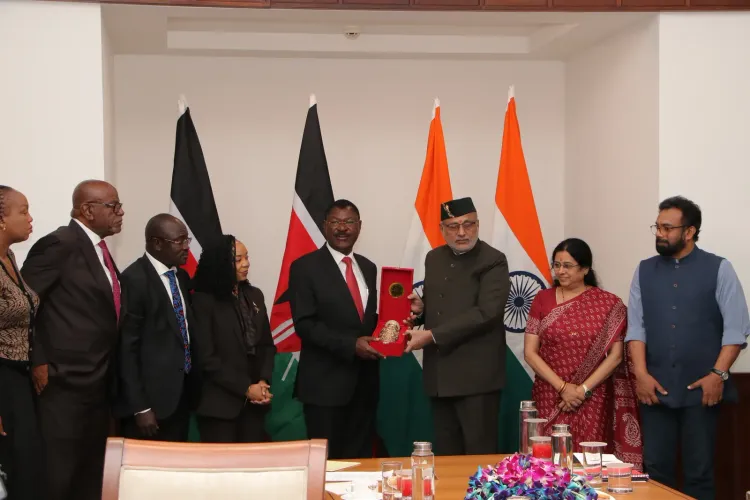
The Kenyan delegation also called on Vice-President and Chairman of Rajya Sabha C.P. Radhakrishnan. According to the Rajya Sabha Secretariat, Radhakrishnan highlighted the close parliamentary ties between the two countries and expressed India's readiness to share its expertise in digital technology, including efforts toward a paperless Parliament. He also noted the presence of an Indian-origin Member of Parliament in Kenya's Parliamentary Friendship Group.
Radhakrishnan recalled India's development partnership with Kenya, citing several grant-in-aid projects — among them the refurbishment of the Mahatma Gandhi Graduate Library at the University of Nairobi and the establishment of CT scan infrastructure at the Kenyan Navy Base, Mtongwe. He also acknowledged India's assistance during the Ebola Virus Outbreak, when India delivered the first tranche of 4.5 tonnes of medical supplies to Kenya.
India's UN Security Council Bid
A significant diplomatic moment emerged when Radhakrishnan thanked Kenya for supporting India's candidature for a non-permanent seat on the United Nations Security Council for the term 2028–29. He also sought Kenya's backing for India's permanent membership in the UN Security Council — a longstanding foreign policy objective for New Delhi. The proposal to install a bust of Mahatma Gandhi within the premises of Kenya's National Assembly was also recalled with appreciation.
What This Visit Signals
The visit reflects a broader Indian diplomatic effort to strengthen South-South parliamentary ties, particularly with African nations. Kenya's support on the UN Security Council front adds strategic weight to what is otherwise a legislative exchange visit. With Parliamentary Friendship Groups now formally in place on both sides, the institutional scaffolding for sustained engagement is being built — the test will be how actively it is used in the months ahead.
Point of View
Embedded in what is nominally a parliamentary exchange, reveals how India is using every bilateral touchpoint to build its multilateral coalition. The Parliamentary Friendship Groups are a useful institutional mechanism, but their value depends entirely on follow-through; India has a mixed record of sustaining such frameworks beyond the inaugural visit. The real measure of this engagement will come when Kenya's vote is needed — at the UN or elsewhere.
NationPress
28 Sept 2026
Frequently Asked Questions
Why is Kenya's Speaker Moses Wetang'ula visiting India?
Wetang'ula is visiting India at the invitation of Lok Sabha Speaker Om Birla to strengthen parliamentary exchanges between India and Kenya, including through the recently constituted Parliamentary Friendship Groups in both countries. The visit covers cooperation in technology, education, healthcare, and the Blue Economy.
What did VP C.P. Radhakrishnan discuss with the Kenyan delegation?
Vice-President Radhakrishnan highlighted India's readiness to share digital technology expertise, including efforts toward a paperless Parliament, and recalled India's development projects in Kenya such as the Mahatma Gandhi Graduate Library refurbishment and CT scan infrastructure at the Mtongwe Naval Base. He also sought Kenya's support for India's permanent UN Security Council membership.
What is the Parliamentary Friendship Group between India and Kenya?
The Parliamentary Friendship Group is a recently constituted bilateral mechanism designed to deepen legislative engagement, foster greater understanding between the two Parliaments, and strengthen people-to-people connections between India and Kenya.
How has India supported Kenya in the past?
India has executed several grant-in-aid projects in Kenya, including the refurbishment of the Mahatma Gandhi Graduate Library at the University of Nairobi and CT scan infrastructure at the Kenyan Navy Base, Mtongwe. India also delivered 4.5 tonnes of medical supplies to Kenya during the Ebola Virus Outbreak.
What is India's UN Security Council position, and how does Kenya factor in?
India is seeking a non-permanent seat on the UN Security Council for the term 2028–29 and has a long-term goal of permanent membership. Vice-President Radhakrishnan thanked Kenya for supporting the non-permanent seat bid and used the visit to seek backing for India's permanent membership aspiration.