Kerala Grand Mufti's 'women at home' remarks draw cross-party fire
Synopsis
Kerala's Grand Mufti compared women to gold ornaments that must be locked away, claiming the Quran bars them from public life. The remarks drew immediate, rare cross-party condemnation — from a Kerala state minister to TMC, Congress, and Shiv Sena — putting the spotlight on the limits of religious authority in a constitutional democracy.
Key Takeaways
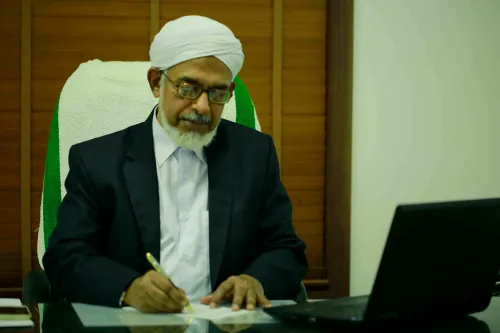
Grand Mufti Kanthapuram A.P.
Aboobacker Musliyar said women should stay home and not enter the public sphere, speaking at the Hubbul Rasool conference in Kochi .
He compared women to gold ornaments needing to be 'kept safely inside a box' and warned that their public presence could cause 'great destruction.' Kerala Minister Bindu Krishna rejected the remarks, saying they 'push women back by centuries' and contradict the Constitution of India .
Congress MP Imran Masood questioned the cleric's Islamic scholarship, citing figures like Razia Sultan and Hazrat Aisha .
Leaders from Shiv Sena , TMC , and Congress all condemned the statement, reflecting rare cross-party consensus.
Kerala's Grand Mufti Sheikh Abubakr Ahmad, also known as Kanthapuram A.P. Aboobacker Musliyar, has triggered sharp political backlash after stating that women should remain confined to their homes and stay out of public life. Leaders across party lines on Monday condemned the remarks, asserting that women have a constitutional right to independence and full participation in society.
What the Cleric Said
The controversy erupted following remarks made at the Hubbul Rasool conference in Kochi, where the cleric compared women to gold ornaments that must be kept safely inside a box. He further claimed that bringing women into the public sphere could result in 'great destruction.'
'Women should remain confined within their homes. They should not enter the public sphere. The Holy Quran says so,' Kanthapuram said at the event.
Political Leaders Push Back
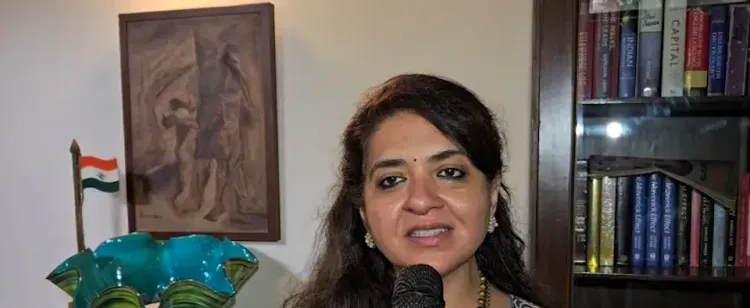
Shiv Sena spokesperson Shaina NC called the remarks deeply regressive. 'How regressive is it to say that women should not appear on public platforms and that they are a great distraction? I mean, the Quran nowhere says that women should sit at home and be confined to their homes. Public appearances are part of living in a civil society,' she said.
Kerala Minister for Women and Child Development Bindu Krishna firmly rejected the statement, saying it was unacceptable in a progressive society. 'A society like Keralam cannot accept such statements. Statements of this kind push women back by centuries. We abide by the Constitution of India, which guarantees equality to women and men, irrespective of gender, religion, or any other factor,' she said.
Trinamool Congress (TMC) Member of Parliament Saugata Roy said religious leaders should stay out of such social matters. 'This is wrong. This should not happen. Women should be independent. Religious leaders should remain silent on such matters concerning society,' Roy said.
Congress Questions the Cleric's Credentials
Congress MP Imran Masood challenged the cleric's understanding of Islam, invoking prominent women in Islamic history. 'Who was Razia Sultan? What status does Hazrat Aisha hold for us? A person who has no knowledge of Islam cannot be called an Islamic scholar just by growing a beard or wearing a cap,' Masood said.
Congress leader Udit Raj also condemned the remarks, invoking constitutional guarantees. 'Our Indian Constitution grants freedom, equality, equal rights and an equal vote. Nonsense will not be tolerated here, and strict action should be taken against such an individual,' he said.
Broader Context
This is not the first time statements by religious figures on women's roles have drawn political censure in India. The remarks come at a time when debates around gender equality, constitutional rights, and the limits of religious commentary on public life remain live and contested. Notably, the breadth of condemnation — spanning the Bharatiya Janata Party (BJP)-aligned Shiv Sena, the Congress, the TMC, and Kerala's own state government — signals rare cross-ideological consensus on the issue. How the cleric or his organisation responds remains to be seen.
Point of View
But it should not obscure the harder question: why do statements of this kind still command platforms at major religious gatherings? Cross-party condemnation is the easy part — it costs nothing and satisfies a news cycle. What rarely follows is a sustained institutional response from within the community. The comparison of women to ornaments locked in boxes is not a fringe view expressed in private; it was delivered at a named, organised conference in a major city. That warrants more than competing sound bites from politicians.
NationPress
15 Oct 2026
Frequently Asked Questions
What did Kerala's Grand Mufti say about women?
Grand Mufti Kanthapuram A.P. Aboobacker Musliyar stated that women should remain confined to their homes and must not enter the public sphere, claiming the Quran mandates this. He also compared women to gold ornaments that need to be kept safely inside a box, and said their presence in public could cause 'great destruction.'
Where did the Grand Mufti make these remarks?
The remarks were made at the Hubbul Rasool conference held in Kochi, Kerala. The event provided the cleric a public platform from which the controversial statements were widely reported.
Which political leaders condemned the remarks?
Leaders from multiple parties condemned the statement, including Kerala Minister for Women and Child Development Bindu Krishna, Shiv Sena spokesperson Shaina NC, TMC MP Saugata Roy, and Congress leaders Imran Masood and Udit Raj.
How did Congress respond to the cleric's remarks?
Congress MP Imran Masood questioned the cleric's credentials as an Islamic scholar, citing prominent women in Islamic history such as Razia Sultan and Hazrat Aisha. Congress leader Udit Raj called for strict action against the cleric, invoking constitutional guarantees of equality.
What does the Indian Constitution say about women's rights?
The Constitution of India guarantees equality to all citizens irrespective of gender, religion, or any other factor. Kerala Minister Bindu Krishna specifically invoked these constitutional provisions in rejecting the cleric's remarks.