Kerala Minister Bindu Krishnan tells Grand Mufti: Respect the Constitution
Synopsis
A sitting Kerala Cabinet minister has directly invoked the Constitution and the office of the President to rebuke India’s Grand Mufti after he argued women must stay home and out of public life. The row follows a Samastha circular that triggered mass pushback when women joined Prophet’s Day rallies — and Kanthapuram’s Kochi speech was a pointed doubling-down.
Key Takeaways
Kerala Labour Minister Bindu Krishnan on Monday criticised remarks by Grand Mufti Sheikh Abubakr Ahmad (Kanthapuram A.P.
Aboobacker Musliyar) urging women to stay out of public life.
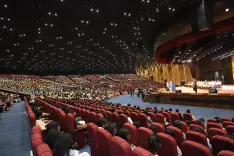
Kanthapuram made the remarks at the Hubbur Rasool conference of the Kerala Muslim Jamaath in Kochi , claiming women entering the public sphere would cause 'great destruction.' Minister Krishnan invoked the Constitution and noted that the President of India is a woman, calling the cleric’s views not worthy of emulation.
The controversy follows an earlier circular by the Kanthapuram faction of Samastha barring women from appearing on public roads alongside unrelated men.
The circular drew widespread criticism after women and girls participated in Prophet’s Day rallies, defying the directive.
Kerala Labour Minister Bindu Krishnan on Monday publicly rebuked the controversial remarks made by Grand Mufti of India Sheikh Abubakr Ahmad, widely known as Kanthapuram A.P. Aboobacker Musliyar, who argued that women should remain confined to their homes and stay out of the public sphere. The minister's remarks came in response to statements the cleric made at the Hubbur Rasool conference of the Kerala Muslim Jamaath held in Kochi.
What the Minister Said
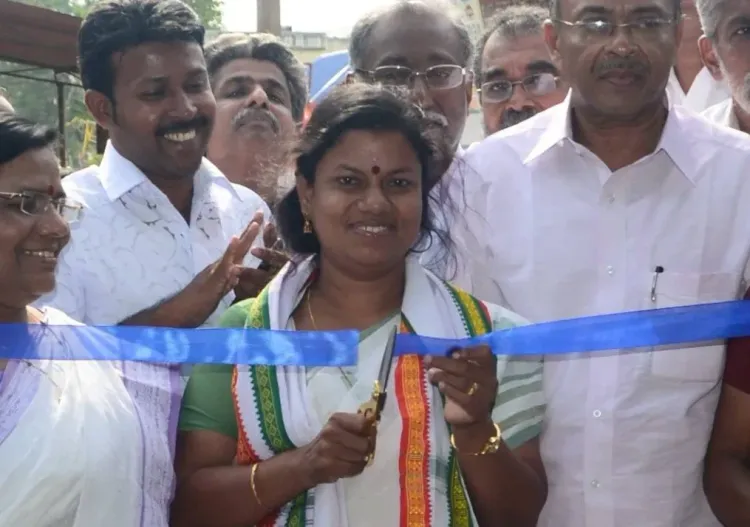
'The Constitution treats everyone as equal. The President of the country herself is a woman. One can follow one’s religious beliefs, but the Constitution must also be respected,' Bindu Krishnan said. While acknowledging the right to freedom of expression, she made clear that the cleric’s views were 'not something that should be emulated.'
What Kanthapuram Said
Kanthapuram A.P. Aboobacker Musliyar, regarded as one of the most senior and influential religious authorities of the Sunni Muslim community in India, reiterated at the conference that women must live within the confines of their homes. He claimed that their entry into the public sphere would lead to 'great destruction' and argued that restricting women from public life was, in fact, an expression of respect for them.
He also invoked the purdah system, asserting that women appearing in public would lead to undesirable consequences and that this position reflects the teachings of the Quran. He defended his authority to make such pronouncements, stating that he and his associates had studied religion thoroughly and that guiding the Muslim community on matters of religious practice was their 'obligatory responsibility.'
The Circular That Triggered the Row
The controversy did not emerge in isolation. A circular issued earlier by the Kanthapuram faction of Samastha had already drawn sharp criticism — it instructed that women should not appear on public roads or at public venues alongside unrelated men. The backlash intensified after girls and women participated in Prophet’s Day celebration rallies, directly challenging the directive. The Kochi conference remarks were widely seen as a doubling-down on that position.
Broader Implications for Kerala
The episode has reignited debate in Kerala’s political and social spheres over where religious authority ends and constitutional guarantees of equality and individual liberty begin. Notably, this is not the first time that statements from conservative religious factions in the state have drawn a government response — but a sitting Cabinet minister directly invoking the Constitution and the office of the President in rebuke marks a pointed escalation in tone.
The issue is expected to generate further political and civil society debate as opposition voices and women’s groups weigh in on the constitutional dimensions of the controversy.
Point of View
Grounding a religious dispute in constitutional symbolism. What is underreported is that the Samastha circular preceded these remarks and had already tested the state’s tolerance — the Kochi speech was not a spontaneous opinion but a reiteration under fire. Kerala’s political class has historically been cautious about direct confrontation with influential clerics; a Cabinet minister breaking that pattern, on record, signals that the political calculus around religious conservatism and women’s rights may be shifting. The harder question — whether the government will act beyond rhetoric — remains unanswered.
NationPress
15 Oct 2026
Frequently Asked Questions
What did Kerala Minister Bindu Krishnan say about Kanthapuram's remarks?
Minister Bindu Krishnan criticised the Grand Mufti’s remarks, saying that while everyone has the right to freedom of expression, his views on women are not something that should be emulated. She invoked the Constitution, noting it treats everyone as equal, and pointed out that the President of India is herself a woman.
What did Grand Mufti Kanthapuram A.P. Aboobacker Musliyar say about women?
At the Hubbur Rasool conference of the Kerala Muslim Jamaath in Kochi, Kanthapuram argued that women should live within the confines of their homes and claimed their entry into the public sphere would lead to 'great destruction.' He also defended the purdah system as a Quranic prescription.
What is the Samastha circular that triggered this controversy?
The Kanthapuram faction of Samastha issued a circular instructing that women should not appear on public roads or at public venues alongside unrelated men. It drew widespread criticism, particularly after girls and women took part in Prophet’s Day celebration rallies in defiance of the directive.
Who is Kanthapuram A.P. Aboobacker Musliyar?
Kanthapuram A.P. Aboobacker Musliyar, also known as Grand Mufti of India Sheikh Abubakr Ahmad, is considered one of the most senior and influential religious authorities of the Sunni Muslim community in India. He leads a significant faction within the Samastha Kerala Jamiyyathul Ulama.
Why does this controversy matter for Kerala?
The row has reignited debate over the balance between religious freedom and constitutional guarantees of equality and individual liberty in Kerala. It is notable for drawing a direct, on-record response from a sitting Cabinet minister invoking the Constitution — a relatively rare escalation in tone in the state’s usually cautious approach to religious authority.