Kerala BJP chief Rajeev Chandrashekhar accuses IUML of pushing Sharia via back door
Synopsis
Kerala BJP chief Rajeev Chandrashekhar has accused the IUML of trying to smuggle an 'Islamic Sharia law kind of a system' into Kerala through the back door, days after Grand Mufti Sheikh Abubakr Ahmad's remarks comparing women to gold necklaces that must be kept locked away ignited a firestorm. The controversy puts the Congress-IUML alliance under direct pressure on women's rights.
Key Takeaways
Kerala BJP President Rajeev Chandrashekhar accused the IUML of attempting to introduce a 'Sharia law kind of a system' in Kerala on 2 September .
The attack follows controversial remarks by Kerala Grand Mufti Sheikh Abubakr Ahmad urging women to stay away from public life.
The Grand Mufti used an analogy comparing women to gold necklaces kept in protective packaging, which critics called deeply objectifying.
Chandrashekhar challenged Rahul Gandhi to explain why he endorses the IUML as a 'secular party' while it champions such positions.
The IUML is a key coalition partner of the Congress in Kerala's opposition front, and the BJP has framed the row as a test of that alliance's values.
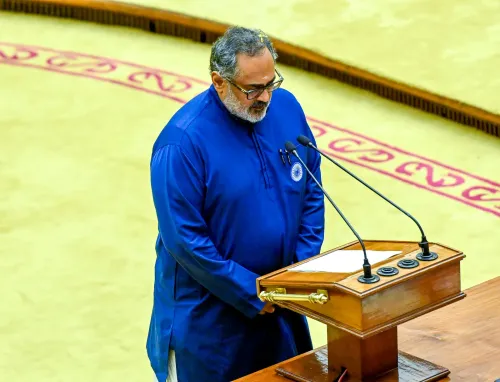
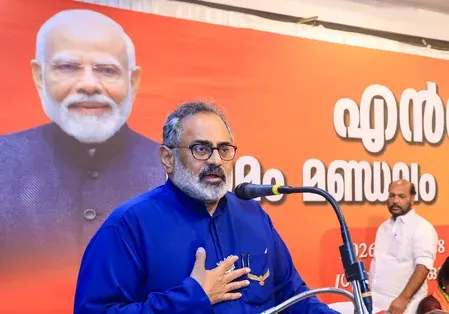
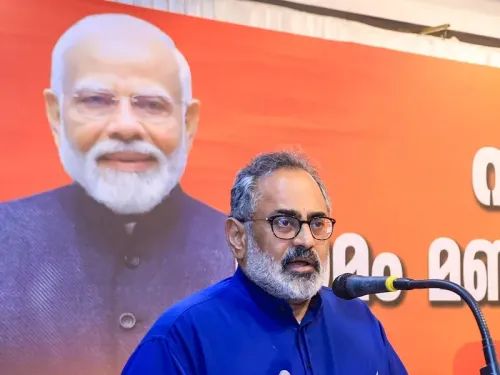
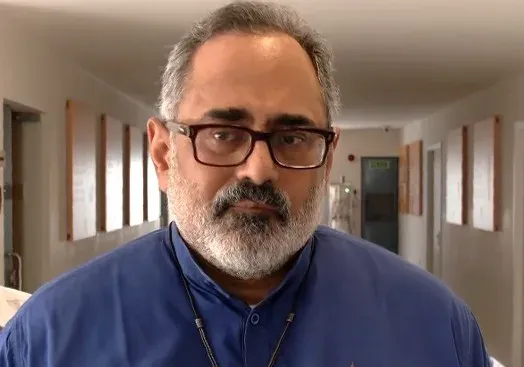
Kerala Bharatiya Janata Party (BJP) President Rajeev Chandrashekhar on Wednesday, 2 September launched a sharp attack on the Indian Union Muslim League (IUML), accusing it of attempting to introduce what he called an 'Islamic Sharia law kind of a system' through the back door — a move he warned could 'take women and girls back to the stone ages.' The remarks come days after Kerala Grand Mufti Sheikh Abubakr Ahmad's controversial comments urging women to stay away from public life triggered a statewide debate.
What Chandrashekhar Said
Addressing reporters in Thiruvananthapuram, the Kerala BJP chief said: 'I am appealing to every Indian across the country to observe what is happening in Kerala under this Congress-Muslim League government. It is extremely disturbing. The Indian Union Muslim League is today transgressing every constitutional propriety and boundary and is trying to smuggle in, through the back door, a foreign ideology and Islamic Sharia law kind of a system that could take our women and girls back to the stone ages. That is not acceptable.'
Chandrashekhar also turned his fire on Leader of Opposition in the Lok Sabha Rahul Gandhi, questioning the Congress leader's stance. 'Their (IUML) Minister keeps saying Religion is our priority. If that is what the Indian Union Muslim League is, how come Rahul Gandhi talks about patriarchy and gives a certificate to the Indian Union Muslim League as a secular party?' he said.
The Grand Mufti Controversy
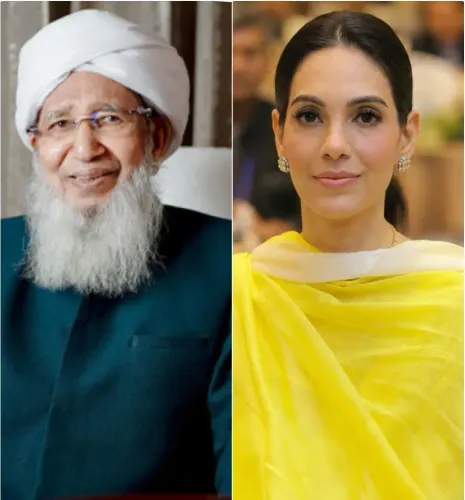
The BJP's broadside is directly linked to remarks made by Kerala Grand Mufti Sheikh Abubakr Ahmad, which sparked widespread condemnation. The Grand Mufti had argued that women should remain at home and stay away from public life — a position that drew criticism across political lines.
In a subsequent clarification, the Grand Mufti maintained that his intention was not to demean women but to advocate for their protection and respect. However, an analogy he deployed during his original speech became the focal point of the controversy. He compared women to a gold necklace kept securely inside a cupboard and protective packaging, contrasting this with a stone-grinding machine left by the roadside. He argued that leaving a gold necklace on the road would allow passers-by to touch it, affecting its beauty and value.
Using this analogy, he suggested that bringing women into public life could result in 'great destruction,' and described the purdah system as a safeguard against such consequences. Critics argued the comparison was deeply objectifying regardless of the stated intent.
Political Implications for the Kerala Alliance
The IUML is a key coalition partner of the Indian National Congress (INC) in Kerala's opposition alliance. Chandrashekhar alleged that the Congress government is 'under the thumb' of the Muslim League and 'surviving because of the latter' — a charge that frames the controversy as a test of the Congress's stated commitment to gender equality and constitutional values.
This is not the first time the IUML's positions have drawn scrutiny from rival parties. The BJP has consistently sought to highlight what it describes as ideological contradictions within the Congress-IUML alliance, particularly on questions of women's rights and religious conservatism.
What Happens Next
With the controversy gaining national traction, pressure is mounting on the Congress leadership to formally respond to the Grand Mufti's remarks and clarify its position on the IUML's ideological stance. Political observers in Kerala expect the debate to intensify ahead of upcoming local body elections, with the BJP likely to keep the issue in focus as a wedge issue within the opposition alliance.
Point of View
By any reasonable reading, treat women as objects requiring containment. The Grand Mufti's clarification did not retract the analogy — it doubled down on the logic. The harder question is for the Congress, which has built its national brand around gender justice while remaining silent on a coalition partner whose religious leadership has publicly argued against women's presence in public life. Chandrashekhar's challenge to Rahul Gandhi is less a BJP talking point and more an accountability question that the Congress cannot indefinitely deflect.
NationPress
2 Sept 2026
Frequently Asked Questions
What did Kerala BJP chief Rajeev Chandrashekhar accuse the IUML of?
Chandrashekhar accused the Indian Union Muslim League of attempting to introduce an 'Islamic Sharia law kind of a system' into Kerala through the back door, warning it could set back women's rights. He made these remarks on 2 September in Thiruvananthapuram, linking them to the Grand Mufti's controversial comments on women.
What did Kerala Grand Mufti Sheikh Abubakr Ahmad say about women?
The Grand Mufti argued that women should remain at home and stay away from public life, using an analogy comparing women to a gold necklace that must be kept locked away to preserve its value. He later clarified that his intention was to advocate for women's protection, not to demean them, but the analogy itself remained the centre of controversy.
Why did Chandrashekhar target Rahul Gandhi in his remarks?
Chandrashekhar questioned how Rahul Gandhi could describe the IUML as a 'secular party' while the League's minister publicly states 'Religion is our priority' and its associated religious leadership makes regressive remarks about women. He framed this as a contradiction in the Congress's stated commitment to fighting patriarchy.
What is the IUML's relationship with the Congress in Kerala?
The Indian Union Muslim League is a key coalition partner of the Indian National Congress in Kerala's opposition alliance. The BJP has used this partnership to argue that the Congress is ideologically compromised and effectively operates under the IUML's influence in the state.
What is likely to happen next in this controversy?
Political pressure is mounting on the Congress leadership to formally respond to the Grand Mufti's remarks and clarify its position on the IUML's stance. With local body elections on the horizon in Kerala, the BJP is expected to continue amplifying the issue as a test of the Congress-IUML alliance's commitment to gender equality.