Maggie Gyllenhaal: Cinema is 'fundamentally, unavoidably political'
Synopsis
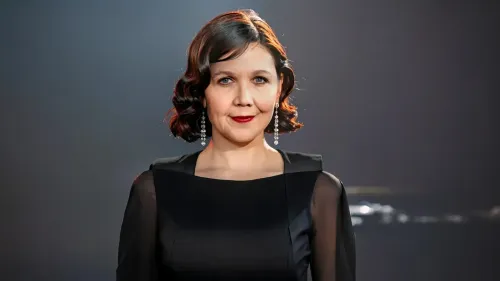
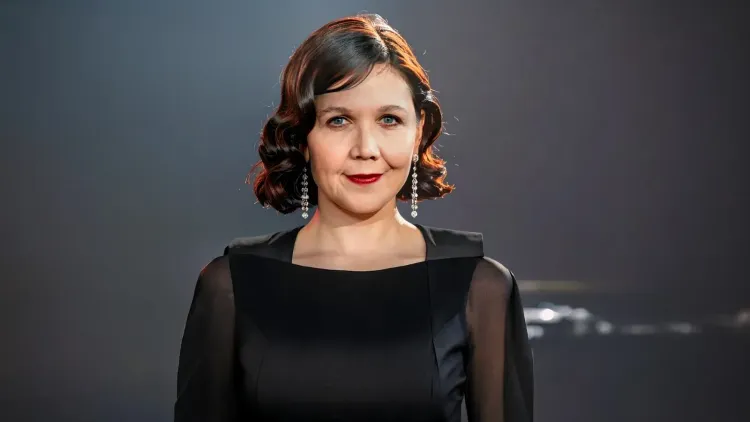
Maggie Gyllenhaal didn’t just take the Venice jury president’s chair — she used the opening press conference to make two blunt arguments: that cinema is inescapably political, and that the near-total absence of women in this year’s Golden Lion lineup reflects a systemic financing problem, not a talent one.
Key Takeaways
Maggie Gyllenhaal declared cinema “fundamentally, unavoidably political” at the Venice Film Festival press conference on Wednesday .
She argued film’s core value lies in building empathy — even for ‘the most corrupt, most perverse people.’ Only one film in the Golden Lion competition — ‘Woman Unknown’ by May El-Toukhysolely — was solely directed by a woman.
Gyllenhaal attributed the gender gap to systemic financing barriers and questioned who defines ‘high art.’ Her remarks set a pointed tone for representation debates at one of cinema’s most prestigious festivals.
Hollywood actress and director Maggie Gyllenhaal, serving as jury president of the Venice Film Festival, declared on Wednesday that cinema is “fundamentally, unavoidably political” — a statement that landed against the backdrop of ongoing conflicts in Gaza, Ukraine, and West Asia, and deepening unrest in the United States.
Cinema as a Vehicle for Empathy
At the festival’s press conference, Gyllenhaal was asked directly whether cinema should be political given the current global crisis. Her response was unequivocal. “OK. May as well get into it,” she began, before arguing that the medium’s political character is inescapable.
“Look, we could say, how are we possibly here talking about movies right now when the world is in a state of emergency? To me, the answer has something to do with empathy. I think that film allows an opening into an opportunity to find empathy inside of ourselves,” she said.
She extended the argument to morally difficult subject matter: “I think we can challenge ourselves to hear stories about the most corrupt, most perverse people because it opens up the opportunity to find empathy for those people. I am here open. I am here curious.”
The Gender Gap in Venice’s Competition Lineup
Gyllenhaal was also pressed on the near-absence of female directors in this year’s main competition. Only one film in contention for the Golden Lion — the drama ‘Woman Unknown’ by Danish-Egyptian director May El-Toukhysolely — was solely directed by a woman.
Her initial response was pointed sarcasm: “I guess it’s finally become clear that men make better movies than women do.” She then pivoted to a direct structural critique.
“I will answer you seriously. There’s a systemic problem. It’s harder for women to get films financed. Could it be possible that women, having had a different experience of being alive in the world, want to make movies about — are not always deemed high art? Who decides what’s good? Who decides what is valuable?” she added.
What Her Remarks Signal for the Festival
Gyllenhaal’s dual role — as a working filmmaker and as the festival’s top juror — gives her remarks unusual weight. Her willingness to name systemic financing barriers and question the gatekeeping of ‘high art’ sets a tone for how this edition of Venice may approach questions of representation and relevance. This comes amid a broader industry reckoning over gender parity in awards circuits globally.
Point of View
She surfaces a contradiction Venice has not resolved. The ‘who decides what is valuable’ question is the sharpest one: awards circuits have historically shaped what gets financed next, meaning curation bias compounds over time. One woman-directed film in a major Golden Lion competition in 2024 is not an anomaly — it is a data point in a pattern that Gyllenhaal, to her credit, refused to soften.
NationPress
2 Sept 2026
Frequently Asked Questions
What did Maggie Gyllenhaal say about cinema and politics at Venice?
Gyllenhaal said cinema is ‘fundamentally, unavoidably political,’ arguing that film’s power lies in its ability to generate empathy even amid global crises. She made the remarks at the Venice Film Festival press conference on Wednesday.
Why is Maggie Gyllenhaal at the Venice Film Festival?
Gyllenhaal is serving as jury president for this edition of the Venice Film Festival, making her the head of the panel that will award the Golden Lion and other top prizes.
How many women directors are in the Venice Golden Lion competition this year?
Only one film in the Golden Lion competition — ‘Woman Unknown’ by Danish-Egyptian director May El-Toukhysolely — was solely directed by a woman, a figure Gyllenhaal described as reflecting a systemic problem.
What did Gyllenhaal say about the lack of women directors at Venice?
After an initial sarcastic remark, she offered a direct critique: ‘There’s a systemic problem. It’s harder for women to get films financed.’ She also questioned who determines what qualifies as ‘high art’ in festival selection.
What is ‘Woman Unknown’ at the Venice Film Festival?
‘Woman Unknown’ is a drama directed by Danish-Egyptian filmmaker May El-Toukhysolely and is the sole film in this year’s Venice Golden Lion competition to be directed exclusively by a woman.