Jensen Huang: Every country must build its own AI capacity

Synopsis
Nvidia's Jensen Huang didn't just make a business pitch in Chapel Hill — he issued a geopolitical warning. His message: every country that outsources its AI intelligence risks surrendering economic and strategic sovereignty. With India's ₹10,000 crore IndiaAI Mission already underway, Huang's five-layer framework offers a precise blueprint for where New Delhi should double down next.
Key Takeaways
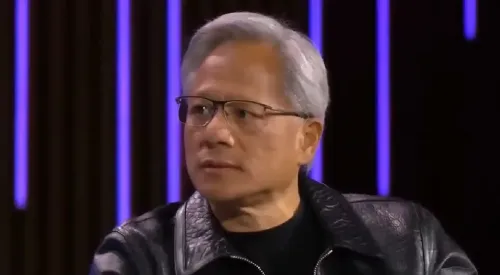
Nvidia CEO Jensen Huang spoke at a fireside chat with US Commerce Secretary Howard Lutnick in Chapel Hill, North Carolina on 2 September .
Huang described AI as a 'five-layer cake' — energy, chips, infrastructure, models, and data/applications — urging each country to choose which layers to invest in.
He warned that nations must not outsource all their intelligence, calling domestic AI capacity as essential as water, roads, and electricity .
Huang said the United States would lead AI development across all five layers but expressed willingness to partner globally.
India's IndiaAI Mission , launched in 2024 with an outlay of more than ₹10,000 crore , directly reflects the sovereign AI strategy Huang advocated.
Nvidia chief executive Jensen Huang on 2 September called on every nation to develop domestic artificial intelligence capacity and determine which parts of the rapidly expanding technology chain it wants to own — warning governments that outsourcing all their intelligence to others carries serious strategic risk. Huang made the remarks during a fireside chat with US Commerce Secretary Howard Lutnick in Chapel Hill, North Carolina.
AI as Essential National Infrastructure
Huang drew a direct parallel between AI infrastructure and foundational utilities, describing it as being as critical to modern economies as water, roads, electricity, and the internet. 'Every single country needs to build infrastructure so that you could support your own local economy,' he said. He added that such infrastructure becomes the 'digital intellectual capacity' to support researchers, students, industries, and startups.
This framing positions AI not merely as a commercial technology but as a sovereign resource — one that nations neglect at their economic and strategic peril. Notably, Huang's remarks come at a moment when governments worldwide are racing to define their AI policies amid intensifying US-China competition over chips and compute.
The Five-Layer AI Stack
Huang described AI as a 'five-layer cake', with each layer representing a distinct investment opportunity for nations. Energy forms the foundation. Chips constitute the second layer. The third is infrastructure — encompassing data centres, land, and power. AI models occupy the fourth layer. The fifth and most consequential layer, Huang argued, is data and applications.
'Every single region, every single country should decide which one of the layers they want to invest in,' he said. 'You don't have to win in every single one of them. You don't have to develop all of them.' This layered framing offers smaller economies a practical entry point — concentrating investment where they already hold comparative advantages rather than attempting to compete across the entire stack.
Build Your Own Intelligence — Don't Outsource It
Huang urged countries and companies to blend off-the-shelf commercial AI systems with technology tailored to their specific needs. 'You should use AI off-the-shelf wherever you can, but don't forget, you have to invest in building your own intelligence, every country, every company,' he said. 'You can't outsource all of your intelligence to somebody else.'
He also noted that AI's scope extends well beyond language. The technology, he said, can learn, understand, and predict across any field with identifiable structure — including biology, chemistry, and physics. That breadth means countries with existing sectoral strengths in, say, pharmaceuticals or materials science could leverage AI to deepen those advantages rather than starting from scratch.
US Leadership and Global Partnerships
While asserting that the United States would lead AI development across all five layers of the stack, Huang struck a collaborative note. 'We'd love to partner with everybody so that everybody could take advantage of this,' he said. Commerce Secretary Lutnick echoed the call for infrastructure investment, stating that governments must build data centres and 'harness the AI for themselves' to deliver benefits to their citizens.
Both Huang and Lutnick highlighted AI's democratising effect on education, arguing that people who previously lacked access to top-tier learning could now benefit from digitally produced intelligence at scale.
India's AI Push in Context
India launched the IndiaAI Mission in 2024 to expand computing access, cultivate domestic AI capabilities, and support startups, datasets, and skills development. The government approved an outlay of more than ₹10,000 crore for the programme, which includes plans to provide shared computing infrastructure to researchers and developers. Huang's remarks align closely with the strategic logic underpinning that initiative — and may add fresh momentum to calls for India to deepen its investment in the chips and data layers of the AI stack.
As governments from New Delhi to Riyadh to Brussels race to define their AI sovereignty strategies, the central question Huang posed — which layers of the stack do you own? — looks set to shape national technology policy for years to come.
Point of View
And India should hear it clearly: owning shared compute infrastructure, as the IndiaAI Mission attempts, is necessary but not sufficient if the model and data layers remain dominated by a handful of American and Chinese firms. The deeper question Huang left unanswered is whether US export controls on advanced chips — Nvidia's own products among them — are compatible with his call for every country to build sovereign AI capacity. That contradiction will define the next chapter of global AI diplomacy.
NationPress
2 Sept 2026
Frequently Asked Questions
What did Nvidia CEO Jensen Huang say about AI and national sovereignty?
Jensen Huang said every country must develop its own domestic AI capacity and decide which parts of the AI technology chain it wants to build, warning that nations cannot afford to outsource all their intelligence to others. He described AI infrastructure as essential to national economies, comparable to water, roads, and electricity.
What is Jensen Huang's five-layer AI stack?
Huang described AI as a 'five-layer cake': energy at the base, followed by chips, infrastructure (data centres, land, power), AI models, and finally data and applications at the top. He said countries should identify which layers align with their existing strengths and concentrate investment there, rather than trying to compete across all five.
How does India's IndiaAI Mission relate to Huang's remarks?
India launched the IndiaAI Mission in 2024 with a government-approved outlay of more than ₹10,000 crore to expand computing access, develop domestic AI capabilities, and support startups and researchers. The mission's focus on shared computing infrastructure closely mirrors the sovereign AI strategy Huang advocated in Chapel Hill.
What role did US Commerce Secretary Howard Lutnick play in the discussion?
Commerce Secretary Howard Lutnick joined Huang for the fireside chat and reinforced the call for government infrastructure investment, stating that nations must build data centres and 'harness the AI for themselves' to deliver economic benefits to their citizens. He also highlighted AI's role in democratising access to education.
Can countries use off-the-shelf AI instead of building their own?
Huang said countries and companies should use commercially available AI systems wherever possible, but stressed that this cannot replace investment in building tailored, domestic AI capabilities. 'You can't outsource all of your intelligence to somebody else,' he said, urging a hybrid approach that combines global tools with locally developed intelligence.