Nvidia CEO Jensen Huang on Building Through Uncertainty

Synopsis
Chip giant Nvidia on 23 May 2026 shared remarks by CEO Jensen Huang on the 'How I Built This' podcast, where he urged founders to anchor decision-making in first principles and persistence when uncertainty is pervasive — a philosophy he has practised since co-founding Nvidia in 1993.
Key Takeaways
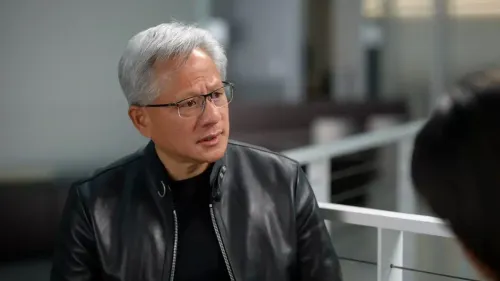
Nvidia posted a clip on 23 May 2026 of CEO Jensen Huang appearing on the How I Built This podcast hosted by Guy Raz .
Huang's quoted advice: 'When the unknowns are everywhere, start with first principles, reason through what you believe and keep showing up.' Huang has co-led Nvidia since its founding in 1993 , guiding it from a gaming-GPU maker to the dominant AI-infrastructure chip supplier.
Nvidia's 2006 launch of the CUDA platform is a concrete example of first-principles thinking that predated and enabled the AI computing boom.
The appearance extends Nvidia's long-running communications strategy of framing its growth as conviction-driven rather than trend-driven, reaching entrepreneurial audiences beyond financial markets.
Chip giant Nvidia shared a clip on Saturday, 23 May 2026 featuring its co-founder and chief executive Jensen Huang on the entrepreneurship podcast How I Built This, underscoring the first-principles mindset that has guided the company from a gaming-graphics startup to the world's leading AI-infrastructure firm.
Context
In the post, Nvidia quoted Huang as saying: 'When the unknowns are everywhere, start with first principles, reason through what you believe and keep showing up.' The remark was made during an appearance on How I Built This, the widely followed podcast hosted by Guy Raz that interviews founders about the arc of building companies from scratch.
Huang co-founded Nvidia Corporation in 1993 and has led it continuously since, steering its evolution from graphics processing units for gaming into the dominant supplier of accelerated computing hardware powering modern artificial intelligence workloads.
Policy Backdrop
The first-principles framing Huang invokes has a concrete corporate lineage. In 2006, Nvidia launched CUDA, a parallel computing platform that extended GPU programming far beyond graphics — a decision rooted in reasoning from hardware fundamentals rather than prevailing market consensus at the time.
That bet is now widely credited as foundational to the AI computing boom. Nvidia's messaging around iterative, principle-driven reasoning has remained consistent across earnings calls and long-form profiles over more than a decade, and podcast appearances extend that narrative to broader, non-specialist audiences.
The outreach also coincides with a period of intense focus on semiconductor self-sufficiency, with United States policy frameworks emphasising domestic chip innovation and supply-chain resilience — a context in which Nvidia's leadership voice carries particular weight.
Stakeholders and Impact
The audience for Huang's remarks spans tech entrepreneurs, AI developers, and the wider startup ecosystem that looks to Nvidia's trajectory as a template for long-cycle, conviction-driven company-building. For Indian technologists and founders, who constitute one of the largest communities of AI practitioners globally, the message carries practical resonance at a time when uncertainty around AI regulation, compute access, and market timing is acute.
Nvidia's data-centre chips — particularly the H100 and successor Blackwell series — underpin AI infrastructure for enterprises and cloud providers worldwide, making Huang one of the most closely watched technology executives by investors, policymakers, and developers alike.
What's Next
The full episode of How I Built This featuring Huang is expected to offer a more detailed account of Nvidia's founding decisions and the reasoning behind its pivotal platform bets. Analysts and the developer community will watch for any subsequent Nvidia commentary linking Huang's philosophical remarks to specific product roadmaps or partnership announcements. For now, the post reinforces a deliberate communications strategy: positioning Nvidia's rise not as a market accident but as the outcome of disciplined, first-principles thinking sustained over decades.
Point of View
Targeting the global founder and developer community at a moment when AI investment sentiment is volatile. The first-principles framing is not incidental — it mirrors the justification Nvidia has used internally and publicly for its most consequential bets, from CUDA in 2006 to its data-centre pivot in the 2010s. For Indian policymakers and startup ecosystem actors navigating compute access and AI policy, the message from the world's most valuable semiconductor company carries implicit weight: patient, principle-grounded conviction is the differentiator. The podcast format democratises that message, reaching audiences well outside Wall Street or Silicon Valley.
NationPress
7 Oct 2026
Frequently Asked Questions
What did Nvidia CEO Jensen Huang say on How I Built This?
Jensen Huang advised that when uncertainty is pervasive, founders should reason from first principles, trust their convictions, and keep showing up — a philosophy he has applied throughout Nvidia's history.
What is the 'How I Built This' podcast?
'How I Built This' is a widely followed podcast hosted by Guy Raz that features in-depth interviews with company founders about the challenges and decisions behind building their organisations.
Why is Jensen Huang considered a first-principles thinker?
Huang's decision to launch the CUDA parallel computing platform in 2006 — extending GPU use far beyond gaming when that market did not yet exist — is cited as a textbook example of reasoning from technical fundamentals rather than following market trends.
What is Nvidia's role in AI infrastructure?
Nvidia, headquartered in Santa Clara, California, is the dominant supplier of GPUs and accelerated computing hardware used to train and run large AI models, with its data-centre chip revenue surging sharply since the generative AI boom began.
Why does Jensen Huang's advice matter for Indian entrepreneurs?
India has one of the world's largest communities of AI developers and startup founders, many of whom face uncertainty around compute access, regulation, and market timing — making Huang's first-principles framework directly relevant to their decision-making context.