Sam Altman: Rejecting AI is like rejecting electricity, G20 told
Synopsis
OpenAI CEO Sam Altman told G20 representatives that banning AI is as self-defeating as banning electricity was a century ago — and that adoption is simply 'not negotiable.' With warnings on cybersecurity, power concentration, and biosecurity sitting alongside bold predictions of an unprecedented small-business boom, Altman's Chapel Hill address is the clearest statement yet of how the world's most influential AI executive wants governments to frame the technology: not as a risk to manage, but as infrastructure to build.
Key Takeaways
Sam Altman warned G20 representatives in Chapel Hill, North Carolina on 2 September that excluding AI from a country's economy is comparable to rejecting electricity over a century ago.
Altman called AI adoption 'not negotiable,' arguing the economic and social value is 'too high to ignore.' He predicted AI will spark the greatest boom in entrepreneurship and small-business creation the world has seen, citing ChatGPT and Codex as tools already compressing months of startup work into minutes.
Altman flagged cybersecurity , biosecurity , and the concentration of AI power among a small group as the most urgent risks requiring government action.
He cautioned that without major investment in computing infrastructure, AI could remain accessible mainly to wealthy users despite improving chip efficiency.
OpenAI launched ChatGPT publicly in November 2022 , accelerating global debate on AI governance.
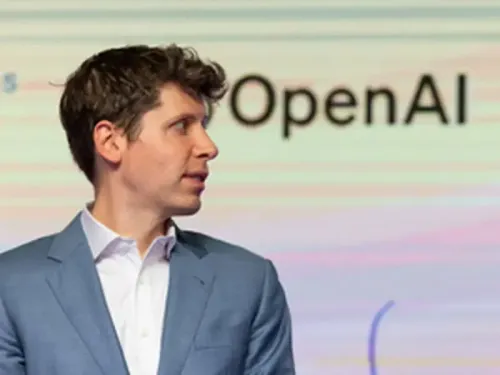
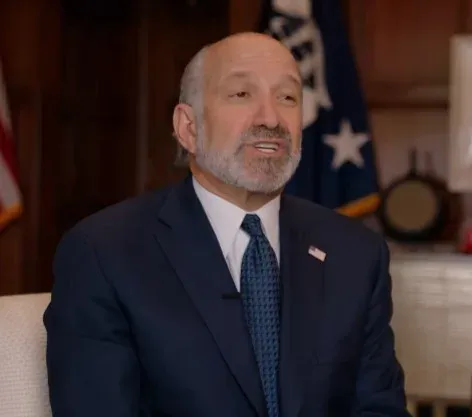
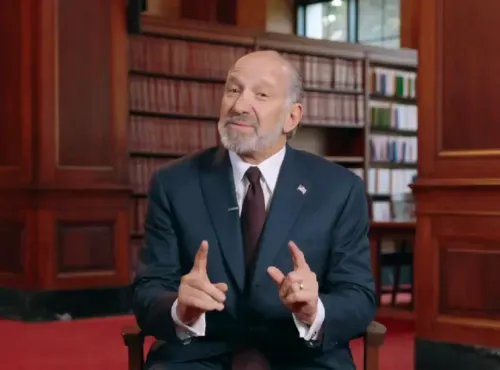
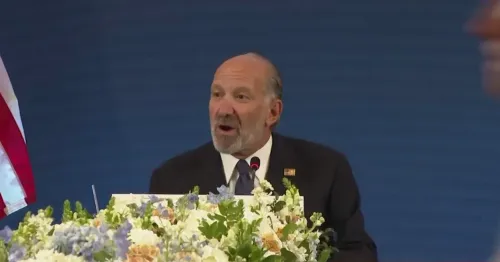
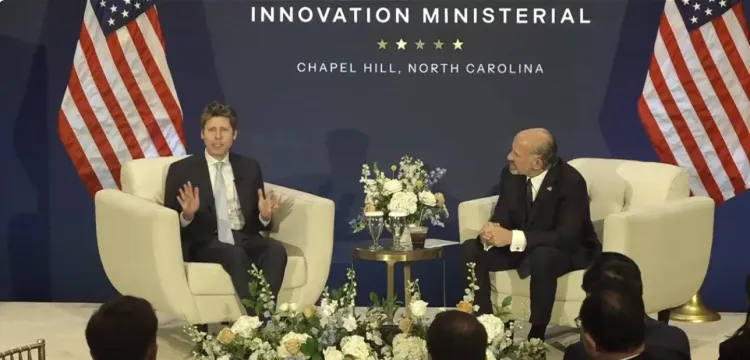
OpenAI Chief Executive Sam Altman on 2 September warned governments against excluding artificial intelligence from their economies, comparing such a move to rejecting electricity more than a century ago and arguing that AI adoption is now indispensable for economic growth and improved public services. Altman made the remarks during a fireside chat with US Commerce Secretary Howard Lutnick at an event in Chapel Hill, North Carolina, attended by representatives of G20 economies.
The Electricity Analogy
'I think it would be approximately as bad of an idea to say we're not gonna have AI in our country as it was to say we're not gonna have electricity in our country, you know, back 100 plus years ago,' Altman said. He acknowledged that governments retain the right to craft different regulatory frameworks and choose whether to build or lease data centre infrastructure. However, he was unequivocal that using the technology itself was no longer a matter of choice.
'For sure, I think it is not negotiable. You have to use it,' he stated. 'The economic growth and benefit to people that can come from this, the value to a country is too high to ignore.'
AI as an Engine for Small Business and Entrepreneurship
Altman predicted that artificial intelligence would trigger the largest boom in entrepreneurship and small-business creation the world has ever seen, by placing expertise, software, and other previously costly resources within reach of ordinary people. He cited a meeting with a laundromat operator who had begun using ChatGPT for marketing, legal contract advice, and vendor management — describing him as among the earliest examples he had encountered of someone deploying AI effectively to run a business.
The pace of idea development, he noted, has since accelerated dramatically. 'The work that we expected a startup to accomplish in three months is now probably doable in, like, 17 minutes with Codex,' Altman said. 'The world is not caught up with what this is going to mean.'
AI as a Democratising Force
Looking further ahead, Altman envisioned AI systems evolving into persistent virtual collaborators capable of working continuously alongside people. He argued the technology could widen access to medical care, education, and services that have historically been available primarily to wealthier individuals. His longer-term prediction: AI will become so deeply embedded in everyday products that it ceases to be discussed as a distinct technology. 'My prediction is we won't be talking about AI as much as we do in a decade from now, because we'll just expect it everywhere,' he said.
Risks: Cybersecurity, Power Concentration, and Biosecurity
Altman was candid about the dangers that rapid adoption could bring. He flagged cybersecurity as requiring urgent attention, warned of biosecurity threats, and raised the prospect of AI control becoming dangerously concentrated among a small group of actors. 'I think some things are gonna go very wrong with cybersecurity unless people act quite urgently,' he said. 'Another thing that could go wrong is too much concentration of power... In many ways, AI should be an equalising force in the world.'
He also cautioned that without sufficient investment in computing infrastructure, AI risked remaining an expensive commodity accessible mainly to wealthy users — even as chips and algorithms grow more efficient. This comes amid a global scramble among governments and corporations to secure GPU capacity and build sovereign AI capabilities.
Background: OpenAI and ChatGPT
OpenAI was founded in late 2015 and began operations in January 2016. Its ChatGPT service, released publicly in November 2022, accelerated the mainstreaming of generative AI by enabling users to produce text, analyse information, and write computer code through conversational prompts. The platform's rapid uptake reshaped public and policy debate around AI globally, setting the stage for the kind of G20-level conversations Altman is now a central figure in.
Point of View
Sidestepping the fact that electricity did not hallucinate, concentrate geopolitical leverage, or pose biosecurity risks. For G20 governments, including India, the real question is not whether to adopt AI but on whose infrastructure and under whose terms. Altman's own warnings about power concentration sit in tension with OpenAI's dominant market position. The laundromat anecdote humanises the pitch, yet the same session acknowledged that without massive compute investment, AI's benefits flow disproportionately to those who can afford access — precisely the inequality dynamic that 'equalising force' rhetoric obscures.
NationPress
18 Oct 2026
Frequently Asked Questions
What did Sam Altman say about governments rejecting AI?
Altman said rejecting AI would be as damaging as rejecting electricity was more than a century ago, calling adoption 'not negotiable' for any country seeking economic growth. He made the remarks at a G20 event in Chapel Hill, North Carolina on 2 September.
Why does Sam Altman believe AI is non-negotiable for governments?
Altman argued that the economic growth and public-service benefits AI can deliver are too significant for any country to forgo. He said AI could expand access to healthcare, education, and expertise that was previously available only to the wealthy.
What risks did Sam Altman acknowledge about rapid AI adoption?
Altman flagged cybersecurity as requiring urgent action, warned of potential biosecurity threats, and raised concerns about AI control becoming concentrated among a small group of actors. He also cautioned that insufficient computing infrastructure could keep AI accessible mainly to wealthy users.
How does Altman see AI changing small businesses and entrepreneurship?
Altman predicted AI will trigger the greatest boom in small-business creation the world has ever seen by giving entrepreneurs affordable access to expertise, software, and resources. He cited OpenAI's Codex as already compressing three months of startup work into roughly 17 minutes.
What is OpenAI and when was ChatGPT launched?
OpenAI is an AI research company founded in late 2015, with operations beginning in January 2016. Its ChatGPT service was released publicly in November 2022 and helped bring generative AI into mainstream use worldwide.