US Commerce Secretary Lutnick urges G20 to deploy AI against trade barriers
Synopsis
At the G20 Innovation Ministerial in North Carolina, US Commerce Secretary Howard Lutnick made a pointed case: AI should be the instrument that dismantles disguised trade barriers and stress-tests global supply chains. His framing — that AI is really ‘education’, not intelligence — hints at how Washington intends to sell AI governance to developing-economy G20 members.
Key Takeaways
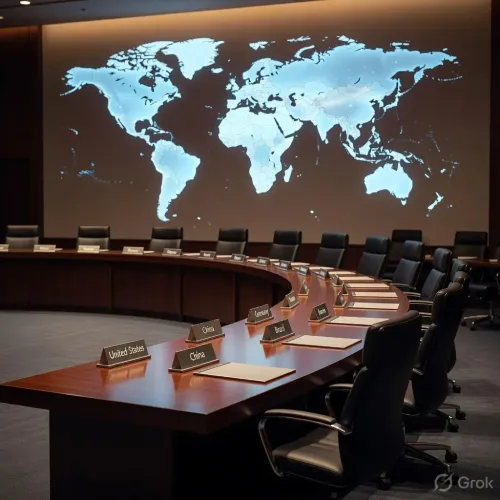
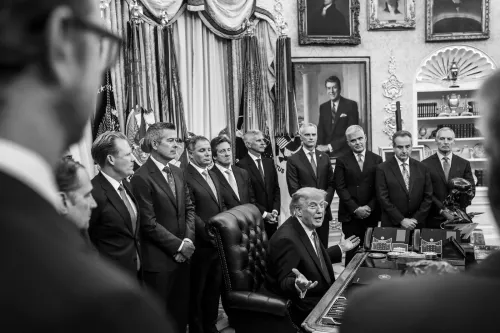
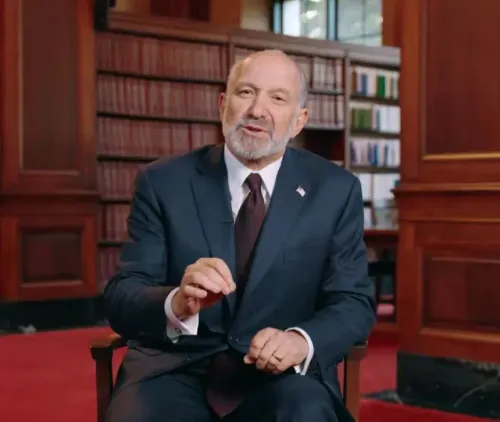
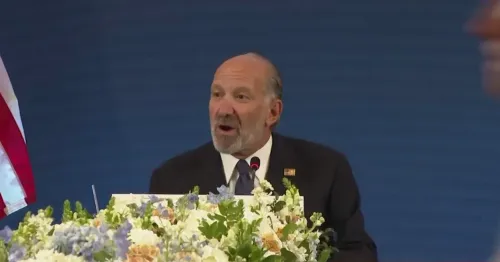
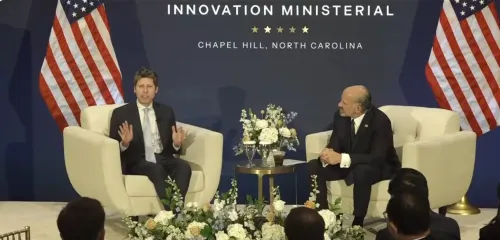
US Commerce Secretary Howard Lutnick addressed the G20 Innovation Ministerial in Chapel Hill, North Carolina on 3 September .
He urged G20 nations to deploy AI to identify and eliminate unnecessary trade barriers and stress-test supply chains.
Lutnick argued that technical standards ‘should not be disguised as barriers to trade’ and must promote interoperability.
He called for close private-sector involvement in setting international standards, building infrastructure, and diversifying supply chains.
Countries that restrict industry and AI risk slowing their economies, he warned, while those welcoming investment will advance.
Lutnick redefined AI as ‘education’, arguing it could democratise access to expertise across languages and geographies.
US Commerce Secretary Howard Lutnick on 3 September called on G20 nations to harness artificial intelligence to eliminate unnecessary trade barriers, fortify global supply chains, and create a more level playing field for businesses competing across borders. Speaking at the G20 Innovation Ministerial in Chapel Hill, North Carolina, Lutnick argued that the way technical standards are set could determine the fate of emerging technologies in international markets.
Standards at the Centre of the Debate
Lutnick placed technical standards at the heart of his argument, contending that they shape whether companies can bring new technologies to market and whether those technologies can function across national boundaries. “Standards determine whether companies can bring new technologies to market, whether those technologies can connect across borders and whether you can actually compete globally or not,” he said.
He was unambiguous that standards must not be weaponised as protectionist instruments. “Technical standards and regulations should not be disguised as barriers to trade,” Lutnick said. “They should increase interoperability and allow the best technologies access to compete.”
AI as a Tool for Standards Reform
Lutnick argued that AI could give governments and businesses sharper tools to measure, test, and benchmark standards across countries — reducing reliance on individual-government assessments of whether foreign products or technologies are safe. “We can study them, we can check them. We can know better by doing incredible comparisons,” he said.
Beyond compliance, he suggested AI could actively improve standards themselves — identifying weaknesses and making products and systems safer before problems emerge. “If we transform the way the standards and regulations on standards are set, we can undress unnecessary barriers to trade,” he said.
Industry Partnership and Supply Chain Resilience
Lutnick emphasised that private companies, as direct participants in developing and deploying new technologies, were best placed to help convert established practices into flexible, technically sound international standards. He called on G20 members to involve the private sector closely in building infrastructure, expanding manufacturing, and diversifying supply chains.
He also urged governments to use AI to stress-test supply chains and identify vulnerabilities before they become economic crises. “Let’s check our supply chains. Let’s check how we’re interoperable. Let’s worry about where our weaknesses are. Let’s test them. Let’s study them,” he said. Notably, this call comes amid ongoing global concerns about supply-chain fragility exposed during the COVID-19 pandemic and subsequent geopolitical disruptions.
Red Carpet vs Roadblocks
Lutnick cited foreign investment flows into the United States as proof that a welcoming regulatory climate pays dividends. He warned that countries placing excessive restrictions on industry and AI risked falling behind economically. “If you roll out the red carpet, you’ll succeed,” he said. “And if you put your hands up to stop them and stop industry, stop AI, you’re going to slow yourself down.”
He reserved particular concern for small and medium-sized businesses, arguing that greater interoperability and fewer unnecessary restrictions would disproportionately benefit smaller firms seeking access to overseas markets.
Reframing AI: Education, Not Just Intelligence
In a notable conceptual aside, Lutnick offered a broader definition of AI’s value. “I think intelligence is the wrong word. I think it’s education,” he said, suggesting AI could give people access to some of the world’s greatest minds in their own languages and help them adapt that knowledge to their specific circumstances. The remarks signal a rhetorical effort to reframe AI adoption as a democratising force rather than a purely technological one, with implications for how the US plans to pitch AI governance frameworks to developing-economy G20 members.
Point of View
To a degree, the EU. For India and other large emerging economies in the G20, the subtext matters: adopt open, interoperable standards (read: US-compatible) or risk being coded as a barrier-builder. Whether AI can genuinely neutralise protectionism or simply provide a new vocabulary for it remains the unanswered question.
NationPress
18 Oct 2026
Frequently Asked Questions
What did US Commerce Secretary Howard Lutnick say at the G20 Innovation Ministerial?
Lutnick called on G20 nations to use artificial intelligence to eliminate unnecessary trade barriers, strengthen global supply chains, and promote interoperability through better technical standards. He spoke at the G20 Innovation Ministerial in Chapel Hill, North Carolina, on 3 September.
How does Lutnick propose AI can reduce trade barriers?
He argued that AI can give governments and businesses tools to measure, test, and compare standards across countries, reducing reliance on individual-government safety assessments. AI could also identify weaknesses in standards themselves, making products safer and compliance more objective.
Why does Lutnick want the private sector involved in setting standards?
Lutnick said private companies are directly involved in developing and deploying new technologies and are therefore best placed to help convert established practices into flexible, technically sound international standards. He wants governments to act as active partners, not bystanders.
Who benefits most from Lutnick’s proposed reforms?
Lutnick specifically highlighted small and medium-sized businesses as the primary beneficiaries, arguing that greater interoperability and fewer unnecessary restrictions would make it far easier for smaller firms to access overseas markets.
What did Lutnick mean when he called AI ‘education’ rather than ‘intelligence’?
Lutnick said AI’s value goes beyond machine intelligence — it can give people access to some of the world’s greatest minds in their own languages and help them adapt that knowledge to their specific needs. The framing positions AI adoption as a democratising, inclusive force rather than a purely technological one.