US Commerce Secy Lutnick warns AI data centre blocks risk jobs, investment
Synopsis
US Commerce Secretary Howard Lutnick used the G20 Innovation Ministerial stage in Chapel Hill to issue a blunt warning: block AI data centres and watch the investment go elsewhere. With Orange County — the host county itself — under a data centre moratorium, the confrontation was as pointed as it gets. Lutnick's claim that adversaries are behind community resistance raises questions the administration has yet to substantiate.
Key Takeaways
US Commerce Secretary Howard Lutnick warned on 3 September that communities blocking AI data centres risk losing investment, jobs, and tax revenue.
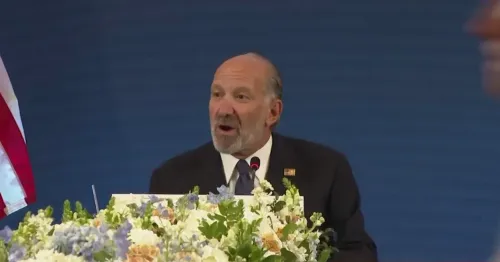
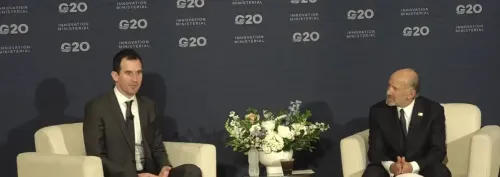
Lutnick made the remarks at the G20 Innovation Ministerial in Chapel Hill, North Carolina .
Orange County , the host county, had imposed a one-year moratorium on large-scale data centres — the direct trigger for his comments.
Lutnick claimed data centres would lower local electricity costs and strengthen local tax bases, rejecting concerns about grid burden.
He attributed community resistance to misinformation spread by unnamed foreign adversaries, without citing specific evidence.
US companies are committing hundreds of billions of dollars to AI infrastructure including semiconductors, supercomputers, and data centres.
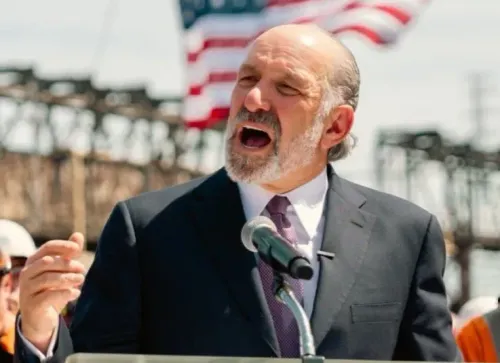
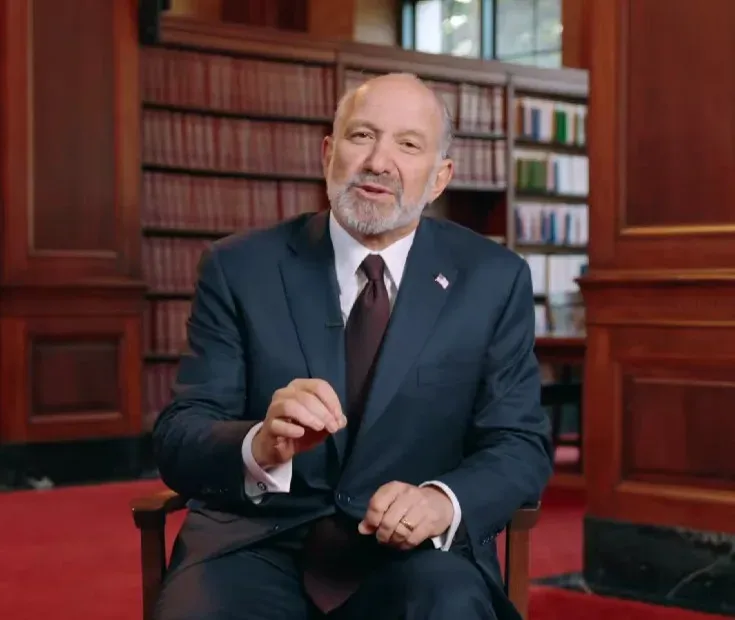
US Commerce Secretary Howard Lutnick on 3 September warned American communities that blocking the construction of artificial intelligence data centres would cost them investment, jobs, and tax revenue — dismissing opposition to such projects as misinformation driven by foreign adversaries. Lutnick made the remarks at a press conference following the G20 Innovation Ministerial in Chapel Hill, North Carolina.
What Triggered the Warning
The remarks followed a reporter's observation that Orange County — the very county hosting the G20 ministerial — had imposed a one-year moratorium on large-scale data centre construction. Lutnick responded directly, framing the decision as a self-inflicted economic setback.
'I think your point, you touched it, which is it's misinformation,' Lutnick said. 'And by setting a moratorium on data centres, that means the next set of opportunity just won't go to you.'
What Lutnick Said About Economic Benefits
The Commerce Secretary argued that AI data centres would serve as economic anchors for host communities, contributing to local tax bases and bringing down — not raising — the cost of electricity. He said companies building these facilities would develop their own power supplies independently of local grids.
'They're not going to raise the cost of power in that community,' he said. 'They're going to bring down the cost of power in that community.'
He also framed the infrastructure in broader terms, describing frontier AI models as delivering 'the world's knowledge in a bottle to each economy, right? And to each community and to each neighbourhood.'
Adversaries and Misinformation Claims
Lutnick went further, attributing community resistance to deliberate interference by unnamed foreign adversaries. 'These data centres, they're just getting a bad rap because our adversaries are trying to slow us down,' he said. The claim was made without citing specific evidence, and critics have separately raised legitimate concerns about water usage, energy demand, and grid pressure from large-scale AI infrastructure.
He urged technology companies to proactively communicate with residents, repeating the message that data centres would be 'an incredible partner in the tax base of that vicinity.'
The Broader AI Infrastructure Push
AI infrastructure was a central theme at the G20 Innovation Ministerial. Lutnick said US companies were committing hundreds of billions of dollars to semiconductors, supercomputers, and data centres. The rapid expansion of generative AI has sharply increased demand for computing capacity and electricity, driving a global race to build large-scale facilities capable of training and running increasingly powerful models.
Communities that reject such projects, Lutnick predicted, would come to regret it. 'You will see a year from today, two years from today, and five years from today, when we look back at those people who said, 'Don't build it here,' they will feel silly, and they will be less economically,' he said.
How local governments across the US respond to the administration's pressure — and whether the promised economic benefits materialise without the feared utility and resource costs — will shape the political landscape around AI infrastructure for years ahead.
Point of View
Grid strain, and land use. Orange County's moratorium was not born in a vacuum; communities across the US have raised documented questions about the resource footprint of hyperscale AI facilities. The Commerce Secretary's promise that data centres will lower electricity costs runs counter to the experience of several localities where large compute clusters have strained existing utility infrastructure. By conflating scepticism with sabotage, the administration risks hardening opposition rather than winning it over — and leaves the economic case, which is genuinely strong in many respects, undercut by overreach.
NationPress
18 Oct 2026
Frequently Asked Questions
Why did Howard Lutnick warn communities about blocking AI data centres?
Lutnick warned that communities imposing moratoriums on AI data centres would forfeit investment, jobs, and tax revenue to rival localities willing to host the projects. He made the remarks on 3 September at the G20 Innovation Ministerial in Chapel Hill, North Carolina, after a reporter flagged that Orange County — the host county — had enacted a one-year data centre moratorium.
What did Lutnick say about electricity costs and data centres?
Lutnick argued that AI data centres would not raise local electricity prices; he claimed they would in fact bring costs down, as the companies building them would develop independent power supplies. This position is contested by some local governments and utility analysts who have cited grid pressure from large compute facilities.
What is the Orange County data centre moratorium?
Orange County, North Carolina — which hosted the G20 Innovation Ministerial — imposed a one-year moratorium on the construction of large-scale data centres. The moratorium reflects broader community concerns about the environmental and economic impact of hyperscale AI infrastructure, concerns Lutnick labelled as misinformation.
What did Lutnick say about foreign adversaries and data centre opposition?
Lutnick claimed that data centres were 'getting a bad rap' because unnamed foreign adversaries were attempting to slow down the United States. He did not cite specific evidence for the claim. Critics argue that much of the opposition stems from genuine local concerns about resources and utility costs.
How much are US companies investing in AI infrastructure?
According to Lutnick, US companies are committing hundreds of billions of dollars to AI-related infrastructure including semiconductors, supercomputers, and data centres. The investment surge is driven by surging demand from generative AI applications that require large-scale computing capacity.