US Commerce Secy Lutnick at G20: Protect IP to keep AI investment flowing
Synopsis
At the G20 Innovation Ministerial in Chapel Hill, US Commerce Secretary Howard Lutnick delivered a pointed message: protecting intellectual property and accelerating AI are not a trade-off — they’re inseparable. His warning that countries which fail to extend reciprocal IP protections will lose investment signals Washington’s intent to make IP enforcement a condition of AI-era economic partnership.
Key Takeaways
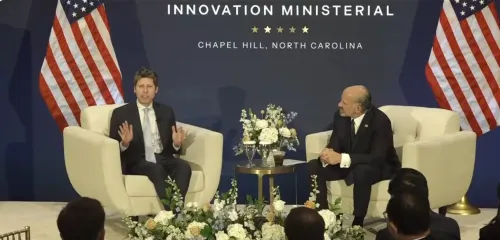
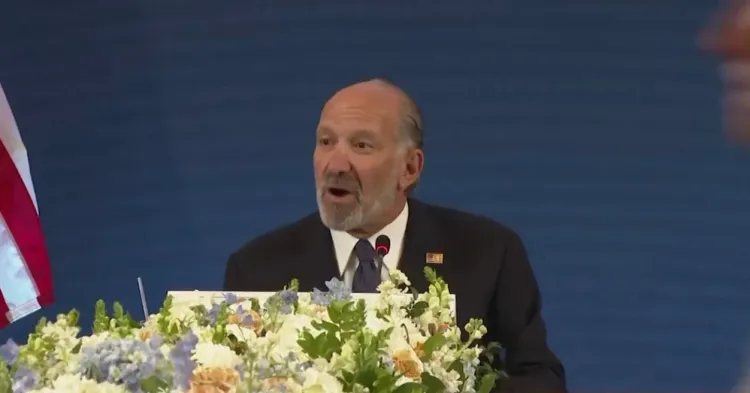
US Commerce Secretary Howard Lutnick opened the G20 Innovation Ministerial in Chapel Hill, North Carolina on 2 September .
He urged G20 nations to treat IP protection and AI development as complementary, not competing, objectives.
Lutnick called for clarity on how fair use and fair dealing doctrines apply to AI across jurisdictions.
He warned that countries failing to extend reciprocal IP protections to foreign innovators risk losing investment and economic opportunity.
The US proposed G20 statements backing private sector-led standards, domestic manufacturing, and IP rights.
India is a G20 member and held the grouping’s presidency in 2023 , when the African Union joined as a permanent member.
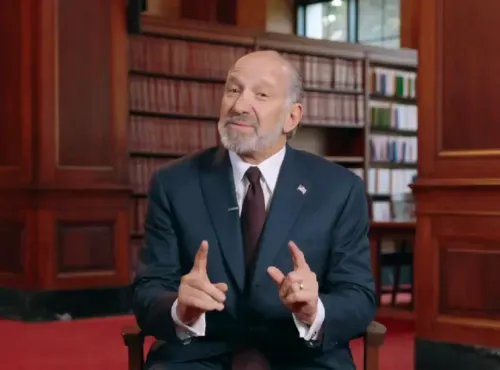
US Commerce Secretary Howard Lutnick on 2 September urged G20 nations to protect intellectual property (IP) rights while simultaneously enabling artificial intelligence (AI) to thrive, cautioning that countries failing to safeguard the interests of both domestic and foreign innovators risked forfeiting investment and economic opportunity. He made the remarks while opening the G20 Innovation Ministerial in Chapel Hill, North Carolina.
The Core Argument: IP and AI Are Not at Odds
Lutnick pushed back against the notion that protecting intellectual property and accelerating AI development are inherently conflicting goals. “You can protect intellectual property and promote AI innovation, but that’s the tricky part. We have to find a way to do both things together,” he told delegates. He framed the two objectives as “two sides of the same innovation ecosystem,” arguing that a functioning IP framework could shield creators while preserving space for AI competition and commercialisation.
“That balance matters because private investment will drive technological progress,” Lutnick said. He described AI as a powerful instrument for amplifying human ingenuity, while acknowledging it was raising fundamentally new questions about traditional approaches to invention.
Patents, Copyright, and the Fair Use Question
Lutnick addressed both patent and copyright dimensions of the AI-IP challenge. “Copyrights protect authors, they protect artists and innovators and creators and existing laws provide important foundations that AI technologies are going to continue to develop,” he said. He called on governments to determine how doctrines such as fair use and fair dealing would apply to AI-related activities, acknowledging that answers would vary across jurisdictions depending on local facts and circumstances.
“We have to figure out and recognise the interaction between copyright and AI, and that’s gonna raise complex questions across all of our jurisdictions,” he added. The Commerce Secretary also stressed the importance of trade secret protections, saying they were essential to fostering research, development, and competitive markets.
Reciprocal Protection: A Warning to G20 Members
Lutnick was pointed in his message on reciprocity. He urged every G20 economy to extend IP protections to foreign innovators entering their markets — not just to domestic players. “You have to protect your own. But if you’re going to protect your own, you have to protect others coming into your market. It has to be both,” he said. “And if you don’t do both, you’ll be left with less opportunity than you would otherwise have.”
This framing carries particular relevance for economies where enforcement of foreign IP rights has historically been inconsistent, and where AI development is expanding rapidly alongside domestic regulatory gaps.
The US Position and G20 Context
The United States proposed statements at the ministerial reflecting priorities including support for private sector-led standards, domestic manufacturing, and intellectual property rights. The ministerial’s broader agenda, according to Lutnick, would cover policies to promote innovation, accelerate scientific discovery, strengthen supply chains, and build confidence in emerging technologies.
The G20 comprises 19 countries, the European Union, and the African Union. India is a member of the grouping and held its presidency in 2023, the year the African Union was admitted as a permanent member. As AI regulation moves up the global policy agenda — with the EU’s AI Act already in force and several G20 nations drafting their own frameworks — the outcome of this ministerial could shape the baseline for international IP-AI norms.
Lutnick’s closing message was unambiguous: “Getting that balance right could allow AI to boost investment, productivity, scientific discovery, manufacturing and economic growth across G20 economies.”
Point of View
And where AI firms are scaling on data pipelines that may not survive copyright scrutiny. For India, which is both a G20 voice on AI governance and a country with evolving IP enforcement norms, this ministerial sets up a tension between its aspiration to lead on AI and the pressure to align with US-backed IP standards. The real test will be whether G20 statements translate into binding frameworks or remain aspirational language — a pattern the grouping has not yet broken.
NationPress
18 Oct 2026
Frequently Asked Questions
What did US Commerce Secretary Howard Lutnick say at the G20 Innovation Ministerial?
Lutnick urged G20 nations to protect intellectual property rights while enabling AI to flourish, arguing the two goals are complementary rather than competing. He warned that countries failing to extend reciprocal IP protections to foreign innovators risk losing investment and economic opportunity.
Where was the G20 Innovation Ministerial held?
The G20 Innovation Ministerial was held in Chapel Hill, North Carolina, in the United States. Lutnick opened the event and outlined the US position on AI and intellectual property frameworks.
Why does the AI-IP balance matter for G20 economies?
As AI systems increasingly rely on copyrighted data and patented technologies, governments must decide how existing IP doctrines — such as fair use and fair dealing — apply to AI activities. Lutnick argued that getting this balance right could unlock AI-driven gains in investment, productivity, and economic growth across G20 nations.
What is the US position on intellectual property at the G20?
The United States proposed G20 statements supporting private sector-led standards, domestic manufacturing, and strong intellectual property rights. Lutnick also pushed for reciprocal IP protections, meaning countries should extend to foreign innovators the same rights they grant domestic ones.
What is India’s role in the G20 context discussed at the ministerial?
India is a full G20 member and held the grouping’s presidency in 2023, the year the African Union was admitted as a permanent member. As a major AI-developing economy, India is directly affected by any G20 consensus on IP frameworks governing artificial intelligence.