Nvidia Says AI's Five-Layer Stack Is Rebuilding US Economy

Synopsis
Nvidia's corporate X account on 1 July 2026 endorsed the view that a full-stack 'five-layer cake of AI' is building new American industries, raising productivity, and adding jobs — a message that intersects directly with ongoing US industrial-policy debates over CHIPS Act returns and AI's workforce impact.
Key Takeaways
Nvidia's official X account on 1 July 2026 amplified claims that AI's full technology stack is reshaping the US economy .
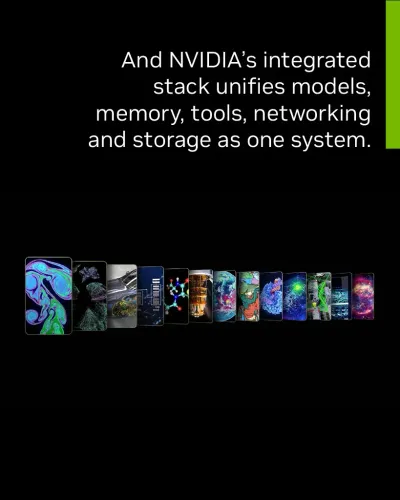
The 'five-layer cake of AI' metaphor describes the stack from silicon and networking through cloud, software frameworks, and end applications.
The CHIPS and Science Act of 2022 directed more than $50 billion in federal subsidies toward domestic semiconductor and AI infrastructure — a policy environment that directly benefits Nvidia's supply chain.
Nvidia's CUDA ecosystem and GPU platforms power the majority of global large-scale AI training and inference workloads.
The corporate messaging feeds into active congressional debates over CHIPS Act effectiveness and potential new AI accountability legislation expected in 2025–2027 .
Whether AI-driven productivity gains translate into broad-based job growth or concentrated tech-sector benefits remains the central contested question for policymakers and labour economists.
Chip giant Nvidia on Wednesday, 1 July 2026 amplified a message on its official X account asserting that what it calls the 'five-layer cake of AI' is actively reshaping American industry, lifting productivity, creating jobs, and strengthening the broader US economy.
Context
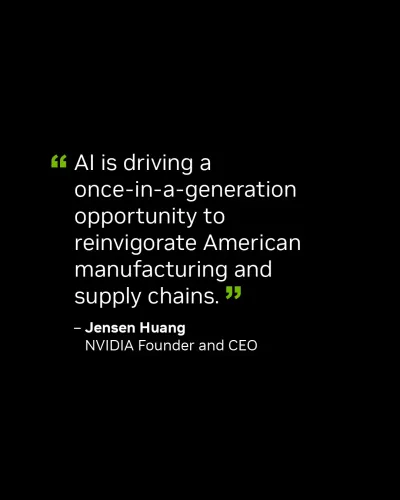
The post, a retweet with endorsement from Nvidia's corporate account, states: 'In this way, the five-layer cake of AI is enabling America to build new industries and reimagine existing ones. It's helping to increase productivity, add jobs, and bolster the U.S. economy.' The 'five-layer cake' framing — a metaphor for the full AI technology stack, from silicon and networking through cloud infrastructure, software frameworks, and end applications — is consistent with the language Nvidia CEO Jensen Huang has used in public forums to describe the company's vertically integrated opportunity in artificial intelligence.
Nvidia sits at the apex of the AI hardware market, with its H100 and successor GPU families powering the majority of large-scale model training and inference workloads globally. Its CUDA software ecosystem has become a de facto industry standard, giving the company influence across every layer of the stack it describes.
Policy Backdrop
The corporate messaging lands against a backdrop of sustained US industrial policy aimed at cementing domestic AI and semiconductor leadership. The CHIPS and Science Act of 2022 authorised more than $50 billion in subsidies, tax credits, and research funding to expand on-shore advanced chip manufacturing — an effort in which Nvidia's supply-chain partners are direct beneficiaries.
A 2023 Executive Order on AI established federal coordination mechanisms for the safe development and deployment of foundation models, while successive rounds of export controls on advanced AI accelerators have been designed to preserve US technological leadership amid strategic competition. Nvidia's hardware is central to both the commercial promise and the national-security calculus embedded in those controls.
Stakeholders and Impact
The claim of job creation and productivity gains speaks directly to three constituencies: the US tech workforce, which watches AI adoption with a mix of opportunity and displacement anxiety; semiconductor manufacturers seeking policy continuity for capital-intensive fab investments; and AI application developers whose business models depend on accessible, affordable compute.
Corporate endorsements of AI's economic upside carry weight in congressional debates over whether CHIPS Act spending has delivered promised returns and whether new accountability legislation is warranted. When a company of Nvidia's market stature publicly frames AI as a net job creator, it shapes the terms of that legislative conversation.
What's Next
Attention will turn to allocation decisions under remaining CHIPS Act funds and any new AI accountability or industrial-policy legislation expected in the 2025–2027 congressional sessions. Whether the productivity and employment gains Nvidia references translate into measurable, broadly distributed economic outcomes — rather than concentrated gains at the top of the technology sector — will be the central question regulators, labour economists, and lawmakers are likely to press in the months ahead.
Point of View
The world's most valuable semiconductor company is pre-empting criticism that advanced AI primarily concentrates gains among a narrow technology elite. The message also reinforces Nvidia's implicit argument that export controls on its accelerators serve a broader national economic interest, not merely shareholder returns. Analysts watching the 2025–2027 congressional session will note that corporate testimony echoing this framing could influence both subsidy continuity and the shape of any new AI governance framework.
NationPress
30 Sept 2026
Frequently Asked Questions
What is Nvidia's 'five-layer cake of AI'?
The 'five-layer cake of AI' is a metaphor Nvidia uses to describe the full AI technology stack — spanning chips and networking hardware, cloud infrastructure, software frameworks such as CUDA, AI models, and end-user applications. Nvidia argues that progress across all five layers together is what enables broad economic impact.
How is Nvidia connected to the US CHIPS Act?
The CHIPS and Science Act of 2022 provided more than $50 billion in subsidies and tax credits for domestic semiconductor manufacturing. While Nvidia designs rather than fabricates its own chips, its key manufacturing partners and the broader US AI infrastructure ecosystem are direct beneficiaries of CHIPS Act funding.
Is AI actually creating jobs in the United States?
Nvidia's post asserts that AI is adding jobs and boosting productivity, but the precise employment figures referenced could not be independently verified from available data. Economists are divided: AI is creating new roles in technology and adjacent sectors while also automating tasks in others, making net job impact a contested question.
Why does Nvidia post about US economic policy on social media?
As the dominant supplier of AI accelerator hardware, Nvidia has a direct commercial and reputational interest in shaping how policymakers and the public perceive AI's economic benefits. Corporate messaging on platforms like X influences legislative debates over industrial subsidies, export controls, and AI regulation.
What legislation could affect Nvidia's AI business in 2026 and beyond?
Remaining CHIPS Act fund allocations and potential new congressional AI accountability legislation expected in the 2025–2027 sessions are the key policy developments to watch. These could affect domestic chip investment incentives, export-control regimes on advanced GPU hardware, and federal AI procurement rules.