Nvidia Says Energy Is Core to Its AI 5-Layer Cake Framework
Synopsis
Nvidia on June 15, 2026, called energy 'the foundation of the AI 5-Layer Cake,' framing power availability as the primary constraint on AI growth. The company says AI, digital twins, and intelligent agents are transforming how energy is produced and managed — from utilities to subsurface operations — signalling a structured push into the energy vertical.
Key Takeaways
Nvidia's corporate account on June 15, 2026 , identified energy as 'the foundation of the AI 5-Layer Cake,' its new framework for AI infrastructure.
The company stated that as AI demand accelerates, energy is 'the key constraint on growth' — not chips or software.
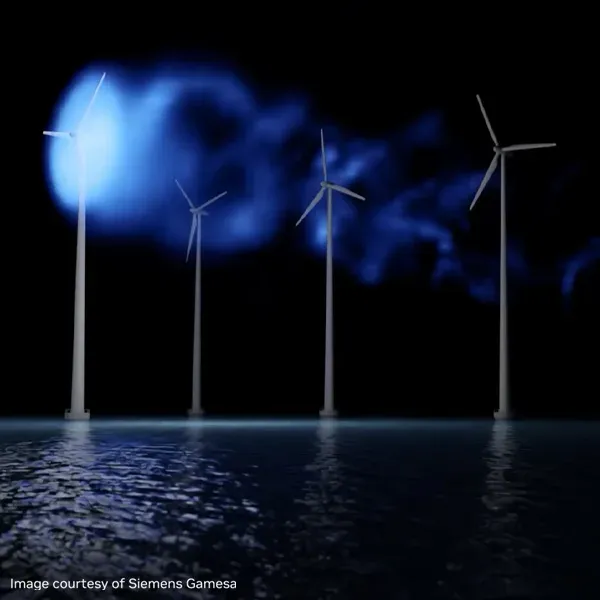
Nvidia highlighted three areas of energy transformation: power and utilities, surface operations, and subsurface operations .
AI tools cited include digital twins and intelligent agents for optimising energy production and management.
The CHIPS and Science Act (2022) allocated more than $50 billion to US semiconductor and AI infrastructure, underpinning Nvidia's supply-chain growth.
Nvidia occupies a dual role — driving electricity demand through GPU sales while selling AI optimisation tools back to the energy sector.
Chip giant Nvidia on Monday, June 15, 2026, declared that energy is 'the foundation of the AI 5-Layer Cake,' framing power availability as the single most critical constraint on artificial intelligence growth as demand for compute continues to accelerate. The company highlighted how AI, digital twins, and intelligent agents are reshaping both the production and management of energy — spanning power utilities, surface operations, and subsurface exploration.
Context
Nvidia's post arrives at a moment when hyperscale data centres — the physical backbone of AI training and inference — are consuming electricity at an unprecedented pace, making grid capacity and power procurement the primary physical bottleneck on further scaling. The company's framing of an 'AI 5-Layer Cake' positions energy not merely as a cost input but as the foundational layer upon which every subsequent tier of AI infrastructure rests. The post links to additional material elaborating the framework, signalling a structured corporate narrative around the energy-AI nexus.
Jensen Huang, who co-founded Nvidia in 1993 and has led its transformation from a gaming-chip maker into the dominant supplier of AI accelerators, has repeatedly pointed to power constraints in public commentary on data-centre expansion. The corporate account's language — 'energy is the key constraint on growth' — echoes that theme at an institutional level.
Policy Backdrop
The broader policy environment amplifies the stakes. The CHIPS and Science Act, signed into law in 2022, directed more than $50 billion toward US semiconductor manufacturing and AI-related research, directly supporting supply-chain expansion for companies like Nvidia. Yet chip fabrication itself is extraordinarily energy-intensive, meaning the legislation's ambitions are inseparable from questions of grid resilience and power generation capacity.
For India, the convergence of AI and energy policy carries its own significance. The country is simultaneously scaling data-centre infrastructure and pursuing a massive renewable-energy build-out, creating a potential alignment with the kind of AI-driven energy optimisation Nvidia is now actively promoting to utilities and operators worldwide.
Stakeholders and Impact
Data-centre operators, power utilities, and AI developers are the three constituencies most immediately affected by the dynamic Nvidia is describing. For utilities, the message is that AI tools — including digital twins that simulate grid behaviour and intelligent agents that automate load management — can help them handle the very surge in demand that AI hardware is creating. For data-centre operators, it underscores that securing long-term power purchase agreements is now as strategically critical as securing chip supply.
Nvidia's dual position — as both a primary driver of electricity demand through its GPU sales and as a vendor of optimisation software to the energy sector — places it at the centre of a feedback loop that will shape infrastructure investment decisions globally. Investors and analysts tracking the company will watch for concrete utility partnerships or grid-operator deals that give commercial substance to the framework.
What's Next
Market observers will closely monitor Nvidia's upcoming earnings commentary for any quantification of data-centre power constraints and announcements of partnerships with major utilities or national grid operators. The explicit branding of an 'AI 5-Layer Cake' suggests Nvidia intends to develop this into a repeatable go-to-market framework for the energy vertical, potentially rivalling its existing verticalised platforms in healthcare and automotive. As AI model complexity continues to grow, the company's ability to position itself as both the cause of and the solution to the energy challenge may define its next phase of enterprise expansion.
Point of View
Where AI data-centre ambitions and renewable-energy targets are advancing in parallel, Nvidia's energy-AI narrative could accelerate conversations around grid modernisation and digital-twin adoption in the power sector. The explicit 'AI 5-Layer Cake' branding suggests Nvidia is building a verticalised sales playbook for energy that mirrors its earlier moves in automotive and healthcare — a signal that enterprise, not just hyperscalers, is the next growth frontier.
NationPress
14 Sept 2026
Frequently Asked Questions
What is Nvidia's AI 5-Layer Cake?
Nvidia's 'AI 5-Layer Cake' is a framework the company introduced to describe the layered architecture of AI infrastructure, with energy positioned as its foundational layer. The full definition of each layer was elaborated in material linked from the June 15, 2026 post.
Why does Nvidia say energy is the key constraint on AI growth?
Hyperscale data centres used for AI training and inference consume vast amounts of electricity, and grid capacity has emerged as the primary physical limit on how quickly AI infrastructure can be expanded — outpacing chip supply as the binding constraint.
How is Nvidia involved in the energy sector?
Nvidia sells AI tools including digital twins and intelligent agents to energy companies, helping them optimise power production and grid management — even as its GPU sales to data centres are a major source of rising electricity demand.
What is the CHIPS and Science Act and how does it relate to Nvidia?
The CHIPS and Science Act, signed in 2022, directed more than $50 billion toward US semiconductor manufacturing and AI research, supporting supply-chain expansion for companies like Nvidia that design advanced chips used in AI systems.
What does Nvidia's energy-AI push mean for India?
India is simultaneously scaling data-centre capacity and pursuing large renewable-energy targets, making it a natural market for AI-driven energy optimisation tools of the kind Nvidia is now actively promoting to utilities and grid operators worldwide.