Nvidia Says Energy, Not Chips, Is AI's True Foundation
Synopsis
Nvidia declared on 10 July 2026 that energy — not chips or data centres — is the true foundation of AI, citing CEO Jensen Huang's 'five-layer cake' framework shared in a Sequoia Capital interview. The post frames electricity as the binding constraint on all AI development, with implications for policymakers, utilities, and AI hubs including India.
Key Takeaways
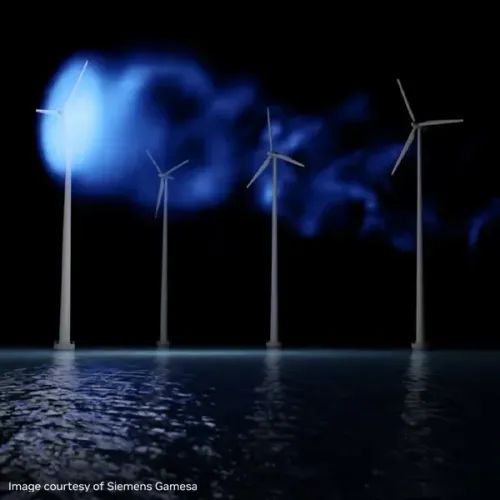
Nvidia posted on 10 July 2026 that every AI response begins with an electron, positioning energy as AI's most fundamental infrastructure layer.
CEO Jensen Huang described AI infrastructure as a ' five-layer cake ' in a Sequoia Capital interview, with energy at the base below chips, data centres, and models.
The US Department of Energy projected as early as 2019 that data centres could consume up to 8 percent of US electricity by 2030 under high-growth scenarios.
Since late 2022 , rapid scaling of generative AI has shifted the industry's infrastructure bottleneck debate from semiconductor supply to power-grid capacity.
For India 's expanding data centre sector and the IndiaAI Mission , grid reliability and electricity supply are now front-line policy concerns.
Hyperscalers and chip designers are increasingly tying expansion plans to power-purchase agreements and advanced nuclear or renewables projects.
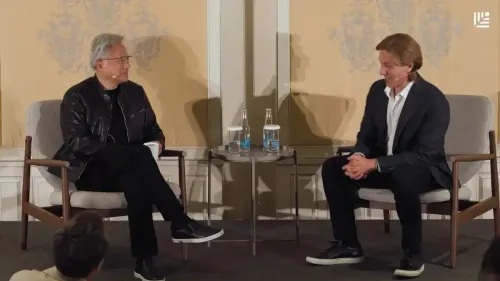
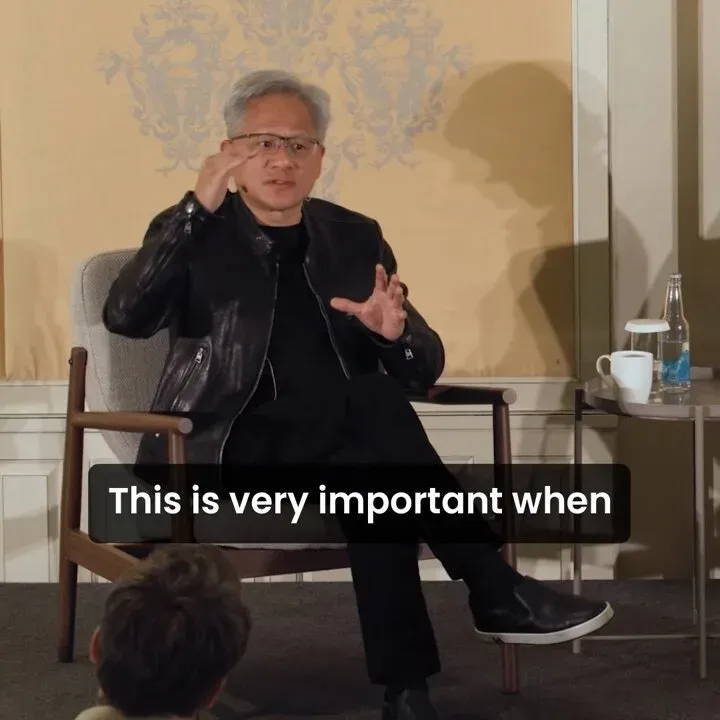
Chip giant Nvidia on Friday, 10 July 2026 posted on X that every AI response ultimately originates with an electron, framing energy — not semiconductors or data centres — as the foundational layer of artificial intelligence infrastructure. The post referenced a recent interview in which Nvidia chief executive Jensen Huang described AI infrastructure as a 'five-layer cake' with energy sitting at the very bottom.
Context
In the post, Nvidia quoted Huang as telling Sequoia Capital that the stack underpinning every AI response runs — in ascending order — from energy, through chips, through data centres, through models, before reaching the response a user sees. 'Every AI response you've ever gotten started with an electron,' the post stated, using a lightning-bolt symbol to underscore the point. The company described energy as 'the binding' constraint holding the entire edifice together.
Huang co-founded Nvidia in 1993 and has steered it from a graphics-chip maker into the dominant supplier of AI accelerators. Sequoia Capital, one of Silicon Valley's most prominent venture firms, has funded a wide range of AI startups and regularly hosts conversations with technology leaders about the practical limits of scaling.
Policy Backdrop
The electricity demands of generative AI workloads came into sharp focus after the launch of large-scale conversational AI systems in late 2022, with industry analyses documenting multi-fold increases in power consumption relative to conventional cloud applications. The US Department of Energy had already flagged in 2019 that data centres could account for as much as 8 percent of national electricity use by 2030 under high-growth scenarios — a projection that now looks conservative given the pace of AI adoption.
Hyperscale cloud providers and chip designers have since shifted their infrastructure planning conversations from semiconductor supply and networking capacity toward power-purchase agreements, grid interconnection queues, and permitting timelines for new generation capacity. Advanced nuclear projects and large-scale renewables are increasingly discussed as candidate solutions for powering multi-gigawatt AI campuses.
Stakeholders and Impact
The implications of Nvidia's framing reach across several industries simultaneously. AI developers and model-training teams face hard ceilings on how fast they can scale if grid capacity is unavailable; data centre operators must now negotiate power-purchase agreements years in advance as a prerequisite for expansion. Power utilities and grid operators find themselves at the centre of what was previously a purely technology-sector conversation.
For India, where the government has positioned the country as an emerging AI hub through initiatives such as the IndiaAI Mission, the energy-first framing carries direct policy relevance. Domestic data centre capacity is expanding rapidly, but grid reliability and the carbon intensity of electricity supply remain live questions for operators and regulators alike.
What's Next
Analysts and policymakers will be watching regulatory filings from hyperscalers for new data-centre power-purchase agreements, as well as any legislative or executive proposals on expedited permitting for transmission lines or advanced nuclear facilities tied explicitly to AI demand. Nvidia's public articulation of the 'five-layer cake' model is likely to shape how investors, governments, and infrastructure planners prioritise energy in AI road maps going forward. The post signals that the industry's next major bottleneck debate has moved decisively from silicon to the socket.
Point of View
Where it holds a near-monopoly — is a notable strategic signal. By elevating electricity to the 'binding' constraint, the company implicitly broadens the conversation beyond its own product stack and positions itself as an infrastructure-level thinker rather than a component vendor. For India, which is racing to build sovereign AI capacity through the IndiaAI Mission, this framing is a quiet but pointed reminder that grid investment must keep pace with GPU procurement. The post also reflects a broader industry pattern in which dominant technology players shape regulatory agendas by naming the next bottleneck before policymakers have fully grasped the previous one.
NationPress
10 Oct 2026
Frequently Asked Questions
What did Nvidia say about AI and energy on 10 July 2026?
Nvidia posted on X that energy is the foundational layer of all AI infrastructure, quoting CEO Jensen Huang's description of AI as a 'five-layer cake' with electricity at the very bottom, below chips, data centres, and models.
What is Jensen Huang's five-layer cake framework for AI?
Jensen Huang described AI infrastructure as five layers stacked in order: energy at the base, then chips, then data centres, then AI models, and finally the responses users receive — arguing that each layer depends entirely on the one beneath it.
Why is energy considered the biggest constraint for AI growth?
Since the rapid scaling of large language models from late 2022 onward, power availability has emerged as the primary bottleneck for AI expansion, with hyperscalers unable to build new data centres faster than grid interconnection and generation capacity allows.
How much electricity do AI data centres consume in the US?
The US Department of Energy projected in 2019 that data centres could account for up to 8 percent of national electricity use by 2030 under high-growth scenarios; analysts now consider that figure likely to be exceeded given the pace of AI adoption since 2022.
What does Nvidia's energy focus mean for India's AI ambitions?
India's IndiaAI Mission is expanding domestic data centre capacity, but Nvidia's framing highlights that grid reliability, power availability, and the carbon intensity of electricity supply are as critical as chip procurement for building a sustainable AI ecosystem.