Nvidia Spotlights Energy Solutions for AI Data Centers
Synopsis
Chip giant Nvidia on June 15, 2026, spotlighted its energy solutions portfolio on X, reflecting the semiconductor leader's strategic push to address surging electricity demand from AI data centres worldwide — a concern increasingly relevant to India's expanding digital infrastructure ambitions.
Key Takeaways
Nvidia posted on June 15, 2026 , directing followers to explore its energy solutions portfolio.
The move reflects the company's broader strategy to position itself as an AI-infrastructure partner, not just a chip supplier.
Generative AI growth since 2022 has sharply raised electricity demand at hyperscale data centres globally.
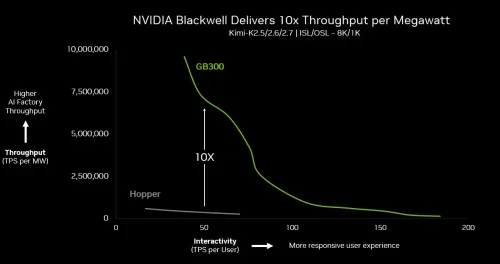
Nvidia's Hopper architecture and H100 GPU , launched in 2022 , emphasised improved performance-per-watt as a key metric.
Data-centre operators and AI developers are the primary stakeholders who stand to benefit from more energy-efficient GPU infrastructure.
India's domestic AI and data-centre expansion makes power-efficient GPU solutions a strategically significant offering in the market.
Chip giant Nvidia on Monday, June 15, 2026, directed its global audience to explore its dedicated energy solutions portfolio, signalling the company's growing focus on power efficiency as artificial intelligence infrastructure scales rapidly worldwide.
The post, shared from Nvidia's official corporate account, invited followers to 'Explore NVIDIA's energy solutions' — a terse but pointed message that underscores how the Santa Clara, California-based semiconductor leader is positioning itself not just as a chip supplier but as a broader AI-infrastructure partner.
Context
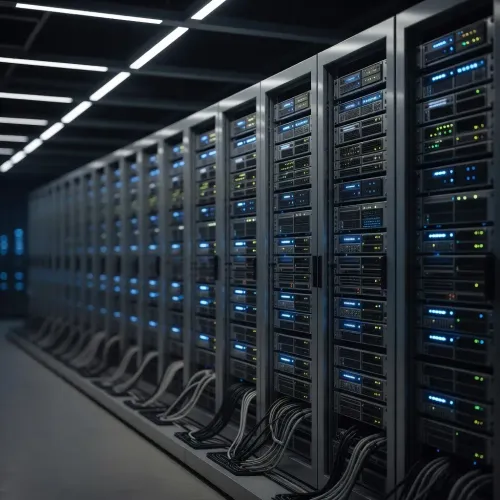
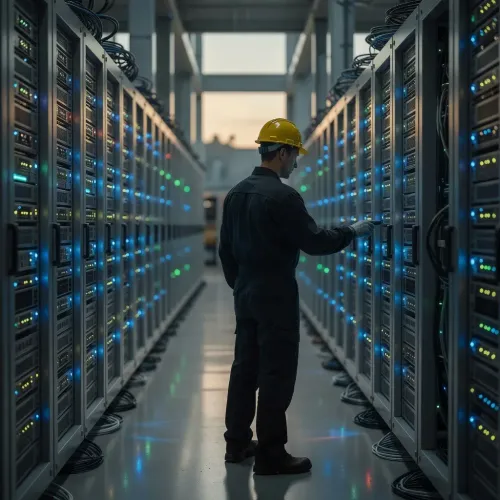
The prompt is brief, but the backdrop is substantial. Since 2022, the explosive growth of generative AI has driven electricity consumption at hyperscale data centres to record levels. Every cluster of Nvidia GPUs — the accelerators that power large language models and cloud AI services — draws significant power, making energy efficiency a central concern for data-centre operators and cloud providers alike.
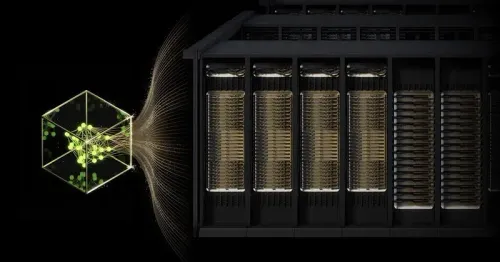
Nvidia introduced its Hopper architecture and the H100 GPU in 2022, with improved performance-per-watt metrics as a headline selling point. The company's pivot toward articulating 'energy solutions' suggests that narrative has only deepened since then, as grid constraints and corporate sustainability targets have become boardroom priorities.
Policy Backdrop
Globally, regulators and grid operators are grappling with the electricity appetite of AI data centres. In India, the government's push for domestic data-centre capacity under digital-infrastructure schemes has brought power availability to the fore, with hyperscale operators seeking reliable, clean-energy supply to meet both capacity and emissions commitments.
Semiconductor firms, including Nvidia, are increasingly under pressure to demonstrate that AI's performance gains do not come at an unacceptable environmental cost. Corporate communications that foreground 'energy solutions' are partly a response to that regulatory and investor scrutiny.
Stakeholders and Impact
The primary audience for Nvidia's energy-solutions messaging is data-centre operators — the hyperscalers, colocation providers, and enterprise IT teams that run Nvidia-accelerated clusters. For them, power efficiency translates directly into operating costs and capital planning for new facilities.
AI developers building and fine-tuning large models are a secondary stakeholder: lower power draw per training run reduces cloud compute bills and carbon footprints. In India, where domestic AI startups and public-sector AI programmes are scaling up, the availability of energy-efficient GPU infrastructure could influence where and how those workloads are deployed.
What's Next
Nvidia's next major architecture launches will be closely watched for accompanying power-consumption benchmarks. Cloud providers are expected to publish efficiency data as they deploy next-generation Nvidia hardware, and those numbers will determine whether the company's 'energy solutions' positioning translates into measurable gains on the ground.
For India's fast-growing AI ecosystem, the intersection of affordable GPU access and sustainable power supply will remain a defining infrastructure challenge — one that Nvidia appears increasingly eager to address as part of its competitive identity.
Point of View
The company is pre-empting criticism that AI acceleration comes at too high an environmental cost — a narrative gaining traction in both Western regulatory circles and emerging markets like India. For Indian policymakers weighing data-centre policy and green-energy mandates, a chip giant framing its products as part of the solution rather than the problem is a message worth noting. The post may be brief, but it signals that the energy-efficiency argument will be central to Nvidia's competitive positioning through the next hardware cycle.
NationPress
14 Sept 2026
Frequently Asked Questions
What are Nvidia's energy solutions for AI data centres?
Nvidia offers hardware and software tools designed to improve power efficiency in AI data centres, including GPU architectures engineered for higher performance per watt, such as the Hopper-based H100. The specific portfolio details are promoted through the company's official channels.
Why is energy efficiency important for AI chips like Nvidia GPUs?
AI training and inference workloads consume large amounts of electricity, making data centres significant power users. Energy-efficient GPUs reduce operating costs for cloud providers and help companies meet sustainability and emissions targets.
How does Nvidia's energy focus affect India's AI infrastructure?
India is rapidly expanding its data-centre capacity to support domestic AI programmes and startups. Energy-efficient GPU solutions from Nvidia could lower the power burden on the grid and reduce costs for Indian operators deploying AI workloads.
What is the Nvidia Hopper architecture and why does it matter?
The Hopper architecture, introduced by Nvidia in 2022, underpins the H100 GPU and was designed with improved performance-per-watt metrics. It became the dominant accelerator for large-scale AI training and set a benchmark for energy-efficient AI computing.
Is Nvidia's energy push driven by regulation?
Corporate sustainability targets, investor pressure, and emerging regulatory scrutiny of data-centre power consumption have all contributed to semiconductor firms, including Nvidia, highlighting energy efficiency in their communications and product roadmaps.