CM Fadnavis Reviews Moshi Tragedy, Orders Faster Biomining
Synopsis
Chief Minister Devendra Fadnavis reviewed the Moshi dumpsite accident in Pimpri-Chinchwad, Pune on 10 July 2026, directing rescue completion by night, full support to victims' families, immediate acceleration of legacy waste biomining, and a new system to process around 100 tonnes of daily unprocessed waste.
Key Takeaways
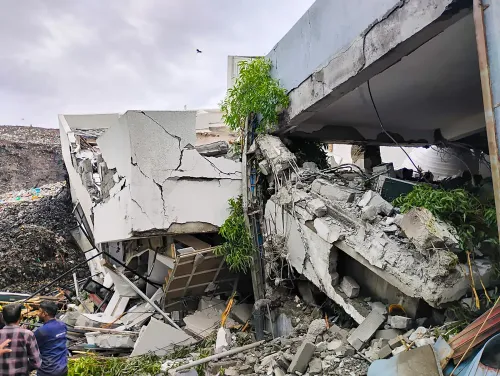
CM Devendra Fadnavis conducted an on-ground review of the Moshi dumpsite accident in Pune on 10 July 2026 .
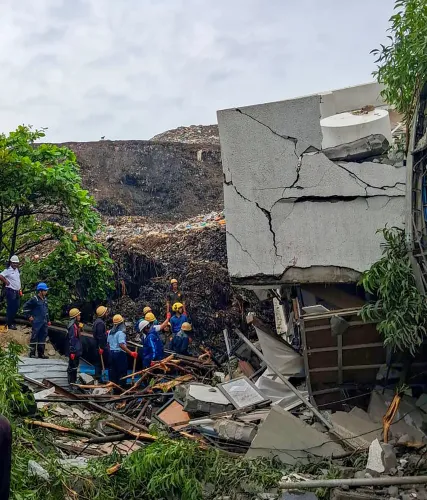
The Commissioner informed the Chief Minister that rescue operations would be completed by the night of 10 July .
Fadnavis directed the administration to provide all necessary support to the families of the deceased .
Immediate acceleration of the Legacy Waste biomining process at Moshi was ordered.
A separate mechanism to urgently process approximately 100 tonnes of daily unprocessed waste is to be established.
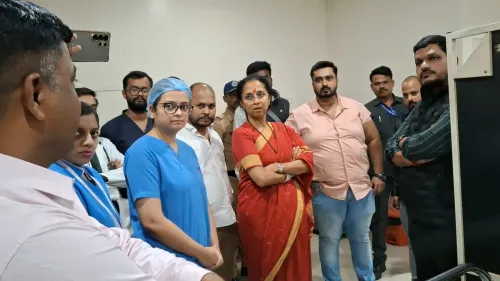
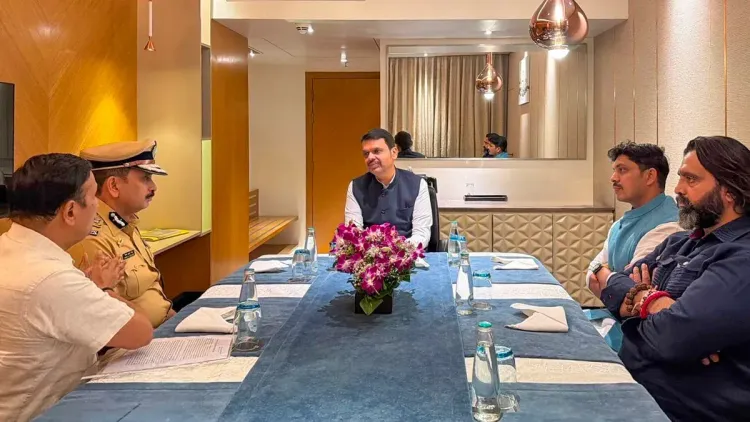
MLA Mahesh Landge , Mayor Ravi Landge , the Police Commissioner, and the Municipal Commissioner were present at the review.
The Chief Minister's Office of Maharashtra announced on Friday, 10 July 2026, that Chief Minister Devendra Fadnavis conducted a detailed review of the accident at Moshi in Pune, directing the administration to provide all necessary assistance to the families of the deceased and to accelerate remediation work at the site.
Context
An incident at the Moshi legacy waste dumpsite in Pimpri-Chinchwad, Pune prompted CM Fadnavis to visit and conduct an on-ground review. According to the official post, the Commissioner briefed the Chief Minister that rescue operations would be completed by that night. The administration was directed to extend all requisite support to the families of those who lost their lives in the tragedy.
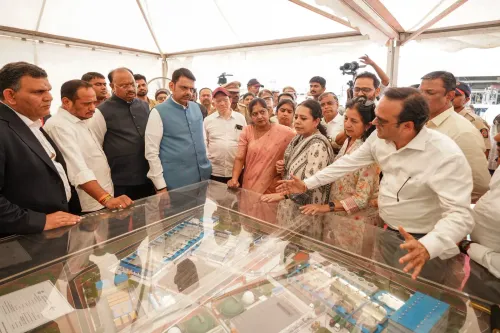
The meeting was attended by MLA Mahesh Landge, Mayor Ravi Landge, the Pimpri-Chinchwad Police Commissioner, the Municipal Commissioner, and other senior officials.
Policy Backdrop
The Moshi dumpsite has long been a focal point for legacy waste remediation efforts under the Swachh Bharat Mission (Urban), launched in 2014, which mandated scientific processing of old municipal solid waste across Indian cities. The Solid Waste Management Rules, 2016 further required civic bodies to undertake biomining of legacy dumps to reduce environmental and safety hazards such as methane build-up and structural instability.
The Pimpri Chinchwad Municipal Corporation (PCMC) has been tasked with executing the Legacy Waste biomining process at Moshi, a scientifically controlled method to segregate, process and remediate accumulated municipal solid waste. Maharashtra cities have faced recurring safety incidents at such sites, prompting repeated state-level interventions.
Key Directives Issued
CM Fadnavis issued specific instructions to immediately expedite the Legacy Waste biomining process at Moshi. He further directed the administration to put in place a separate and effective mechanism to urgently process approximately 100 tonnes of fresh waste that accumulates daily but currently goes unprocessed — a gap that compounds the risk at the already strained site.
These directives signal a dual-track response: addressing the immediate humanitarian fallout of the accident while simultaneously targeting the systemic waste management failures that contributed to unsafe conditions at the dumpsite.
Stakeholders and Impact
The families of the deceased are the most immediate stakeholders, with the Chief Minister personally directing that administrative support reach them without delay. Residents of Pimpri-Chinchwad and surrounding areas face ongoing health and safety risks from the unprocessed waste accumulation, making the ordered remediation measures consequential for the wider community.
Municipal workers engaged in rescue and waste-processing operations are also directly affected. The presence of senior civic and police officials at the review underscores the multi-agency coordination now required to manage both the aftermath of the incident and longer-term site safety.
What's Next
The administration is expected to complete rescue operations at the Moshi site by the night of 10 July 2026, as communicated to the Chief Minister. The pace and funding of expanded biomining equipment deployment, as well as the establishment of a dedicated daily waste-processing facility, will be closely watched as indicators of how swiftly the state can prevent a recurrence.
Any formal safety audit or state-level compensation package for the victims' families could follow in the coming days, as political and public scrutiny of waste management practices in Maharashtra's urban centres intensifies.
Point of View
Family relief, biomining acceleration, and daily waste processing — reflect a state government under pressure to demonstrate decisive action after a high-visibility accident at a legacy dumpsite. The order to process 100 tonnes of daily unprocessed waste separately acknowledges a systemic gap that predates this incident, suggesting the tragedy has forced a reckoning with chronic under-capacity at PCMC. This intervention fits a broader Maharashtra pattern of post-incident reviews that generate directives but whose long-term impact depends on budget allocation and municipal follow-through. The political optics of senior officials — MLA, Mayor, Police Commissioner, Municipal Commissioner — assembled in a single review frame the response as a whole-of-government moment ahead of what could be a more sustained public debate on urban waste safety.
NationPress
10 Oct 2026
Frequently Asked Questions
What happened at Moshi dumpsite in Pune?
An accident occurred at the legacy waste dumpsite in Moshi , Pimpri-Chinchwad , Pune, prompting CM Devendra Fadnavis to conduct an on-ground review on 10 July 2026 . Specific details of the cause and casualty count are under official assessment.
What is legacy waste biomining?
Legacy waste biomining is a scientific process to remediate old municipal solid waste dumps by segregating, processing and stabilising accumulated waste. It is mandated under the Swachh Bharat Mission (Urban) and the Solid Waste Management Rules, 2016 to reduce environmental and safety hazards at ageing dumpsites.
What directives did CM Fadnavis issue after the Moshi accident?
CM Fadnavis directed that all administrative support be extended to the families of the deceased, that Legacy Waste biomining at Moshi be immediately accelerated, and that a separate effective system be set up to process approximately 100 tonnes of daily unprocessed waste at the site.
When will rescue operations at Moshi be completed?
The Pimpri-Chinchwad Municipal Commissioner informed CM Fadnavis during the review that rescue operations at Moshi would be completed by the night of 10 July 2026 .
Who attended the review meeting with CM Fadnavis at Moshi?
The review was attended by MLA Mahesh Landge , Mayor Ravi Landge , the Pimpri-Chinchwad Police Commissioner , the Municipal Commissioner , and other senior officials.