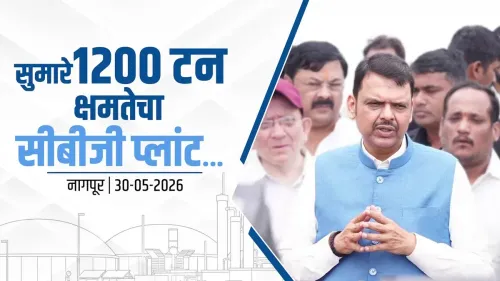
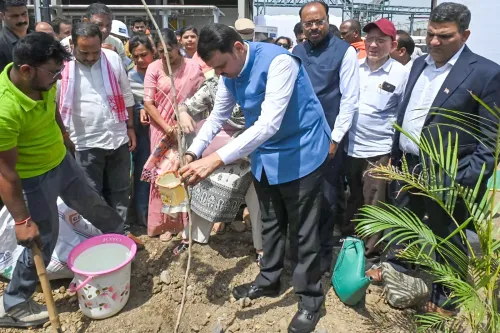
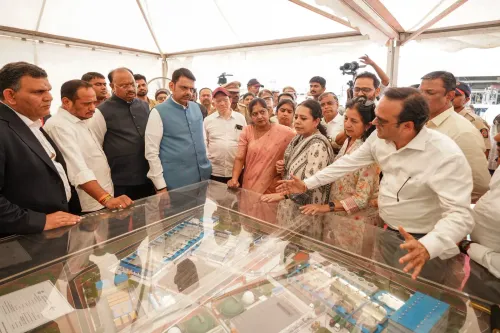
CM Fadnavis: India's First Integrated Solid Waste Plant in Nagpur
Synopsis
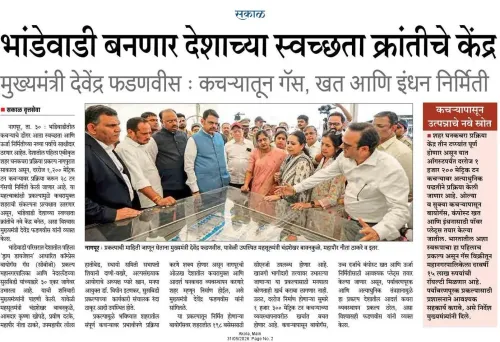
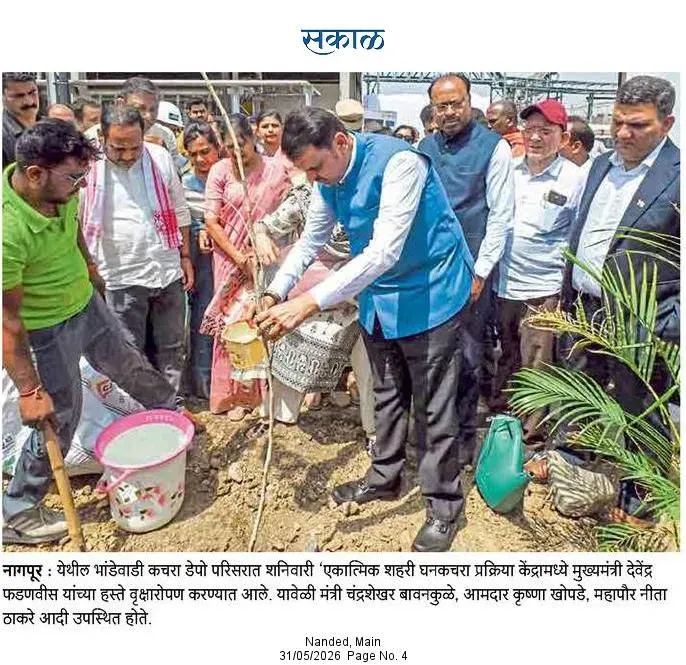
The Chief Minister's Office of Maharashtra announced on 31 May 2026 that Nagpur is home to India's first integrated solid waste processing project. The development, linked to CM Devendra Fadnavis, positions Nagpur as a national model for scientific municipal waste management under the Swachh Bharat Mission framework.
Key Takeaways
The CMO Maharashtra posted on 31 May 2026 that Nagpur hosts the country's first integrated solid waste processing project.
Chief Minister Devendra Fadnavis was directly tagged, underlining his association with Nagpur's urban development agenda.
The project aligns with the Swachh Bharat Mission (2014) and the Solid Waste Management Rules, 2016 , which mandate scientific processing by all urban local bodies.
Integrated facilities combine composting, material recovery, and residue disposal to reduce dependence on landfills.
Nagpur Municipal Corporation is the primary body responsible for operating and sustaining the plant.
Statewide replication across cities like Mumbai and Pune will be the next policy test for Maharashtra.
The Chief Minister's Office of Maharashtra announced on Sunday, 31 May 2026 that Nagpur is home to India's first integrated solid waste processing project, tagging Chief Minister Devendra Fadnavis in the post and highlighting the city's growing role as a model for urban environmental infrastructure.
Context
The CMO's post, written in Marathi, states: 'Deshātīl pahlā ekīkṛt ghankachara prakriyā prakalp Nāgpurāt' — 'The country's first integrated solid waste processing project [is] in Nagpur.' The announcement positions Nagpur, Maharashtra's winter capital, as a national benchmark in municipal solid waste management. Chief Minister Devendra Fadnavis, who represents a Nagpur constituency and has long championed the city's urban development, was directly tagged in the post.
Policy Backdrop
The project aligns with the Swachh Bharat Mission, the national cleanliness and sanitation programme launched in 2014, which has pushed urban local bodies toward scientific processing of municipal solid waste and away from open dumping. The Solid Waste Management Rules, 2016, notified by the Union Government, made segregation at source and scientific processing mandatory for all municipalities. Maharashtra has been working to meet these standards across its urban centres, with Nagpur repeatedly serving as a testbed for technology-driven civic projects.
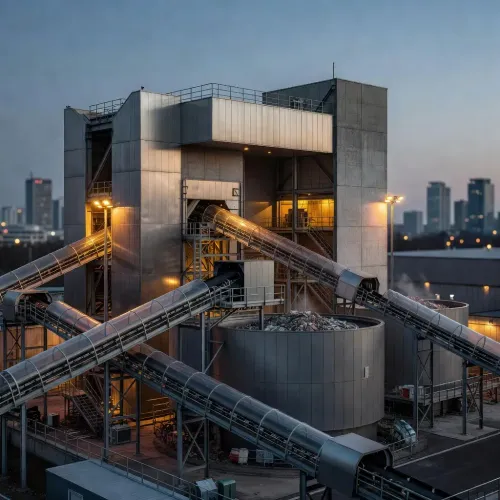
Integrated solid waste processing facilities combine multiple treatment streams — composting, refuse-derived fuel production, material recovery, and residue disposal — within a single plant footprint, reducing the pressure on landfills that have reached critical capacity in many Indian cities.
Stakeholders and Impact
The most immediate beneficiaries are Nagpur's residents, who have long dealt with the environmental and health consequences of inadequate waste disposal. Workers in the informal waste sector — ragpickers and waste aggregators — stand to be affected by the formalisation of processing, making their integration into the facility's operations a key implementation question. The Nagpur Municipal Corporation will be the primary operational body responsible for sustaining the plant's throughput and compliance under the 2016 Rules.
If the 'first in the country' designation holds, the project could attract study visits and replication interest from urban local bodies across India grappling with similar landfill crises.
What's Next
The broader test for Maharashtra will be whether the Nagpur model can be replicated in other large municipalities — Mumbai, Pune, and Thane all face acute solid waste challenges. Compliance audits under the updated waste rules and statewide rollout of integrated processing infrastructure will be the metrics to watch. The state government's ability to finance, operate, and scale such facilities will determine whether this announcement marks a turning point or remains a singular showcase project.
Point of View
Lending a national-first credential to a city he has long used as a governance showcase. Framing Nagpur as a waste-management pioneer fits a broader Maharashtra pattern of piloting urban infrastructure projects in the winter capital before seeking central funds for statewide scale-up. The 'first in the country' claim will face scrutiny — similar integrated facilities have been attempted in other states — making independent verification and operational data critical to the project's credibility. If the model withstands audit, it could give Maharashtra significant leverage in negotiating the next phase of Smart Cities and urban environment funding.
NationPress
14 Oct 2026
Frequently Asked Questions
What is India's first integrated solid waste processing project in Nagpur?
According to the Chief Minister's Office of Maharashtra, it is a facility in Nagpur that combines multiple waste treatment streams — including composting, material recovery, and residue disposal — into a single integrated plant, claimed to be the first of its kind in the country.
Who announced the Nagpur integrated waste project?
The Chief Minister's Office of Maharashtra announced it on 31 May 2026, tagging Chief Minister Devendra Fadnavis in the post.
What is the Swachh Bharat Mission and how does it relate to this project?
The Swachh Bharat Mission, launched in 2014, is a national programme that mandates scientific processing of municipal solid waste and improved sanitation. The Nagpur project aligns with its goals and the Solid Waste Management Rules of 2016.
Why is Nagpur chosen for this waste management project?
Nagpur, Maharashtra's winter capital, has repeatedly served as a testbed for technology-driven municipal and urban development projects, and CM Devendra Fadnavis has a strong political and administrative focus on the city.
Will the Nagpur waste plant model be replicated across Maharashtra?
The state government has indicated interest in statewide replication. Cities like Mumbai, Pune, and Thane face acute landfill pressures, making them likely candidates, though funding, operations, and compliance audits will determine the pace of expansion.