Nvidia Pushes Full-Stack AI for Autonomous Enterprise Ops

Synopsis
Nvidia announced on 24 June 2026 that its full-stack AI platform is powering autonomous operations for the world's leading brands, spotlighting causal marketing analytics, agentic workflows, and real-time auction bidding as the three key capabilities driving enterprise adoption at scale.
Key Takeaways
Nvidia announced its full-stack AI is enabling autonomous operations for leading global brands and platforms as of 24 June 2026 .
Three capabilities were highlighted: causal marketing analytics at enterprise scale, secure agentic workflows , and real-time hyper-efficient auction bidding .
Nvidia 's full-stack approach combines GPU hardware with software layers — rooted in the CUDA platform launched in 2007 — into a single enterprise-deployable package.
The shift accelerates a trend since the early 2020s of replacing rule-based marketing and bidding systems with AI-driven automation.
Enterprise marketers, digital advertisers, and ad-tech platform operators are the primary stakeholders impacted by these capabilities.
Upcoming Nvidia GTC keynotes and quarterly earnings calls are the key events to watch for further enterprise AI software announcements.
Chip giant Nvidia on Wednesday, 24 June 2026 announced that its full-stack artificial intelligence platform is now powering autonomous operations for the world's leading brands and digital platforms, highlighting three key capability pillars driving enterprise adoption at scale.
Context
In its post on X, Nvidia identified three specific capabilities it says are enabling this shift: causal marketing analytics at enterprise scale, secure and trustworthy agentic workflows, and real-time hyper-efficient auction bidding. The announcement was accompanied by a video, signalling a product or partnership showcase rather than a routine corporate update.
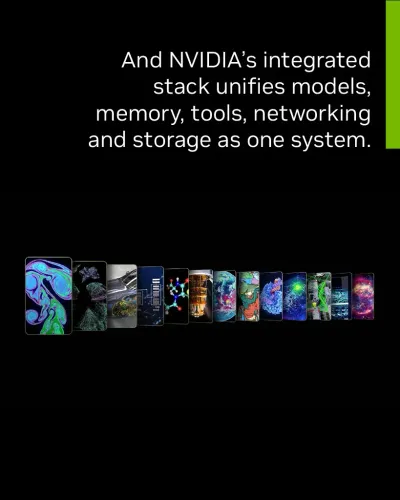
The phrase 'full-stack AI' refers to Nvidia's integrated approach of supplying both the silicon — its GPU and AI accelerator hardware — and the accompanying software layers, from drivers and compilers to inference frameworks, as a single deployable package for enterprise customers.
Policy Backdrop
Nvidia introduced the CUDA parallel-computing platform in 2007, establishing the software foundation that now underpins the majority of commercial AI workloads globally. The company followed that in 2015 with its DGX AI systems, which packaged GPUs with enterprise software stacks for deep-learning deployment — the direct ancestor of today's full-stack positioning.
Since the early 2020s, enterprise software has shifted decisively toward AI-driven automation of marketing, bidding, and workflow tasks previously handled by rule-based systems. Nvidia has positioned itself at the centre of this transition by supplying both compute and the software orchestration layer that agentic applications require. The company's dominant market position also intersects with United States export controls on advanced chips, which have reinforced its grip among Western cloud and advertising platforms.
Stakeholders and Impact
Enterprise marketers and digital advertisers stand to be the most immediately affected constituencies. Causal marketing analytics — the ability to isolate the true incremental effect of a campaign rather than correlate outcomes — has historically required significant data-science investment; Nvidia's claim of delivering this 'at enterprise scale' suggests the capability is being productised for broader deployment.
For ad-tech platforms, the real-time auction-bidding capability is particularly significant. Programmatic advertising auctions resolve in milliseconds, and GPU-accelerated inference allows bidding models to process richer signals within those latency windows, potentially improving return on ad spend for buyers and yield for publishers. Agentic workflows — where AI systems act autonomously across multi-step tasks — add a further layer, enabling marketing operations teams to automate campaign management end-to-end.
What's Next
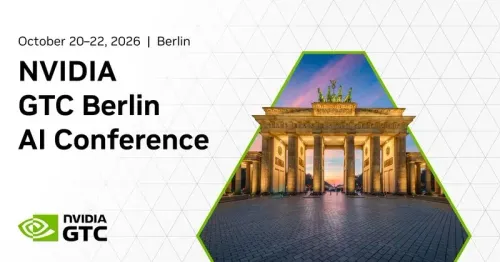
Nvidia's next quarterly earnings call and its annual GTC developer conference are the primary venues to watch for deeper disclosures on enterprise AI software releases and partnership integrations with major ad-tech platforms. Jensen Huang, who co-founded Nvidia in 1993 and has steered the company from graphics hardware to data-centre AI dominance, is expected to elaborate on the enterprise software strategy at upcoming investor and developer events.
As more global brands seek to automate decision-making across marketing, operations, and customer engagement, Nvidia's full-stack push positions it not merely as a chip supplier but as a platform vendor — a strategic shift with significant implications for enterprise software budgets, competitive dynamics in the AI infrastructure market, and the pace at which autonomous AI agents move from pilot projects to production deployments worldwide.
Point of View
Agentic workflows, and programmatic bidding simultaneously, Nvidia is staking a claim across the entire enterprise software value chain, not just the compute layer. For Indian enterprises and ad-tech players increasingly investing in AI-driven marketing, this signals that GPU infrastructure decisions will soon carry software-vendor implications as well. The move also reinforces how U.S. chip export policy inadvertently consolidates Nvidia's leverage among allied-nation cloud and advertising ecosystems.
NationPress
23 Sept 2026
Frequently Asked Questions
What is Nvidia full-stack AI and what does it do for enterprises?
Nvidia's full-stack AI refers to its integrated platform that combines GPU hardware with software layers — including drivers, compilers, and inference frameworks — into a single package enterprises can deploy for tasks like marketing analytics, autonomous agent workflows, and real-time programmatic bidding.
How does Nvidia AI help with programmatic advertising and auction bidding?
Nvidia's GPU-accelerated inference allows bidding models to process richer data signals within the millisecond windows of programmatic ad auctions, potentially improving return on ad spend for buyers and yield for publishers compared to traditional CPU-based systems.
What are agentic workflows and why is Nvidia promoting them?
Agentic workflows are AI systems that act autonomously across multi-step tasks without constant human instruction. Nvidia is promoting them as a way for enterprise marketing and operations teams to automate campaign management and decision-making end-to-end using its AI infrastructure.
What is causal marketing analytics and how is Nvidia enabling it at scale?
Causal marketing analytics isolates the true incremental effect of a marketing campaign rather than simply correlating outcomes with spend. Nvidia claims its platform productises this capability at enterprise scale, reducing the need for large in-house data-science teams to run such analyses.
What should investors and enterprises watch for next from Nvidia on AI software?
Nvidia's next quarterly earnings call and its annual GTC developer conference are the primary events where the company is expected to announce new enterprise AI software releases and integration partnerships with major ad-tech and cloud platforms.