UP T20 League: How UPCA Speed Hunt turned Barabanki's Shakti Verma from ₹7,000 job to IPL dressing room
Synopsis
A motor mechanic's son from Barabanki who couldn't afford ₹7,000 cricket shoes while earning ₹7,000 a month is now in a professional dressing room with IPL stars — because a free trial removed the one barrier that Indian cricket's grassroots system almost never does: the entry fee.
Key Takeaways
Shakti Verma from Barabanki, Uttar Pradesh was discovered through the UPCA Speed Hunt , a free grassroots talent scouting initiative.
He clocked speeds of 138 km/h at the Lucknow selection trials, topping the Speed Hunt charts.
The Kanpur Superstars bought him at the UPT20 player auction for ₹2,50,000 .
Verma had previously worked a private job earning ₹7,000 a month — equal to the cost of a pair of cricket shoes he could not afford.
He has featured in three matches in UP T20 League Season 4 , sharing the dressing room with IPL players Sameer Rizvi , Mohsin Khan , and Karn Sharma .
Verma credited coach Sarvan Nawab , Rajeev Shukla , and Dr.
Sanjay Kapoor for enabling his journey.
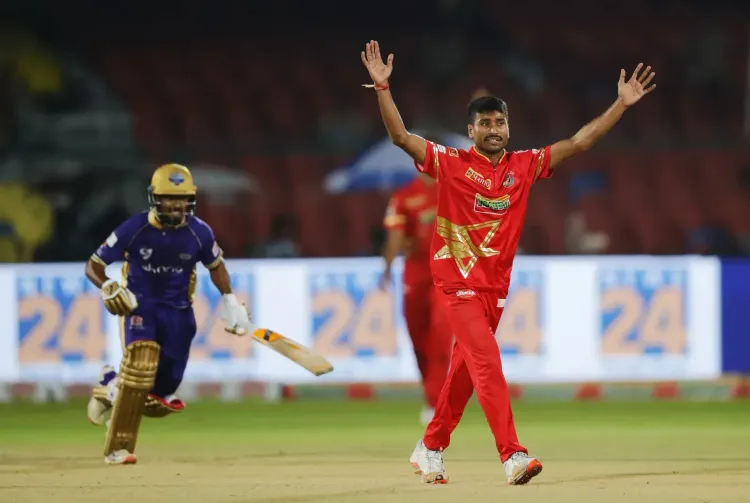
Shakti Verma, a fast bowler from Barabanki district in Uttar Pradesh, has gone from earning ₹7,000 a month at a private job to sharing a dressing room with established Indian Premier League (IPL) stars in Season 4 of the UP T20 League — a transformation made possible by the Uttar Pradesh Cricket Association's (UPCA) grassroots scouting drive, the Speed Hunt. His story is among the most striking to emerge from the tournament this season.
From Local Circuits to the Auction Table
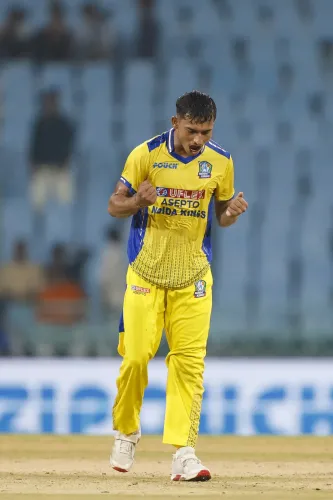
Verma's cricketing roots lie in the informal tennis ball circuits of his district, where peers first noticed his natural pace. A friend introduced him to his coach, Sarvan Nawab, who redirected his focus from batting to fast bowling and steadily refined his skills. Verma consistently clocked speeds of 138 km/h at the Lucknow selection trials, finishing at the top of the Speed Hunt charts. That performance earned him a direct entry into the UPT20 player auction, where the Kanpur Superstars secured his services for ₹2,50,000.
He has since featured in three matches for the Kanpur Superstars in the ongoing season, rubbing shoulders with IPL-capped players such as Sameer Rizvi, Mohsin Khan, and Karn Sharma.
A Family Built on Sacrifice
Verma is the eldest son of Amar Singh Verma, a local motor mechanic. Despite the household's financial constraints, his father consistently found ways to fund practice sessions, including purchasing expensive season cricket balls. Yet the broader cost of professional cricket nearly pushed Shakti out of the sport entirely.
'Cricket is a very expensive game. I used to do a private job earning ₹7,000 a month. With that salary, I couldn't buy cricket shoes worth ₹7,000,' Verma said. He credited coach Sarvan Nawab for providing the support that kept him going, adding: 'Whatever cricket I have played, and whatever I achieve in the future, is all because of him.' Seniors including Vipraj Nigam and a player he referred to as Shivam bhai also guided and financially supported him during difficult phases.
Why the Free Trial Was a Game-Changer
The UPCA's decision to make the Speed Hunt trials entirely free of charge proved to be the single most significant structural decision for players from low-income backgrounds. Verma was direct about its impact.
'If someone comes from a well-off family, an entry fee of ₹1,500 is very little for them. But for a normal boy, even ₹10 is a lot. Because the trials were free, boys like us got a massive boost,' he said. He added that if the Speed Hunt is held annually, more rural talent will find a pathway into professional cricket.
This comes amid a broader national conversation about access and equity in Indian cricket, where district-level players frequently lack the financial means to participate in formal selection structures, let alone sustain a professional career through the domestic circuit.
What the ₹2.5 Lakh Auction Fee Means
For Verma, the auction fee was not merely a professional milestone — it was a financial reality check. 'Frankly, I had never seen this much money in my life before,' he said, noting that the amount would be reinvested in his own cricketing development. For players from comparable backgrounds, the prize money represents years of savings compressed into a single contract.
Gratitude to UPCA and Ambitions Ahead
Verma expressed specific gratitude to the UPCA and named Rajeev Shukla and Dr. Sanjay Kapoor as instrumental in creating the initiative. 'Players from the grassroots who didn't get opportunities in trophy cricket got a huge platform here,' he said. 'If we do well here, we can even play in the IPL and get international recognition.'
With the Speed Hunt model drawing attention for its no-cost, performance-first format, Verma's trajectory could serve as a template argument for expanding such initiatives across other state associations — and for the dozens of fast bowlers still waiting in the wings of India's vast, underserved cricketing hinterland.
Point of View
000-a-month job until his mid-twenties should prompt harder questions about how many Shakti Vermas never got the free trial. One season's feel-good narrative is not a system; annual, free, district-level pace trials across all 28 states would be.
NationPress
3 Sept 2026
Frequently Asked Questions
Who is Shakti Verma and why is he in the news?
Shakti Verma is a fast bowler from Barabanki district in Uttar Pradesh who was discovered through the UPCA Speed Hunt and signed by the Kanpur Superstars for ₹2,50,000 in the UP T20 League Season 4 auction. His story has drawn attention because he went from earning ₹7,000 a month at a private job to playing alongside IPL-capped cricketers.
What is the UPCA Speed Hunt?
The UPCA Speed Hunt is a grassroots talent scouting initiative run by the Uttar Pradesh Cricket Association to identify fast bowlers at the district level. Crucially, the trials are free of cost, removing financial barriers that typically prevent players from low-income backgrounds from entering formal cricket pathways.
How fast does Shakti Verma bowl?
Shakti Verma consistently clocked speeds of 138 km/h at the Lucknow selection trials, finishing at the top of the Speed Hunt charts. That performance directly earned him a spot in the UPT20 player auction.
Which team did Shakti Verma play for in the UP T20 League?
Shakti Verma was signed by the Kanpur Superstars at the UP T20 League Season 4 auction for ₹2,50,000. He has featured in three matches for the side during the ongoing season.
Why does the Speed Hunt matter for grassroots cricket in India?
The Speed Hunt's zero-cost entry model directly addresses one of the most persistent barriers in Indian domestic cricket — the financial cost of participation. Verma himself noted that even a ₹1,500 trial fee would have been prohibitive, and called for the initiative to be held annually to surface more talent from rural and low-income backgrounds.