Delhi HC notices Delhi govt on PIL against MP/MLA endorsement for Lakshmi Yojana
Synopsis
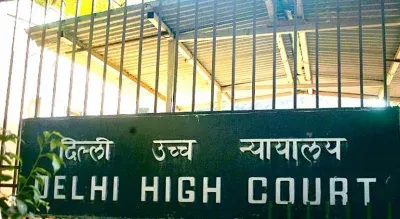
The Delhi High Court has admitted a PIL questioning whether the Delhi government can legally make an elected representative's endorsement a mandatory gate for women to access the ₹2,500-a-month Lakshmi Yojana. The petition argues the condition is arbitrary, discriminatory, and uniquely burdensome for the very women the scheme is meant to serve.
Key Takeaways
The Delhi High Court issued notice to the Delhi government on 3 September over a PIL challenging the MP/MLA endorsement requirement under the Delhi Lakshmi Yojana .
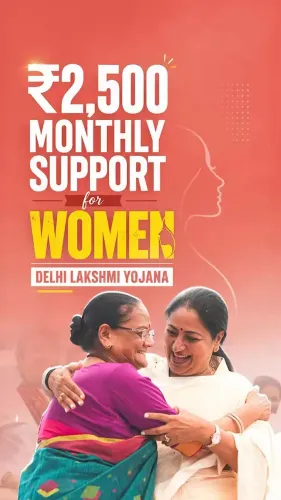
The scheme provides ₹2,500 per month to eligible women from economically weaker sections.
Petitioner Shabana Hussain argues the condition introduces a 'discretionary political interface' with no objective criteria, time limits, or appeal mechanism.
The Delhi government issued a Gazette notification on 6 August 2026 introducing the endorsement condition; a representation on 21 August 2026 went unaddressed.
The bench of Chief Justice Devendra Kumar Upadhyaya and Justice Tejas Karia has listed the matter for 17 September .
The Delhi High Court on Wednesday, 3 September issued notice to the Delhi government on a Public Interest Litigation (PIL) challenging the mandatory requirement of obtaining an MP or MLA endorsement letter before a woman can access benefits under the Delhi Lakshmi Yojana — a scheme that provides ₹2,500 per month in financial assistance to eligible women from economically weaker sections. The bench has scheduled the next hearing for 17 September.
What the PIL Challenges
A bench of Chief Justice Devendra Kumar Upadhyaya and Justice Tejas Karia admitted the petition filed by Shabana Hussain, through advocate Ashu Bidhuri, and tagged it with a pending petition raising a similar issue. The PIL specifically targets the registration process under which an otherwise eligible woman must approach an elected MP or MLA, obtain a recommendation letter, and upload it on the scheme's portal — before her application can proceed.
The petitioner contends that this requirement introduces what the plea calls an 'unguided and discretionary political interface' between the government and welfare beneficiaries. Critically, the scheme reportedly prescribes no objective criteria for granting or refusing such an endorsement, no time limit for issuance, no reasons for refusal, and no appellate or review mechanism.
The Core Legal Question
The petition frames the central issue as follows: 'The limited issue before this Hon'ble Court is whether an elected representative's endorsement, which may appropriately be provided as voluntary assistance, can lawfully be converted into a mandatory condition precedent for an otherwise eligible citizen to access a State welfare benefit.'
The plea argues that the condition risks treating similarly situated women differently — solely based on their ability or inability to secure a political endorsement — despite all of them meeting the scheme's substantive eligibility criteria. This, the petitioner argues, runs contrary to the principle of equal access to welfare entitlements.
Burden on Vulnerable Women
The PIL highlights that the endorsement requirement is particularly onerous for economically vulnerable women. According to the petition, complying with the condition may involve repeated visits to political offices, expenditure on printing, cyber-café and scanning services, loss of daily wages, and reliance on intermediaries — all of which disproportionately affect those the scheme is designed to help.
Notably, the petitioner's grievance is confined to the political endorsement requirement and does not challenge the beneficial object of the Delhi Lakshmi Yojana or the ₹2,500 monthly assistance itself.
Timeline and Relief Sought
The petition was filed after the Delhi government published a Gazette notification on 6 August 2026 introducing the endorsement condition. The petitioner had submitted a detailed representation to the concerned authorities on 21 August 2026, but reportedly received no effective remedial action, prompting the PIL.
The relief sought includes deletion or quashing of the mandatory MP/MLA endorsement requirement and directions to implement the Delhi Lakshmi Yojana through an 'objective, transparent, accessible and non-discriminatory mechanism'. The matter will be heard next on 17 September, when the Delhi government's response is expected.
Point of View
Not a procedural detail. It effectively transfers gatekeeping power from an objective administrative process to the discretion of elected representatives — with no accountability mechanism. The Delhi Lakshmi Yojana is not the first scheme in India to embed such a requirement, and courts have historically been sceptical of conditions that insert political intermediaries into citizen-state welfare relationships. The High Court's decision to tag this PIL with a pending similar petition signals that the issue is not isolated. If the endorsement requirement falls, it could have implications for how other state welfare schemes are structured across the country.
NationPress
3 Sept 2026
Frequently Asked Questions
What is the Delhi Lakshmi Yojana?
The Delhi Lakshmi Yojana is a state welfare scheme that provides financial assistance of ₹2,500 per month to eligible women from economically weaker sections in Delhi. The scheme's beneficial object is not in dispute in the PIL — only the mandatory MP/MLA endorsement requirement is being challenged.
Why has the Delhi High Court issued notice over the Lakshmi Yojana?
The court issued notice on 3 September after a PIL argued that requiring women to obtain a recommendation letter from an elected MP or MLA before accessing the scheme is arbitrary and discriminatory. The bench found the petition prima facie worthy of a government response.
What is wrong with the MP/MLA endorsement requirement, according to the petitioner?
The petitioner argues the requirement has no objective criteria, no time limit, no reasons for refusal, and no appeal mechanism — making it an 'unguided and discretionary political interface.' It can also burden vulnerable women with repeated visits to political offices and extra expenditure.
When was the endorsement condition introduced, and what action was taken before the PIL?
The Delhi government introduced the endorsement condition via a Gazette notification on 6 August 2026. The petitioner submitted a representation to authorities on 21 August 2026, but reportedly received no effective remedial action, leading to the PIL filing.
What relief has the petitioner sought from the Delhi High Court?
The petitioner has sought deletion or quashing of the mandatory MP/MLA endorsement requirement and directions to implement the Delhi Lakshmi Yojana through an objective, transparent, accessible, and non-discriminatory administrative mechanism.