Scindia pushes cooperative expansion to raise farmers' income in MP
Synopsis
At a Gwalior cooperative conference, Union Minister Scindia didn't just give a speech — he launched a Kisan Credit Portal, 200 new PACS offices, and a simplified zero per cent crop loan scheme. With MP declaring 2026 the 'Year of Farmers' Welfare', this is the state's most concentrated cooperative push in recent memory.
Key Takeaways
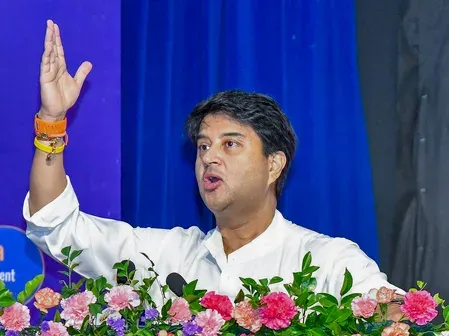
Union Minister Jyotiraditya Scindia addressed a farmers' cooperative conference in Gwalior, Madhya Pradesh on 3 September .
Initiatives launched include the Kisan Credit Portal , the Kavach scheme , and simplification of the zero per cent interest crop loan scheme .
200 new PACS offices were inaugurated to expand last-mile cooperative coverage in rural MP.
Chief Minister Mohan Yadav announced ₹60 lakh for a new farmer rest house at the Krishi Upaj Mandi .
Madhya Pradesh has declared 2026 the 'Year of Farmers' Welfare' .
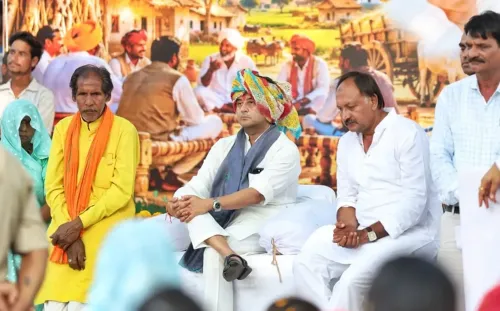
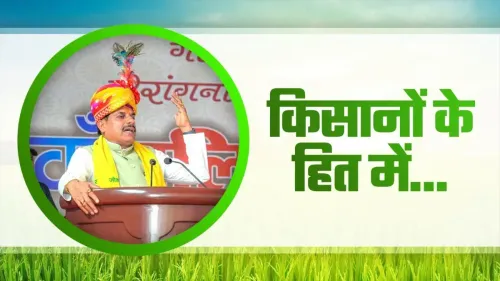
Union Minister Jyotiraditya Scindia on Wednesday, 3 September called for a major strengthening of the cooperative sector in Madhya Pradesh, arguing that robust cooperatives are the most direct route to putting institutional credit and government welfare schemes within reach of farmers at the village level. Speaking at a farmers' cooperative conference in Gwalior, Scindia framed cooperatives not as a legacy structure but as a live delivery mechanism for rural economic empowerment.
Key Launches at the Gwalior Conference
Several initiatives were unveiled at the event, including the Kisan Credit Portal, the Kavach scheme, a simplification of the zero per cent interest crop loan scheme, and the inauguration of 200 new Primary Agricultural Credit Society (PACS) offices. Scindia said these measures would make it substantially easier for farmers to access loans, facilities, and welfare entitlements without navigating bureaucratic barriers.
The conference was held on the birth anniversary of Lord Balram Dau Ji, traditionally venerated by farming communities, lending the event both cultural and political resonance. Madhya Pradesh Assembly Speaker Narendra Singh Tomar attended in person, while Chief Minister Mohan Yadav joined the proceedings virtually.
What the Government Said
'Cooperation is an important means of reaching every village and economically empowering farmers,' Scindia said at the event. He added: 'Our resolve is clear — to increase farmers' income, provide them with better opportunities and ensure that the benefits of cooperatives reach every village.'
Scindia also underscored that farmers are 'not only responsible for feeding the country but are also an important foundation for building a self-reliant and prosperous India,' connecting the cooperative push to the broader national self-reliance agenda championed under Prime Minister Narendra Modi.
State's Farmer-Welfare Focus
The Madhya Pradesh government has declared 2026 the 'Year of Farmers' Welfare', signalling a sustained policy orientation toward agricultural communities. Reinforcing this, Chief Minister Mohan Yadav announced ₹60 lakh for the construction of a new rest house for farmers at the Krishi Upaj Mandi during the conference.
The declaration of a dedicated welfare year reflects a pattern seen in several BJP-governed states of anchoring farmer-centric messaging ahead of electoral cycles, though officials maintain the focus is on long-term structural reform.
Impact on Rural Credit and Cooperative Network
The launch of 200 new PACS offices is expected to be the most tangible near-term outcome of the conference. PACS — the last-mile cooperatives that directly interface with cultivators — have historically suffered from thin coverage in remote districts. Expanding the network addresses a persistent gap in rural credit delivery that has forced many farmers toward informal lenders at higher interest rates.
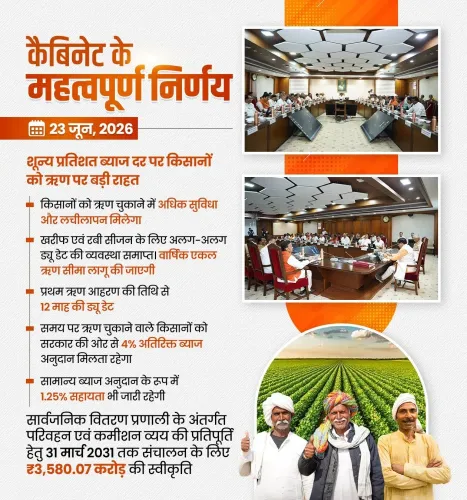
The simplification of the zero per cent interest crop loan scheme is also significant: complex documentation requirements have long been cited by farmer groups as a barrier to uptake, meaning streamlining the process could materially expand the scheme's reach. With guidelines now in place, implementation at the district level will be the critical test of whether these announcements translate into measurable income gains for farmers across Madhya Pradesh.
Point of View
But the real metric will be uptake — not launch. PACS expansion has been promised in multiple policy cycles; the structural problem of thin staffing, poor connectivity, and low farmer awareness in remote districts has not been resolved by office counts alone. The zero per cent crop loan scheme already exists; simplifying its paperwork is welcome but overdue. Madhya Pradesh's 'Year of Farmers' Welfare' framing is politically legible ahead of local body elections, but the credibility of these initiatives depends on whether the new PACS offices are functional and staffed within a defined timeline — a detail conspicuously absent from Wednesday's announcements.
NationPress
18 Oct 2026
Frequently Asked Questions
What initiatives were launched at the Gwalior farmers' cooperative conference?
The conference saw the launch of the Kisan Credit Portal, the Kavach scheme, a simplification of the zero per cent interest crop loan scheme, and 200 new Primary Agricultural Credit Society (PACS) offices. These measures are aimed at improving rural credit access and expanding the cooperative network in Madhya Pradesh.
Who attended the farmers' cooperative conference in Gwalior?
Union Minister Jyotiraditya Scindia and Madhya Pradesh Assembly Speaker Narendra Singh Tomar attended in person, while Chief Minister Mohan Yadav joined the event virtually. The conference was organised on the birth anniversary of Lord Balram Dau Ji.
What is the significance of the 200 new PACS offices in Madhya Pradesh?
Primary Agricultural Credit Societies are the last-mile cooperatives that directly provide credit and services to farmers. Expanding their number by 200 is intended to close coverage gaps in remote rural areas, reducing farmers' dependence on informal lenders who charge higher interest rates.
What is Madhya Pradesh's 'Year of Farmers' Welfare'?
The Madhya Pradesh government has designated 2026 as the 'Year of Farmers' Welfare', signalling a policy focus on farmer-centric schemes and initiatives throughout the year. The declaration was referenced at the Gwalior conference as the broader context for the day's launches.
What financial announcement did Chief Minister Mohan Yadav make at the conference?
Chief Minister Mohan Yadav announced ₹60 lakh for the construction of a new rest house for farmers at the Krishi Upaj Mandi in Gwalior. He addressed the conference virtually.