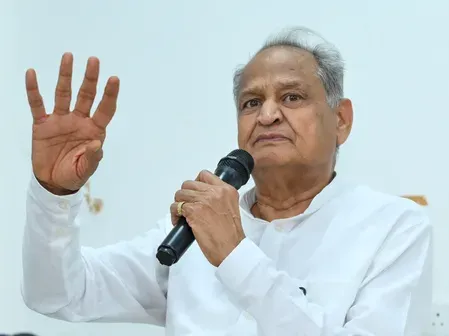
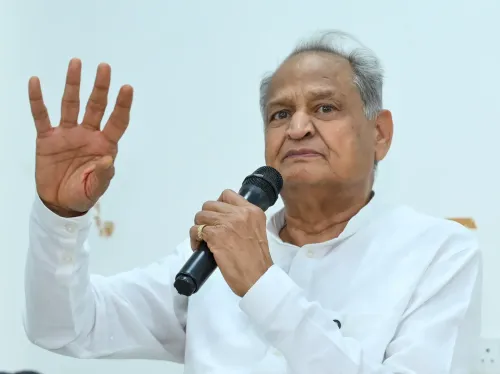
Ashok Gehlot demands ₹3,000 social security pension, slams Centre's 12-year freeze
Synopsis
Ashok Gehlot is accusing the Modi government of a 12-year freeze on central pension contributions for India's most vulnerable — the elderly, widows, and disabled — even as a Parliamentary Standing Committee has repeatedly flagged the amount as inadequate. His ₹3,000 demand and 50:50 cost-sharing proposal frame this as a Centre-versus-states accountability battle, not just a welfare ask.
Key Takeaways
Ashok Gehlot demanded the monthly social security pension be raised to ₹3,000 , shared equally between the Centre and states on a 50:50 basis.
He alleged the Modi government has not increased the central pension contribution for elderly citizens, widows, and persons with disabilities in over 12 years .
The Parliamentary Standing Committee has reportedly made repeated recommendations to increase the pension amount, describing it as inadequate.
In Rajasthan , the Congress government raised the pension from ₹500 (2013) to ₹750 (2018) and then to ₹1,000 (2023), with a legal provision for a 15% annual increase .
Gehlot also alleged that the number of central scheme beneficiaries has not been expanded since 2014 .
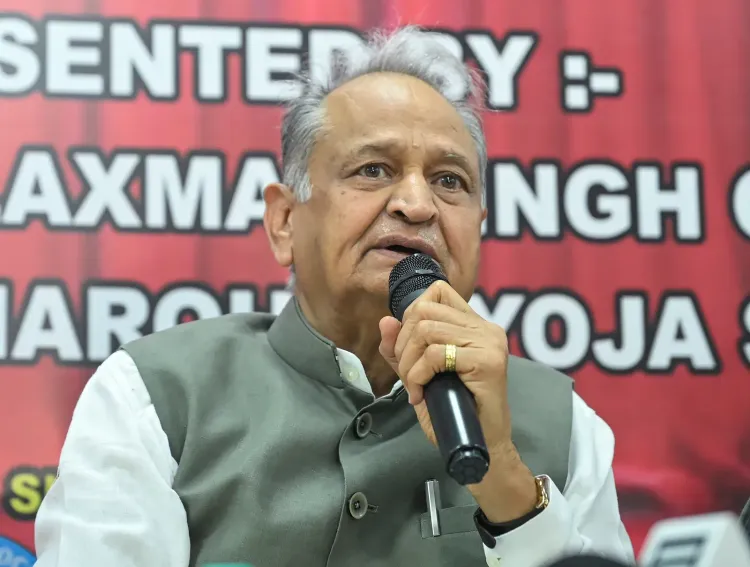
Former Rajasthan Chief Minister Ashok Gehlot on 3 September demanded that the monthly social security pension be raised to ₹3,000 and the beneficiary base expanded, launching a sharp attack on the Bharatiya Janata Party (BJP)-led Central government for allegedly freezing its share of the pension for over a decade.
The Core Allegation
Gehlot alleged that the Modi government had not increased the central contribution to the social security pension — covering elderly citizens, widows, and persons with disabilities — by even a rupee since coming to power in 2014. He further claimed the number of beneficiaries covered under the central scheme had also remained unchanged during this period.
'The Modi government waives off lakhs of crores of rupees owed by wealthy industrialists in one stroke, yet is unwilling to increase the pension for poor and needy elderly citizens, widows, and persons with disabilities by even a single rupee,' Gehlot wrote.
A Timeline of Rajasthan's Pension Revisions
Gehlot traced the evolution of the pension in Rajasthan, noting that the Congress government introduced a monthly social security pension of ₹500 in 2013. According to him, the amount remained unchanged through the subsequent five years of BJP rule in the state. When Congress returned to power in 2018, the pension was raised to ₹750 per month, and further increased to ₹1,000 in 2023.
He also noted that his government introduced a legal provision mandating a 15% annual increase in the pension, aimed at preventing future administrations from keeping the amount stagnant. 'Today, this pension serves as a lifeline for lakhs of needy families in the state,' Gehlot said.
Parliamentary Committee Backing
Gehlot invoked recommendations of the Parliamentary Standing Committee, which he said had repeatedly flagged the existing pension amount as inadequate and called for an upward revision. This lends institutional weight to his demand, going beyond party-political criticism.
He argued that the Centre commands significantly greater financial resources than state governments and is therefore better positioned to bear a larger share of the pension burden — particularly in the face of sustained inflation over the past decade.
What Gehlot Is Proposing
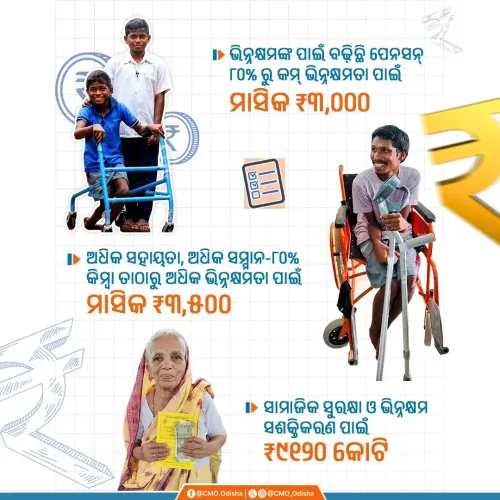
The former chief minister called for a 50:50 cost-sharing arrangement between the Centre and state governments to jointly fund a revised monthly pension of ₹3,000. He said the central government should act immediately to raise the amount and simultaneously expand the number of covered beneficiaries.
This comes amid broader national debate over the adequacy of welfare transfers to India's most economically vulnerable — a constituency that spans rural and urban households alike. With inflation having eroded real incomes significantly since 2014, advocates for the elderly and disabled have long argued that the current pension levels offer little meaningful support.
Whether the Centre responds to Gehlot's demand or the Parliamentary Standing Committee's repeated recommendations remains to be seen, but the political pressure on this issue is clearly mounting.
Point of View
Which is a detail mainstream coverage tends to bury. The more pointed question is why the central contribution has stayed frozen at ₹300 per month for over a decade while inflation has compounded significantly. If the figure is accurate, it represents a real erosion of welfare value that no headline about waiver politics fully captures. The 50:50 cost-sharing proposal is also worth scrutinising: states with weaker fiscal positions would still struggle to fund their half, which means the structural problem of unequal fiscal capacity between Centre and states remains unaddressed by Gehlot's own formula.
NationPress
18 Oct 2026
Frequently Asked Questions
What is Ashok Gehlot's demand regarding social security pension?
Gehlot has demanded that the monthly social security pension for elderly citizens, widows, and persons with disabilities be raised to ₹3,000, with the cost shared equally between the Centre and state governments on a 50:50 basis. He made the demand on 3 September, accusing the BJP-led Central government of freezing its contribution for over 12 years.
How much is the current central government contribution to the social security pension?
According to Gehlot, the central contribution to the social security pension stands at ₹300 per month — a figure he claims has not been revised since the Congress-led government raised it to that level by 2013. He alleges no increase has been made during the subsequent 12 years under the Modi government.
What has the Parliamentary Standing Committee said about the pension?
Gehlot cited recommendations from the Parliamentary Standing Committee, which he said has repeatedly described the existing pension amount as inadequate and called for it to be increased. The committee's position lends cross-party institutional weight to the demand.
How has Rajasthan's social security pension changed over the years?
The Congress government introduced a ₹500 monthly pension in Rajasthan in 2013. It remained at that level during the subsequent BJP government. After Congress returned to power in 2018, it was raised to ₹750, and then to ₹1,000 in 2023. A legal provision for a 15% annual increase was also introduced to prevent future stagnation.
Why does Gehlot argue the Centre should bear a larger share of the pension burden?
Gehlot contends that the Central government has significantly greater financial resources than state governments, making it better placed to fund welfare programmes for the poorest citizens. He also argued that rising inflation over the past decade has made the current pension levels increasingly inadequate as a real support measure.