Kamal Haasan calls for Indian film industry reform amid West Asia crisis

Synopsis
Kamal Haasan’s X post wasn’t just a concern — it was a diagnosis. With the West Asia crisis pushing up energy and logistics costs, he has called out inflated entourage culture, unnecessary foreign shoots, and wasteful spending as the real threats to Indian cinema’s future, while drawing a firm line: workers must never bear the cost of the industry’s excesses.
Key Takeaways
Kamal Haasan posted a detailed appeal on X on 15 May 2025 , urging the Indian film industry to adopt sustainable, cost-disciplined practices.
He cited the West Asia crisis as a driver of rising fuel, energy, logistics, and production costs hitting Indian cinema.
Haasan insisted that workers’ wages, safety, dignity , and working conditions must be protected in any cost-correction effort.
He identified entourage culture, unnecessary foreign travel, poor planning, and production delays as areas of avoidable waste.
He called for a formal meeting of producers, actors, directors, unions, OTT platforms, exhibitors, and guilds to chart a collective path forward.
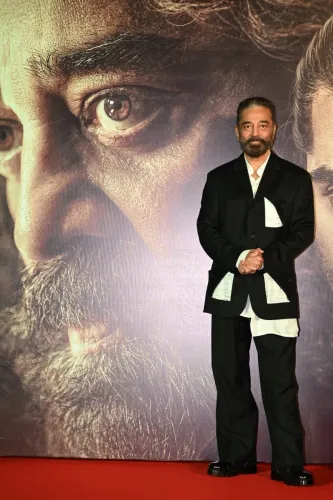
Actor and parliamentarian Kamal Haasan on Friday, 15 May issued a detailed public appeal urging the Indian film industry to adopt practical, sustainable filmmaking practices in response to rising production costs driven by the ongoing West Asia crisis. Writing on his X timeline, Haasan warned that inflationary pressures on fuel, energy, logistics, and trade were already reaching Indian shores — and that cinema could not remain insulated.
The Economic Pressure on Indian Cinema
Haasan framed the challenge in stark terms: Indian film budgets are escalating even as market recoveries remain uneven across regions. He cautioned that the crisis would not merely affect production costs but could also reshape how audiences spend on entertainment. “Rising costs will not affect film production alone. Consumer spending patterns for entertainment may also change in the months ahead due to inflationary pressures,” he wrote.
The burden, he argued, would fall across the entire ecosystem — producers, workers, theatres, distributors, financiers, and beyond. His central message: “Every rupee spent must serve the film, and not merely the appearance of scale.”
Workers Must Be Protected, Waste Must Be Cut
Haasan was unequivocal that any course correction in cinema economics must not come at the expense of those on the ground. He stated that workers’ wages, safety, dignity, food, transport, accommodation, and humane working conditions were non-negotiable. “The burden cannot fall on those who labour the hardest,” he said.
Instead, he pointed to areas where genuine savings were possible: avoidable waste, poor planning, inflated entourage culture, unnecessary foreign travel, and production delays. He called the growing disconnect between spending and purpose a structural problem that the industry had long ignored.
Call for an Industry-Wide Dialogue
Haasan called for a formal meeting of minds across Indian cinema, urging producers, actors, directors, unions, studios, exhibitors, distributors, OTT platforms, and guilds to come together for a collective conversation. He outlined specific measures: better shooting discipline, tighter schedules, reduced luxury expenses, limiting avoidable foreign shoots where local alternatives exist, conserving energy on sets, and encouraging reuse of set construction materials.
Notably, this appeal comes as several major Indian productions have drawn attention for ballooning budgets and overseas shoots, raising questions about financial discipline across the industry.
Cinema’s Larger Responsibility
The veteran actor, director, and producer invoked a broader national obligation, arguing that extravagance had long been mistaken for scale. He pointed out that some of India’s greatest films were made “not with excess, but with clarity, discipline, and conviction.”
Haasan positioned the moment as one requiring national interest to override personal interest. “Our industry shapes culture, influences thought, and reaches millions of people every single day; cinema carries responsibilities beyond entertainment alone. Those of us who have received the most from this industry must lead by example first,” he said. He concluded with a forward-looking warning: “If we protect the economics of cinema today, we protect the future of cinema tomorrow.”
Point of View
But its impact depends entirely on whether the industry’s most powerful players — the very ones who benefit most from inflated budgets and entourage culture — choose to act on it. The structural incentives in Indian cinema often reward spectacle over discipline, and no X post, however well-reasoned, changes that calculus on its own. What the industry actually needs is a binding framework, not a conversation — and Haasan, as both a parliamentarian and a veteran producer, is perhaps uniquely placed to push for one. The question is whether he will take this beyond social media.
NationPress
24 Sept 2026
Frequently Asked Questions
What did Kamal Haasan say about the Indian film industry and the West Asia crisis?
Kamal Haasan warned on 15 May 2025 that the ongoing West Asia crisis is driving up fuel, energy, logistics, and production costs in India, placing the entire film ecosystem under financial strain. He called on producers, actors, directors, unions, OTT platforms, and other stakeholders to meet and collectively adopt sustainable, cost-efficient filmmaking practices.
What specific reforms did Kamal Haasan propose for Indian cinema?
Haasan called for better shooting discipline, tighter production schedules, reduced luxury and entourage expenses, limiting unnecessary foreign travel, conserving energy on sets and studios, and encouraging reuse of set construction materials. He stressed that the goal is to ensure every rupee spent serves the film, not the appearance of scale.
Did Kamal Haasan say workers’ wages should be cut to reduce costs?
No — Haasan explicitly stated that any cost correction must never come at the expense of workers’ wages, safety, dignity, food, transport, accommodation, or humane working conditions. He said the burden cannot fall on those who labour the hardest, and that cuts must come from waste, not from labour.
Why is Kamal Haasan calling for an industry-wide meeting?
Haasan believes the combination of global economic pressure and already-escalating Indian film budgets has created a moment that requires collective action. He urged producers, actors, directors, unions, studios, exhibitors, distributors, OTT platforms, and guilds to come together for a structured dialogue on navigating the economic challenges ahead.
What is Kamal Haasan’s role that gives him standing to make this appeal?
Kamal Haasan is both a veteran actor, director, and producer with decades in Indian cinema and a sitting Member of Parliament, giving him standing in both the industry and policy spheres. His dual role lends weight to calls that bridge cultural and economic governance.