CII urges national strategy on fuel, fertiliser, food inflation amid West Asia crisis

Synopsis
CII is warning that India's fuel, fertiliser, and food price pressures are not three separate problems — they are one compounding crisis. With the West Asian conflict keeping commodity markets on edge, the industry body is pushing for an integrated national strategy spanning ethanol blending, DBT-linked fertiliser reform, and targeted food buffer releases — a policy ask that goes well beyond the usual sectoral fixes.
Key Takeaways
CII on 21 May called for a coordinated national strategy to address the '3Fs' challenge — fuel, fertiliser, and food — amid the West Asian crisis .
Director General Chandrajit Banerjee said all three sectors are interlinked and must be treated as a single integrated economic challenge.
CII recommended a roadmap for E22–E30 ethanol blends , fast-tracking flex-fuel vehicles , and a national LNG trucking framework.
On fertilisers, CII proposed shifting subsidies to a DBT model and integrating urea into the Nutrient Based Subsidy (NBS) framework.
For food, CII called for early release of onion and tomato buffers under the Price Stabilisation Fund and expansion of farmer-to-consumer markets.
The Confederation of Indian Industry (CII) on Thursday, 21 May called for a coordinated national strategy to address what it termed the '3Fs' challenge — fuel, fertiliser, and food — as the West Asian crisis continues to exert upward price pressure across all three sectors. The industry body warned that treating these as separate problems would leave India exposed to compounding inflation, fiscal stress, and household welfare shocks.
Why the 3Fs Are Inseparable
Chandrajit Banerjee, Director General, CII, framed the challenge in stark terms: 'Fuel feeds into fertiliser, fertiliser feeds into food, and all three feed into inflation, fiscal stress, and household welfare.' CII argued that the interlinkage demands a single, integrated policy response rather than siloed sectoral fixes.
Fuel: Ethanol, LNG, and Long-Term Resilience
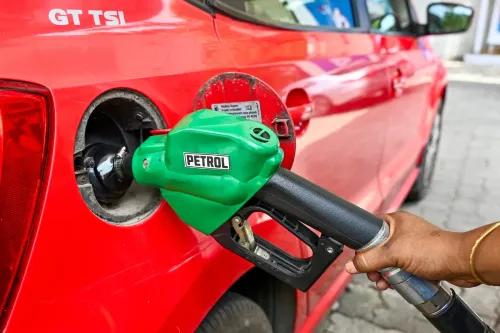
On the energy front, CII recommended leveraging newly notified BIS standards for higher ethanol blends — ranging from E22 to E30 — by establishing a clear market-introduction roadmap. It also called for fast-tracking flex-fuel vehicles in ethanol-producing states and building a national framework for long-haul LNG trucking, including vehicle incentives, refuelling corridors, and transparent pricing.
For longer-term energy resilience, CII urged accelerating domestic oil and gas exploration, expediting the Strategic Petroleum Reserve expansion, and diversifying crude import sources. It also recommended expanding newer energy avenues such as coal gasification, methanol blending, bio-CNG, and nuclear power — including Small Modular Reactors (SMRs).
Fertiliser: Subsidy Reform and Soil Health
CII proposed a phased transition of fertiliser subsidies toward a Direct Benefit Transfer (DBT) model, leveraging digital infrastructure including rural banking networks, mobile authentication, soil health registries, and specialised agricultural credit systems. Subsidised input allocations, it suggested, should be calibrated using digitised land records, crop cycles, and irrigation data — beginning with targeted pilot districts.
Notably, CII also called for the gradual integration of urea into the Nutrient Based Subsidy (NBS) framework to correct pricing imbalances that currently encourage disproportionate nitrogen application and degrade soil quality.
Food: Buffer Releases and Cold-Chain Support
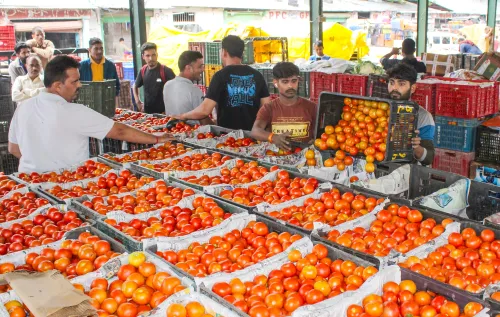
To contain near-term food inflation, CII recommended early, calibrated release of onion and tomato buffers under the Price Stabilisation Fund, action against hoarding, targeted transport support, cold-chain pre-positioning, and expansion of direct farmer-to-consumer markets. The industry body also lauded what it described as 'the government's early response' that cushioned consumers from the initial fuel price spike and directed gas supplies toward critical sectors.
What Comes Next
CII's recommendations now await a formal government response. With global commodity markets remaining volatile amid the West Asian crisis, the pressure on India's fiscal arithmetic — particularly the fertiliser subsidy bill — is unlikely to ease in the near term. How quickly the Centre moves on DBT reform and ethanol blending timelines will be closely watched by industry and markets alike.
Point of View
But the hard part is political, not technical. Fertiliser subsidy reform — particularly urea's integration into the NBS framework — has been recommended by multiple bodies for over a decade and has consistently stalled because of its direct impact on farmer input costs ahead of election cycles. The DBT pivot, while fiscally sensible, requires digital infrastructure in rural districts that remains uneven. The ethanol blending push is the most actionable near-term lever, but its inflation-dampening effect on food prices is limited and depends on feedstock availability. India has heard integrated energy-food-fertiliser strategies before; the test is whether this iteration produces a time-bound implementation plan rather than another well-reasoned advisory.
NationPress
19 Sept 2026
Frequently Asked Questions
What is the '3Fs' challenge that CII has flagged?
The '3Fs' challenge refers to simultaneous price pressures on fuel, fertiliser, and food — three sectors CII says are structurally interlinked. CII argues that a spike in fuel costs raises fertiliser production costs, which in turn pushes up food prices, creating a compounding inflation loop.
Why is the West Asian crisis relevant to India's food and fuel prices?
The West Asian crisis has contributed to volatility in global crude oil and commodity markets, raising India's import costs for fuel and fertiliser feedstocks. Since India is a large net importer of both crude oil and fertilisers, external price shocks transmit quickly into domestic inflation and the government's subsidy bill.
What fertiliser reforms has CII proposed?
CII has proposed a phased shift of fertiliser subsidies to a Direct Benefit Transfer (DBT) model using digital infrastructure such as rural banking networks and soil health registries. It has also called for urea to be gradually brought under the Nutrient Based Subsidy (NBS) framework to fix pricing imbalances that encourage excessive nitrogen use.
What near-term steps has CII recommended to control food inflation?
CII has recommended early, calibrated release of onion and tomato buffers under the Price Stabilisation Fund, action against hoarding, targeted transport support, cold-chain pre-positioning, and expanding direct farmer-to-consumer markets to reduce intermediary costs.
What is CII's position on the government's response so far?
CII acknowledged and praised what it called 'the government's early response,' which it said cushioned consumers from the initial fuel price spike and directed gas supplies toward critical sectors. However, it has called for a more comprehensive, long-term integrated strategy going forward.