El Nino 2026 may spike food inflation as FCI buffer stocks hold at 817 lakh tonnes
Synopsis
India's Finance Ministry is sounding a quiet alarm: if El Nino delivers a deficient monsoon in 2026, the hit to food prices, rural incomes, and growth could be swift and compounding. Buffer stocks are healthy and reservoirs are full — but pulses, oilseeds, and dairy face structural vulnerability that no amount of FCI wheat can offset.
Key Takeaways
The Finance Ministry's Monthly Economic Review (May 2026) warned that El Nino could swiftly transmit deficient rainfall into food inflation and slower growth.
FCI and state agencies held 817.53 lakh tonnes of rice and wheat as of end- April 2026 ; reservoir storage was at 123.86% of the decadal average.
IMD projects 2026 monsoon rainfall at around 92% of the Long Period Average, with a significant probability of deficiency.
Pulses and oilseeds in rainfed regions face the highest crop risk; rice is more resilient due to irrigation coverage.
Summer crop sowing area rose to 83.08 lakh hectares from 80.01 lakh hectares a year earlier.
Domestic air passenger traffic fell 1.3% year on year, signalling early softening in discretionary demand.
A likely transition to El Nino during the 2026 monsoon season could rapidly transmit deficient rainfall into food inflation, rural demand stress, and slower aggregate growth, the Finance Ministry's Monthly Economic Review for May 2026 warned on Saturday, 30 May 2026. The review flagged that these risks would compound existing inflationary pressures already elevated by global energy prices.
Buffer Stocks and Reservoir Levels Offer Near-Term Cushion
On the supply side, the government's starting position is relatively secure. The total stock of rice and wheat held by the Food Corporation of India (FCI) and state agencies stood at 817.53 lakh tonnes as of end-April 2026 — a comfortable buffer ahead of the kharif season. Reservoir storage, meanwhile, was at 123.86 per cent of the decadal average, providing additional near-term reassurance.
Summer crop sowing has also expanded, with area coverage rising to 83.08 lakh hectares from 80.01 lakh hectares in the corresponding period last year — a positive signal for early kharif prospects.
IMD's El Nino Warning and Rainfall Outlook
The India Meteorological Department (IMD) has indicated a likely shift from ENSO-neutral conditions to El Nino during the 2026 monsoon season, with overall rainfall projected at around 92 per cent of the Long Period Average. The review cautioned that the probability of deficient rainfall remains significant, depending on how other climatic factors interact with El Nino conditions.
This comes amid a broader pattern: historically, strong El Nino years have been associated with below-normal monsoons across large swathes of the Indian subcontinent, with uneven regional impacts.
Crops Most at Risk: Pulses, Oilseeds, and Livestock
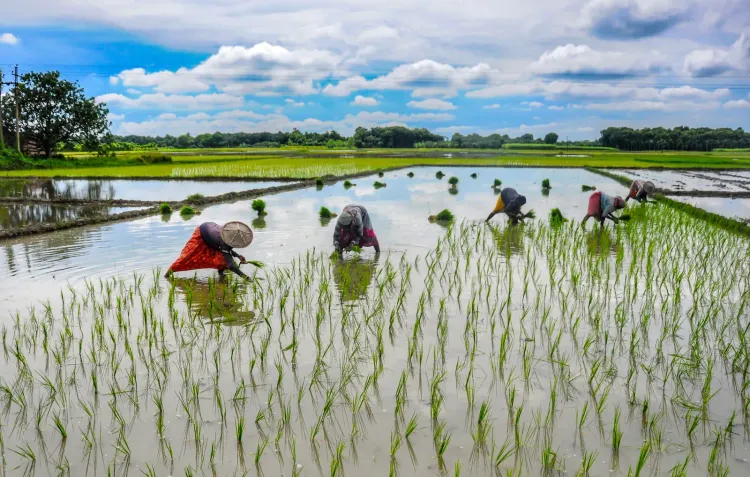
The review drew a distinction between crop categories in its risk assessment. Rice production, it noted, has shown relative resilience during strong El Nino episodes, largely due to higher irrigation coverage in major producing states. However, pulses and oilseeds — both highly climate-sensitive and concentrated in rainfed regions — have historically seen declines in acreage, yields, and production during such episodes.
Livestock and dairy operations are also flagged as vulnerable, with potential stress from fodder shortages, lower milk yields, and rising feed costs likely to ripple into rural incomes.
Demand Conditions: Mixed Signals
Despite the supply-side caution, domestic demand conditions remain broadly resilient for now. Automobile sales have shown strong growth across all segments — two-wheelers, three-wheelers, passenger vehicles, commercial vehicles, and tractors — pointing to continued momentum in rural and semi-urban consumption.
However, domestic air passenger traffic declined 1.3 per cent year on year, signalling some softening at the higher end of discretionary spending. The Finance Ministry document noted that with forecasts pointing to a below-normal monsoon and a likely moderation in economic activity, overall consumption demand may face headwinds in the coming months.
With kharif sowing set to gather pace and the monsoon's trajectory becoming clearer by mid-June, the next few weeks will be critical in determining whether the El Nino threat materialises into a full-scale inflationary episode or remains contained by existing buffers.
Point of View
Medium-term caution' — is diplomatically calibrated, but the underlying risk is sharper than the language suggests. India's inflation architecture has a well-documented Achilles heel in pulses and edible oils, both of which are rainfed and El Nino-sensitive; buffer stocks of rice and wheat offer little direct relief there. The 92% rainfall projection sounds manageable, but distribution and timing matter as much as aggregate volume — a delayed or spatially uneven monsoon can devastate kharif outcomes even when the seasonal total looks adequate. The softening in air traffic, read alongside rural stress signals, suggests that the consumption resilience story may already be thinning at the edges before the monsoon shock has even arrived.
NationPress
27 Sept 2026
Frequently Asked Questions
What is the El Nino risk flagged in India's May 2026 Economic Review?
The Finance Ministry's Monthly Economic Review for May 2026 warned that a likely El Nino during the 2026 monsoon season could cause deficient rainfall, rapidly pushing up food inflation and dampening rural demand and overall growth. The IMD has projected monsoon rainfall at around 92% of the Long Period Average, with a significant probability of further deficiency.
How much food grain stock does India hold ahead of the 2026 kharif season?
As of end-April 2026, the Food Corporation of India and state agencies held a combined 817.53 lakh tonnes of rice and wheat. Reservoir storage was also healthy at 123.86% of the decadal average, providing a strong buffer heading into the monsoon season.
Which crops are most vulnerable to El Nino in India?
Pulses and oilseeds are considered the most vulnerable, as they are highly climate-sensitive and concentrated in rainfed regions that historically see acreage, yield, and production declines during El Nino episodes. Rice is relatively more resilient due to higher irrigation coverage in major producing states.
How is domestic demand holding up ahead of the monsoon?
Demand conditions remain broadly resilient, with automobile sales showing strong growth across all segments including two-wheelers, passenger vehicles, and tractors. However, domestic air passenger traffic declined 1.3% year on year, pointing to some softening in higher-end discretionary spending.
What is El Nino and why does it affect India's economy?
El Nino is a periodic warming of the central and eastern Pacific Ocean that typically suppresses monsoon rainfall over South Asia. For India, a deficient monsoon can reduce agricultural output — particularly in rainfed crops — driving up food prices, squeezing rural incomes, and slowing consumption-led growth.