India's El Nino resilience bolstered by record food stocks, higher reservoirs
Synopsis
Despite the IMD forecasting below-normal rainfall and a high probability of El Niño conditions, India enters the 2026 monsoon season with reservoir levels 5 percentage points above the El Niño-year average and wheat and rice stocks at record highs — a structural firewall that did not exist a decade ago.
Key Takeaways
CareEdge Ratings released a report on 15 June 2026 assessing India's resilience to El Niño and a weak monsoon.
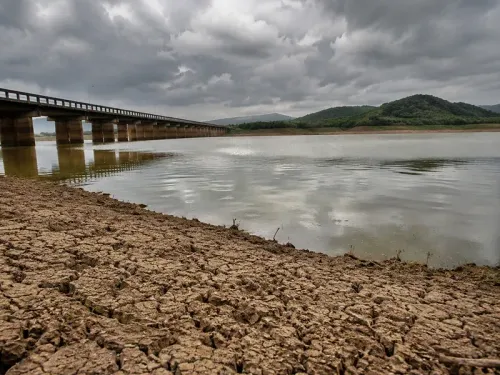
Reservoir storage stood at 30.4% of full capacity in May 2026 , above the 25.1% average during previous El Niño years ( 2015-16 to 2023-24 ).
Wheat and rice buffer stocks were at record levels as of end- April 2026 .
The IMD has forecast rainfall at 90% of the Long Period Average, signalling a below-normal monsoon season.
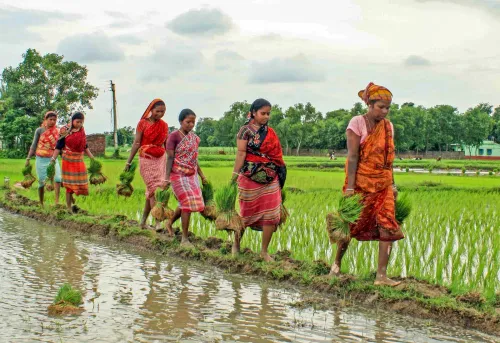
Agriculture's share of GVA has declined from 53.2% in FY1951 to 16.8% in FY26 ; irrigation coverage has risen to 60% of gross sown area.
2,996 climate-resilient crop varieties were released between 2014 and 2025 .
India is significantly better placed to absorb the economic shock of a potentially weak monsoon and emerging El Niño conditions in 2026, owing to higher-than-average reservoir levels, record foodgrain buffer stocks, and decades of structural transformation in the economy, according to a report by CareEdge Ratings released on Monday, 15 June 2026.
Reservoir Levels and Food Stocks Provide a Buffer
Reservoir storage stood at 30.4 per cent of full capacity as of May 2026, comfortably above the 25.1 per cent average recorded during previous El Niño years between 2015-16 and 2023-24. Buffer stocks of wheat and rice were at record levels at the end of April 2026, providing a meaningful cushion against supply disruptions and inflationary pressures, the report noted.
IMD's Monsoon Outlook and El Niño Warning
The India Meteorological Department (IMD) has projected rainfall at 90 per cent of the Long Period Average (LPA) for the southwest monsoon season — indicating below-normal precipitation across the country. The weather office has also flagged a high probability of El Niño conditions developing during the monsoon months, raising concerns about agricultural output and rural demand.
India's Structural Shift Away from Monsoon Dependence
The CareEdge Ratings report underscores how India's economic architecture has evolved considerably since independence. Agriculture's share in Gross Value Added (GVA) has fallen sharply from 53.2 per cent in FY1951 to 16.8 per cent in FY26, while the services sector has expanded to fill the gap. Irrigation coverage has risen from 17.1 per cent of gross sown area in FY1951 to 60 per cent in FY2024, substantially reducing the country's dependence on seasonal rainfall.
Climate-Resilient Agriculture and Diversification
Between 2014 and 2025, the government released 2,996 climate-resilient crop varieties as part of efforts to insulate farmers from erratic weather. Diversification within agriculture — towards livestock, fisheries, and allied activities — has further strengthened the sector's capacity to absorb climatic shocks.
Risks Remain, Especially at the Local Level
Despite the improved macro-level resilience, CareEdge Ratings cautioned that a poor monsoon could still weigh on farm incomes, rural demand, and food prices. Localised disruptions — particularly in rain-dependent districts — cannot be ruled out, even if the aggregate macroeconomic impact is expected to remain manageable. This comes amid broader concerns about rural consumption, which has been a key driver of India's domestic demand recovery.
Point of View
But it risks conflating macro-level resilience with ground-level vulnerability. Aggregate GVA numbers and national reservoir averages mask deep regional disparities — districts in rain-shadow zones or those dependent on unirrigated kharif crops will feel a deficient monsoon acutely, regardless of national buffer stocks. The 60% irrigation coverage figure also warrants scrutiny: coverage does not equal reliability, and many 'irrigated' areas depend on groundwater that is itself under stress. India is undoubtedly more resilient than it was in 2002 or 2009 — but resilience at the macro level should not become a reason to underinvest in localised drought preparedness and direct farmer support.
NationPress
22 Sept 2026
Frequently Asked Questions
What does the CareEdge Ratings report say about India and El Niño in 2026?
The CareEdge Ratings report, released on 15 June 2026, says India is better positioned than in previous El Niño years to absorb the impact of a weak monsoon, citing higher reservoir levels, record food stocks, and structural economic changes. It adds that the overall macroeconomic impact is likely to remain manageable, though localised disruptions are possible.
What is the IMD's monsoon forecast for 2026?
The India Meteorological Department (IMD) has projected rainfall at 90 per cent of the Long Period Average (LPA) for the 2026 southwest monsoon season, indicating below-normal rainfall. The IMD has also flagged a high probability of El Niño conditions developing during the monsoon months.
How do India's current reservoir levels compare to previous El Niño years?
Reservoir storage levels were at 30.4 per cent of full capacity in May 2026, higher than the 25.1 per cent average recorded during El Niño years between 2015-16 and 2023-24, according to the CareEdge Ratings report.
Why is India less vulnerable to monsoon shocks than it was decades ago?
Agriculture's share of Gross Value Added (GVA) has fallen from 53.2 per cent in FY1951 to 16.8 per cent in FY26, and irrigation coverage has expanded from 17.1 per cent to 60 per cent of gross sown area over the same period. The government has also released 2,996 climate-resilient crop varieties between 2014 and 2025.
Can a poor monsoon still hurt India's economy in 2026?
Yes. CareEdge Ratings cautioned that a below-normal monsoon could still weigh on farm incomes, rural demand, and food prices. While aggregate macroeconomic impact is expected to be manageable, localised disruptions — particularly in rain-dependent regions — cannot be ruled out.