Weak monsoon forecast clouds India's FY27 rural demand and inflation outlook

Synopsis
India's FY27 economic outlook has a weather problem. With the IMD forecasting monsoon rainfall at just 92 per cent of normal, a smallcase report is sounding the alarm on food inflation, weakened rural demand, and a potential headache for the RBI — at the worst possible time for an anticipated rate-easing cycle.
Key Takeaways
The IMD has forecast FY27 monsoon rainfall at 92 per cent of the long-period average, classified as below normal .
A smallcase report warns of elevated risks to food inflation , rural demand recovery , and RBI interest-rate trajectories .
Nearly 55 per cent of India's net sown agricultural land is rain-fed; agriculture supports 45 per cent of the population.
Food items make up 46 per cent of India's CPI basket, amplifying the inflation pass-through from any weather-led supply shock.
On 27 April 2026 , all 50 of the world's hottest cities were in India, according to IQAir , adding heat-stress context to the monsoon risk.
Sectors including FMCG , tractors, two-wheelers, fertilisers, and microfinance face demand headwinds if rural incomes disappoint.
India's FY27 macroeconomic trajectory faces a significant weather-driven test, with the India Meteorological Department (IMD) forecasting monsoon rainfall at 92 per cent of the long-period average — a level officially classified as below normal. A report released on Tuesday, 27 May 2025 by investment platform smallcase warned that sub-par rainfall raises material risks for food inflation, rural demand recovery, and the Reserve Bank of India's interest-rate path in the quarters ahead.
Why the Monsoon Forecast Matters
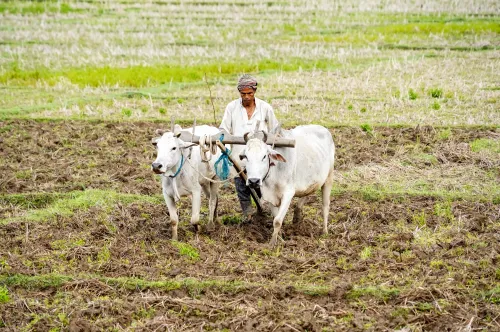
Nearly 55 per cent of India's net sown agricultural land is rain-fed, leaving crop output, food supply chains, and rural incomes directly exposed to monsoon performance. Agriculture contributes 15–16 per cent to India's GDP and supports the livelihoods of roughly 45 per cent of the population. The smallcase report underscored that monsoon performance remains one of the most consequential domestic economic variables, even as India's broader economy demonstrates resilience amid global uncertainties.
Inflation Risk and the RBI's Dilemma
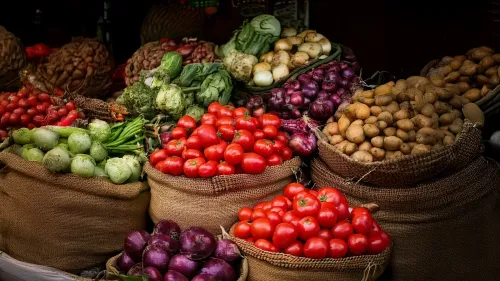
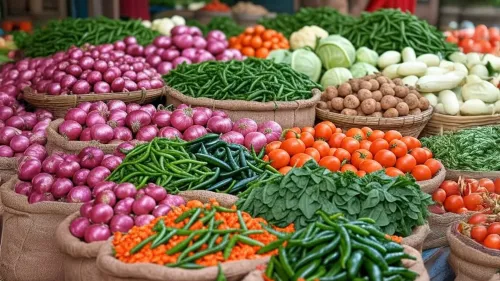
Food items account for nearly 46 per cent of India's Consumer Price Index (CPI) basket, making any weather-driven supply disruption a direct inflation trigger. Upward pressure on food prices — particularly across vegetables and essential commodities — has already been visible in recent months, according to the report. A further spike in inflation could complicate the Reserve Bank of India's (RBI) monetary policy stance at a time when markets are widely anticipating a gradual easing cycle. The report flagged that weaker rainfall patterns could increase inflationary pressures and generate volatility across rural-linked sectors.
Distribution and Timing: The Hidden Risk
Beyond aggregate rainfall totals, the report stressed that the distribution and timing of precipitation across key agricultural states could prove even more critical during FY27. Regions cultivating rain-dependent crops — including rice, pulses, sugarcane, soybean, and oilseeds — remain vulnerable to delayed or uneven rainfall. Prolonged dry spells during sowing windows could suppress agricultural productivity and tighten food availability. The report also noted that climate-change-linked erratic weather is increasing the frequency of such rainfall imbalances, making the quality and spatial spread of rain as important as overall precipitation volume.
Heat Stress Adding to the Pressure
The monsoon concerns arrive against a backdrop of extreme heat. According to global air quality platform IQAir, on 27 April 2026, all of the world's 50 hottest cities were located in India — a data point that underscores the scale of temperature stress the country is absorbing ahead of the monsoon season.
Sectors Watching the Skies
A favourable monsoon typically lifts farm incomes, boosts rural employment, and drives demand across FMCG, tractors, two-wheelers, fertilisers, affordable housing, and microfinance. Conversely, a below-normal season could suppress consumption in these segments precisely when rural recovery was expected to provide a demand fillip. Stable rainfall, the report noted, could support inflation management and sustain growth momentum — making the coming months a critical window for India's economic outlook.
Point of View
But it lands at a structurally fragile moment: food inflation is already elevated, the RBI is under pressure to ease, and rural consumption was supposed to be the demand engine that compensated for slowing urban spending. What the smallcase report captures — but mainstream coverage tends to gloss over — is the distribution problem: aggregate rainfall figures mask the uneven regional patterns that actually determine crop yields. India's climate-change exposure means that even a 'near-normal' season can produce localised droughts that ripple through supply chains. The real policy test is whether the Centre has contingency buffers — buffer stock releases, import duty adjustments, targeted transfers — ready to deploy if the sowing window is disrupted.
NationPress
10 Oct 2026
Frequently Asked Questions
What has the IMD forecast for the FY27 monsoon?
The India Meteorological Department has forecast monsoon rainfall at 92 per cent of the long-period average for FY27, a level officially classified as below normal. This raises concerns about crop output, food supply, and rural income generation across rain-fed agricultural regions.
How could a below-normal monsoon affect food inflation in India?
Food items account for nearly 46 per cent of India's Consumer Price Index basket, meaning any weather-driven supply disruption can quickly translate into broader price pressures. Upward pressure on vegetables and essential commodities has already been observed, and a weak monsoon could intensify this trend.
Which sectors are most exposed to a weak monsoon?
Sectors with high rural linkage — including FMCG, tractors, two-wheelers, fertilisers, affordable housing, and microfinance — are most at risk. A below-normal season suppresses farm incomes and rural employment, directly dampening consumer demand in these segments.
How does the monsoon affect the RBI's interest-rate decisions?
A rise in food inflation triggered by weak rainfall could complicate the Reserve Bank of India's monetary policy at a time when markets anticipate gradual easing. Higher inflation would reduce the RBI's room to cut rates, potentially delaying any relief for borrowers and growth-sensitive sectors.
Why is rainfall distribution more important than total rainfall volume?
Even if aggregate rainfall meets near-normal levels, uneven distribution or delayed onset during sowing periods can devastate specific crops and regions. Key rain-dependent crops such as rice, pulses, sugarcane, soybean, and oilseeds are particularly vulnerable to dry spells at critical growth stages, making spatial and temporal spread of rainfall as consequential as total precipitation.