IMD forecasts below-normal monsoon 2026; 84% probability of deficient rainfall
Synopsis
The IMD has put an 84% probability on a below-normal 2026 monsoon, with total rainfall expected at just 90% of the Long Period Average. El Niño is the key driver, and the monsoon core zone — the heartland of India's rain-fed farming — is directly in the firing line. For a country where agriculture still shapes inflation and rural incomes, this forecast is an early warning that demands urgent state-level action.
Key Takeaways
The IMD forecasts 2026 southwest monsoon rainfall at 90% of the Long Period Average (LPA) , placing it in the below-normal category.
The department assigns an 84% probability to the below-normal rainfall scenario for the full June–September 2026 season.
Northwest India , Central India , and South Peninsular India are projected to receive deficient rainfall ; Northeast India is expected to see near-normal rain.
The monsoon core zone , critical for rain-fed agriculture and food production, is also likely to receive below-normal rainfall.
Developing El Niño conditions in the equatorial Pacific are the primary driver suppressing monsoon activity; the Indian Ocean Dipole remains neutral.
States including Uttar Pradesh , Haryana , Punjab , Bihar , Odisha , Chhattisgarh , Gujarat , and Andhra Pradesh face an elevated number of heatwave days in June 2026 .
The India Meteorological Department (IMD) has issued its updated long-range forecast for the 2026 southwest monsoon season, projecting total rainfall at approximately 90% of the Long Period Average (LPA) — placing the season firmly in the below-normal category. The forecast, covering June to September 2026, carries a model error margin of plus-minus 4% and assigns an 84% probability to the below-normal scenario, raising significant concerns for agriculture, water security, and the broader economy.
Regional Rainfall Outlook
The impact is expected to be uneven across the country. Northwest India, Central India, and South Peninsular India are projected to receive deficient rainfall, while Northeast India is expected to see near-normal precipitation. Some isolated pockets — including parts of Northwest and Northeast India, eastern sections of South Peninsular India, and scattered areas in East India — may receive normal to above-normal rainfall.
Critically, the monsoon core zone — encompassing large rain-fed agricultural belts that underpin India's food production — is also projected to receive below-normal rainfall, compounding concerns for the kharif crop season.
June 2026: Heat and Deficient Rains
For June 2026 specifically, the IMD has forecast below-normal rainfall over most parts of the country. Simultaneously, above-normal maximum and minimum temperatures are expected across large swathes of India, with an elevated number of heatwave days projected in Uttar Pradesh, Haryana, Punjab, Bihar, Odisha, Chhattisgarh, Gujarat, and Andhra Pradesh. Rajasthan and Jharkhand, however, may see fewer heatwave days than the seasonal norm.
El Niño and the Indian Ocean Dipole
The forecast is shaped primarily by developing El Niño conditions in the equatorial Pacific Ocean, which are widely known to suppress monsoon activity over the Indian subcontinent. The Indian Ocean Dipole (IOD) is currently neutral and is expected to remain so through the monsoon season — offering no compensatory boost that a positive IOD phase might have provided in past years.
Impact on Agriculture and Water Resources
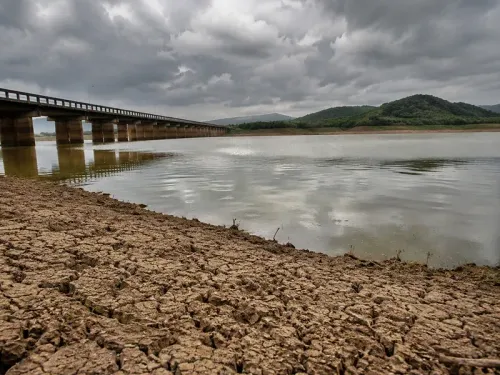
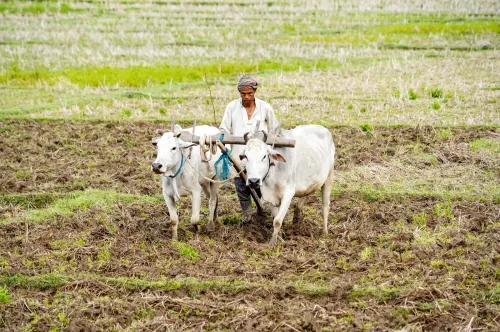
A below-normal monsoon carries wide-ranging consequences. Reduced rainfall could lead to lower crop yields, strain groundwater reserves, and disrupt hydroelectric power generation and drinking water supply across multiple regions. Farmers in rain-dependent areas face the highest exposure, particularly in states where irrigation infrastructure remains limited.
State governments and farming communities have been advised by the IMD to activate contingency plans — including efficient water management, adoption of drought-resistant crop varieties, and stepped-up water conservation measures.
What Comes Next
The IMD is scheduled to release a more detailed forecast for July 2026 towards the end of June. This will provide a sharper picture of sub-seasonal variability and allow state administrations to refine their preparedness strategies. Given that many parts of the country are still recovering from the impact of recent weather anomalies, the early warning carries particular urgency this year.
Point of View
Reservoir levels, and rural demand cycle are all downstream of this number. What is missing from the official response so far is a credible, state-wise drought contingency framework with pre-positioned resources — not just advisory circulars. The El Niño caveat also matters: past El Niño years have seen uneven regional outcomes, and the IMD's own error margin of plus-minus 4% means a 94% LPA outcome is still on the table. The government's challenge is to plan for the worst without triggering the panic that drives food inflation before a single cloud has formed.
NationPress
20 Sept 2026
Frequently Asked Questions
What has the IMD forecast for the 2026 southwest monsoon?
The IMD has forecast that the 2026 southwest monsoon will deliver approximately 90% of the Long Period Average (LPA) rainfall, placing it in the below-normal category. The department has assigned an 84% probability to this scenario for the June–September season.
Which regions of India will be most affected by deficient rainfall in 2026?
Northwest India, Central India, and South Peninsular India are projected to receive deficient rainfall. The monsoon core zone, which covers large rain-fed agricultural areas, is also expected to see below-normal precipitation.
Why is the 2026 monsoon expected to be below normal?
The primary driver is developing El Niño conditions in the equatorial Pacific Ocean, which are known to suppress monsoon rainfall over the Indian subcontinent. The Indian Ocean Dipole is currently neutral and is not expected to provide any offsetting influence.
What are the likely consequences of a below-normal monsoon?
A weak monsoon could reduce crop yields, strain groundwater reserves, disrupt hydroelectric power generation, and affect drinking water supply across several regions. Rain-fed farming communities and states with limited irrigation infrastructure face the greatest risk.
When will the IMD issue its next detailed monsoon forecast?
The IMD is expected to release a more detailed forecast for July 2026 towards the end of June. In the interim, state governments and farmers have been advised to prepare contingency plans including drought-resistant crop adoption and water conservation measures.