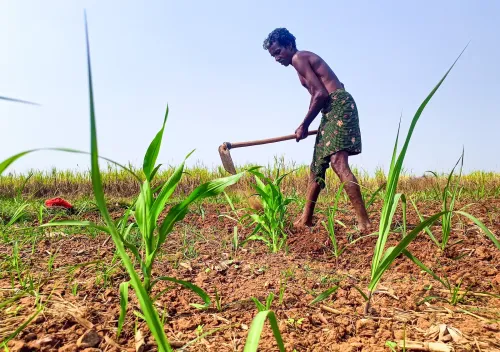
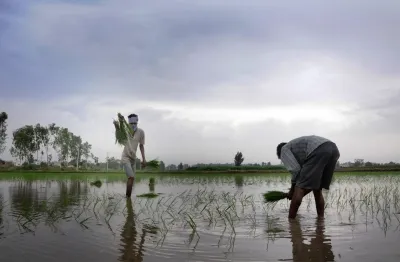
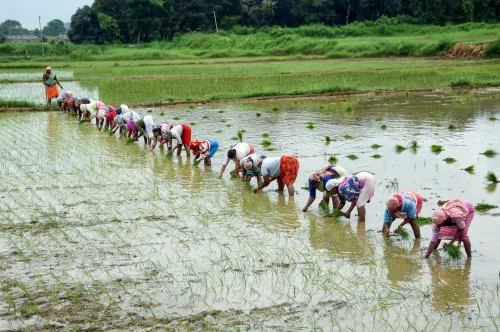
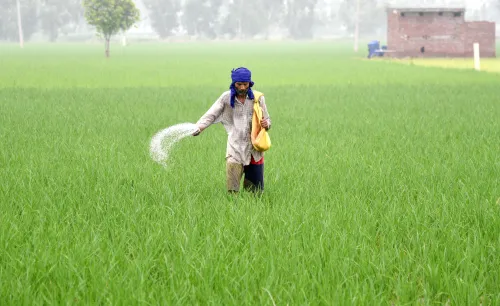
Kharif sowing 2025: India's total acreage at 967.92 lakh hectares, rice area dips 15.9%
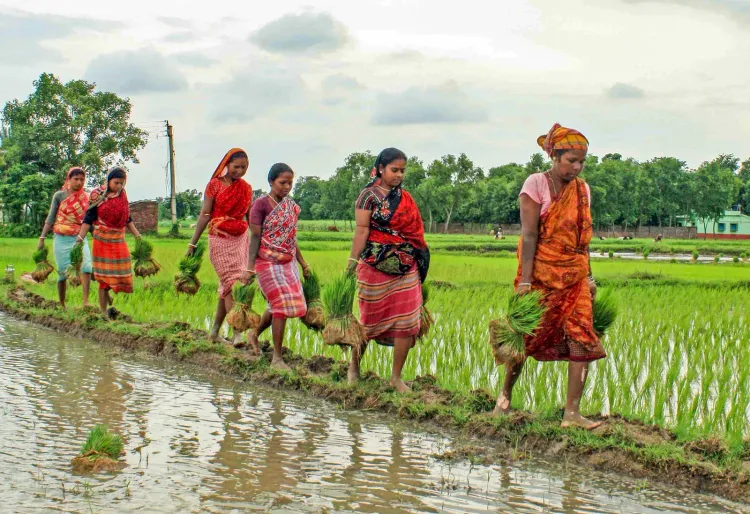
Synopsis
India's kharif sowing is running nearly 18 lakh hectares behind last year's pace, with rice acreage down a steep 15.9% — the clearest on-ground signal yet of El Niño's toll on the 2025 monsoon. While pulses and cotton have held steady, the shortfall in the country's primary staple crop raises early questions about food supply and price stability heading into the harvest season.
Key Takeaways
Total kharif sowing area as of 7 August 2025 stands at 967.92 lakh hectares , down from 985.89 lakh hectares in the same period last year.
Rice acreage has fallen to 344.78 lakh hectares from 360.67 lakh hectares — a decline of 15.9% — due to a deficient monsoon linked to El Niño .
Coarse cereals and millets area slipped to 168.50 lakh hectares from 173.21 lakh hectares a year ago.
Pulses and cotton held relatively steady, with water-efficient crops proving more resilient to the rainfall shortfall.
The CCEA has approved higher MSPs for 14 kharif crops for Marketing Season 2026-27 , with moong farmers set to earn the highest margin of 61% over production costs.
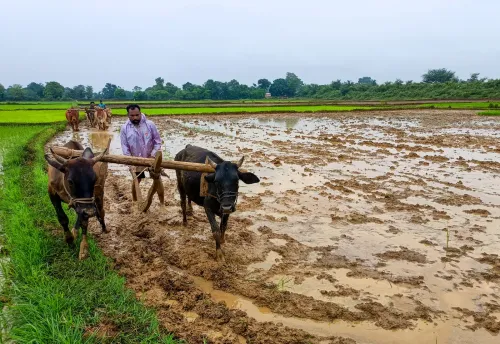
India's total kharif crop sowing area stood at 967.92 lakh hectares as of 7 August 2025, down from 985.89 lakh hectares in the same period last year, according to data released by the Ministry of Agriculture and Farmers Welfare on Tuesday. The shortfall is primarily attributed to a deficient monsoon driven by the El Niño weather pattern, which has weighed heavily on water-intensive crops.
Rice and Cereal Acreage Under Pressure
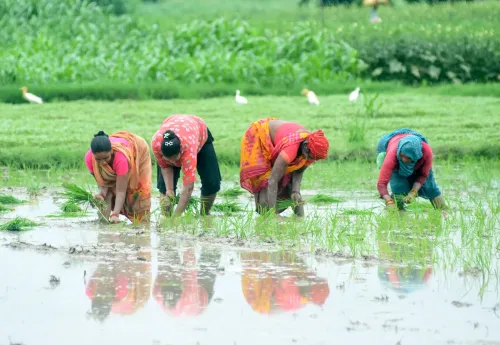
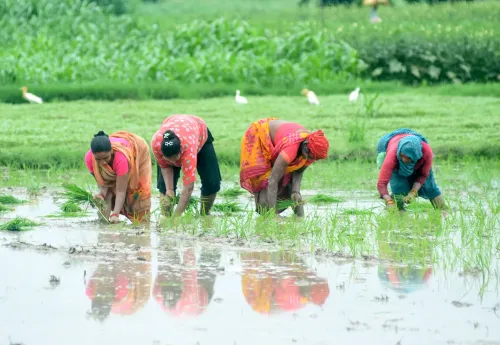
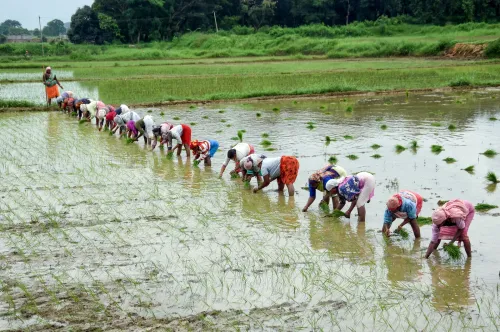
The area under rice has declined sharply to 344.78 lakh hectares this season, against 360.67 lakh hectares in the corresponding period of the previous year — a drop of roughly 15.9%. Officials attribute this directly to the below-normal rainfall that has affected paddy-growing belts across the country.
Coarse cereals and millets — including jowar, bajra, and ragi — have also seen a contraction, with the sown area estimated at 168.50 lakh hectares, down from 173.21 lakh hectares a year ago. Despite the government's push to promote nutri-cereals or 'shree anna', the monsoon deficit has tempered acreage gains.
Pulses, Cotton, and Sugarcane Hold Relatively Steady
Not all crops have been equally affected. The area under pulses — chiefly urad and moong — came in at 103.78 lakh hectares, only marginally below the 105.73 lakh hectares recorded last year. Agronomists note that pulses require significantly less water than paddy, making them more resilient in a rain-scarce season.
Cotton sowing has remained nearly flat at 106.01 lakh hectares, compared with 106.42 lakh hectares in the previous year. Sugarcane, an annual crop sown earlier in the cycle, touched 58.31 lakh hectares against 58.62 lakh hectares in the same period last year — a negligible variance.
Government's MSP Boost for Kharif 2026-27
The Cabinet Committee on Economic Affairs (CCEA), chaired by Prime Minister Narendra Modi, has approved higher Minimum Support Prices (MSP) for 14 kharif crops for Marketing Season 2026-27. The revised MSPs are in line with the Union Budget 2018-19 commitment to fix support prices at no less than 1.5 times the all-India weighted average cost of production.
Among the beneficiaries, farmers growing moong stand to gain the most, with an estimated margin of 61% over production costs. Bajra and maize growers are in line for a 56% margin each, while tur/arhar farmers can expect around 54%. For the remaining crops, the margin over cost is estimated at 50%, according to the government statement.
Policy Push Toward Diversified Cropping
In recent seasons, the government has actively encouraged farmers to shift toward pulses, oilseeds, and nutri-cereals by offering comparatively higher MSPs for these crops. The strategy aims to reduce over-dependence on water-intensive staples like rice and wheat, improve nutritional diversity, and shore up domestic supply of protein-rich crops where India has historically faced deficits.
With the kharif season still under way, final acreage figures will be updated as sowing progresses. The trajectory of the monsoon in the remaining weeks will be critical in determining whether the current shortfall widens or narrows before the season closes.
Point of View
And a supply shortfall heading into the October-November harvest window historically feeds retail price pressure that is difficult to contain. The government's MSP hike for moong and bajra is sound diversification policy, but it takes multiple seasons to shift farmer behaviour at scale. What the data does not yet tell us is how yield will perform on the acreage that has been sown — if a recovering monsoon boosts per-hectare output, the area deficit could be partially offset. That is the number to watch when the first advance crop estimates land.
NationPress
26 Sept 2026
Frequently Asked Questions
What is the total kharif sowing area in India as of August 2025?
India's total kharif sowing area stood at 967.92 lakh hectares as of 7 August 2025, according to data from the Ministry of Agriculture and Farmers Welfare. This is lower than the 985.89 lakh hectares recorded in the same period last year.
Why has rice acreage fallen so sharply this kharif season?
Rice acreage has dropped to 344.78 lakh hectares from 360.67 lakh hectares — a decline of about 15.9% — primarily because of a deficient monsoon caused by the El Niño weather pattern. Rice is highly water-intensive and among the crops most exposed to rainfall shortfalls.
Which kharif crops have been least affected by the monsoon deficit?
Pulses such as urad and moong, and cotton, have remained largely stable. Pulses require significantly less water than paddy, making them more resilient; cotton acreage at 106.01 lakh hectares is nearly unchanged from last year's 106.42 lakh hectares.
What MSP has the government approved for kharif crops in 2026-27?
The Cabinet Committee on Economic Affairs (CCEA) has approved higher Minimum Support Prices for 14 kharif crops for Marketing Season 2026-27, set at no less than 1.5 times the weighted average cost of production. Moong farmers stand to earn the highest margin — 61% over production costs — followed by bajra and maize at 56% each.
How is the government responding to over-dependence on water-intensive crops?
The government has been offering comparatively higher MSPs for pulses, oilseeds, and nutri-cereals (shree anna) to encourage farmers to diversify away from water-intensive staples like rice. The policy aims to improve domestic supply of protein-rich crops and reduce vulnerability to erratic monsoon patterns.