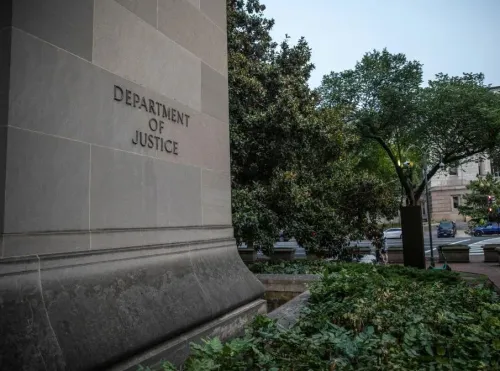
US expands migrant reporting duty: All state agencies must flag undocumented residents
Synopsis
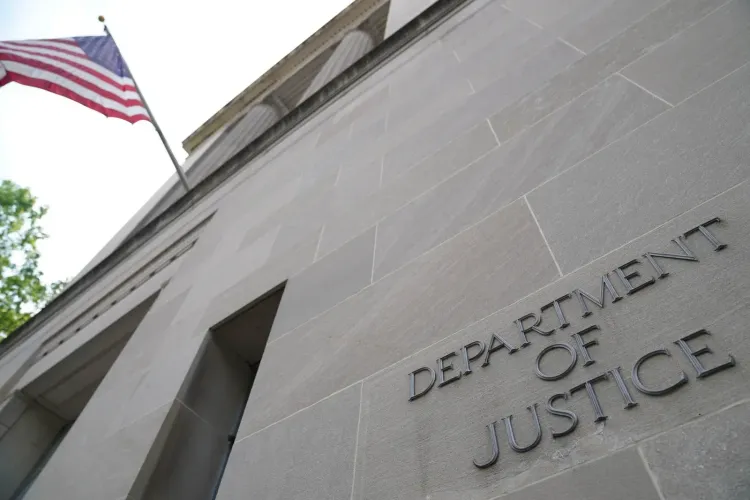
The US Justice Department has quietly redrawn the boundaries of immigration enforcement — by weaponising welfare funding. A new legal opinion forces every state agency receiving TANF or SSI grants to report undocumented residents to federal immigration authorities, reversing a 27-year-old Clinton-era interpretation and putting $16.4 billion in annual federal funding on the line for non-compliant states.
Key Takeaways
The US Justice Department issued a new legal opinion on 1 September 2025 requiring all state agencies in TANF- and SSI-participating states to report undocumented residents to immigration authorities.
The ruling reverses a 1998 Clinton-era OLC opinion that limited the reporting duty to agencies directly administering those programmes.
All 50 states , the District of Columbia , and several US territories are covered; federal TANF grants exceed $16.4 billion annually.
States that fail to comply risk loss of programme funding , according to the Justice Department.
The opinion applies prospectively — no penalties for past actions taken under the 1998 interpretation.
Federal agencies are expected to revise TANF and SSI grant agreements to reflect the broader reporting standard.
The US Justice Department on 1 September 2025 issued a sweeping new legal opinion requiring every agency within states that receive federal welfare funding to report individuals known to be unlawfully present in the country to immigration authorities. The ruling reverses a narrower Clinton-era interpretation from 1998 and extends the reporting obligation far beyond the agencies directly administering benefit programmes.
What the New Interpretation Covers
The Office of Legal Counsel (OLC) determined that the reporting requirement applies to all states participating in Temporary Assistance for Needy Families (TANF) and Supplemental Security Income (SSI). Crucially, the obligation now binds the entire state government — not merely the specific departments managing those two programmes.
All 50 states, the District of Columbia, and several US territories participate in TANF and SSI. Federal TANF grants alone exceed $16.4 billion annually, according to the department, giving the federal government significant financial leverage over state compliance.
What the Government Said
Assistant Attorney General T. Elliot Gaiser of the Office of Legal Counsel stated that Congress had written the requirement plainly. "When a state chooses to participate in TANF, it accepts the obligation to report illegal aliens in the United States," Gaiser said. He added: "Tax dollars intended to help vulnerable Americans should not perversely encourage illegal entry into the United States, but rather should reinforce our laws and our borders."
Deputy Assistant Attorney General Joshua Craddock, who authored the opinion, maintained that the ruling does not impose fresh obligations. "It simply restores the original meaning of the statute Congress enacted and ensures that DHS receives the information it is legally entitled to," Craddock said.
Legal Basis and the Reversal of the 1998 Opinion
The new opinion, dated 1 September, draws on a broad congressional definition of a "State" in the Personal Responsibility and Work Opportunity Reconciliation Act of 1996. The Justice Department formally withdrew the 1998 OLC opinion issued under the Clinton administration, which had limited the reporting duty to the specific state agencies administering TANF or SSI.
Notably, the opinion will apply prospectively — states will not face penalties for actions taken while relying on the now-withdrawn 1998 interpretation. Federal agencies may revise TANF and SSI grant agreements and compliance procedures to reflect the broader standard.
Consequences for Non-Compliant States
The Justice Department warned that states failing to comply could face serious consequences, including the possible loss of programme funding. Given that TANF alone channels more than $16.4 billion annually to states, the financial stakes are substantial.
This comes amid a broader federal push to tighten immigration enforcement through administrative and legal mechanisms, rather than solely through legislative action. Critics are expected to challenge the reinterpretation in court, arguing that it overreaches the original statutory intent and pressures states into acting as immigration enforcement arms of the federal government.
Background on TANF and SSI
TANF provides federal grants to states to support programmes assisting low-income families with children; states retain broad discretion over fund administration within federal requirements. SSI is a federal programme providing monthly payments to eligible individuals with limited income and resources who are aged, blind, or living with disabilities. The Social Security Administration administers SSI, while states may provide supplementary payments and perform related functions.
With grant agreements now set to be revised, state governments across the country face a near-term compliance deadline that will test the limits of federalism and immigration law simultaneously.
Point of View
Not a loophole; reversing it through an OLC memo, rather than legislation, sidesteps Congress and sets up an inevitable court battle. What mainstream coverage underplays is the federalism dimension: states with sanctuary policies are now caught between state law, local political mandates, and the threat of losing funds that support their most vulnerable residents. The prospective application clause is the administration's pressure valve — it softens the rollout while leaving the coercive architecture fully intact.
NationPress
2 Sept 2026
Frequently Asked Questions
What does the new US Justice Department immigration opinion require?
It requires every agency within states that receive federal TANF or SSI welfare funding to report individuals known to be unlawfully present in the US to immigration authorities. The obligation covers the entire state government, not just the agencies directly running those programmes.
Which states are affected by this new reporting requirement?
All 50 US states, the District of Columbia, and several US territories are affected, as all of them participate in TANF and SSI. Federal TANF grants to states exceed $16.4 billion annually.
How does this reverse the Clinton-era interpretation?
A 1998 Office of Legal Counsel opinion under the Clinton administration limited the reporting duty to the specific state agencies administering TANF or SSI. The new opinion, dated 1 September 2025, withdraws that narrower reading and applies the obligation to all agencies of a participating state government.
What happens to states that do not comply?
The Justice Department has warned that non-compliant states could face serious consequences, including the possible loss of TANF and SSI programme funding. States will not be penalised for past actions taken under the now-withdrawn 1998 interpretation.
What is TANF and who does it support?
TANF, or Temporary Assistance for Needy Families, provides federal grants to states to support programmes for low-income families with children. States have broad discretion over how the funds are used within federal requirements, and the programme channels more than $16.4 billion annually across the US.