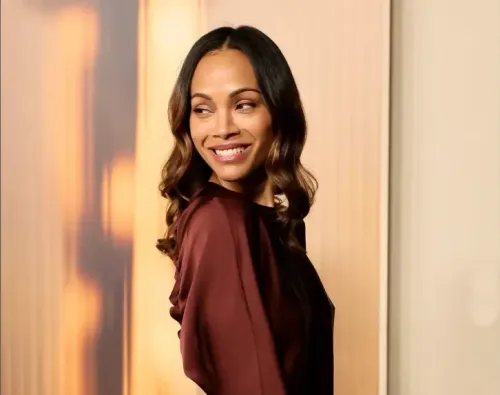
Zoe Saldana calls out double standard of political questions aimed at marginalised actors
Synopsis
Zoe Saldana's Locarno remarks expose a quiet double standard: actors of colour are routinely handed the political questions about inclusion while the gatekeepers who actually control hiring and greenlit decisions face none. Coming months after her Oscar win for Emilia Pérez sparked its own controversy, her frustration carries the weight of lived experience — and lands as a challenge to the press as much as to Hollywood itself.
Key Takeaways
Zoe Saldana spoke out at the Locarno Film Festival on 12 August against the practice of directing inclusivity questions exclusively at actors from marginalised communities.
She argued that 'gatekeepers' — not those from marginalised groups — should be asked how to make films more inclusive.
Saldana, 48 , said the pattern forces people of colour to 'work double to be in a room.' She did not name specific press tours or journalists in her remarks.
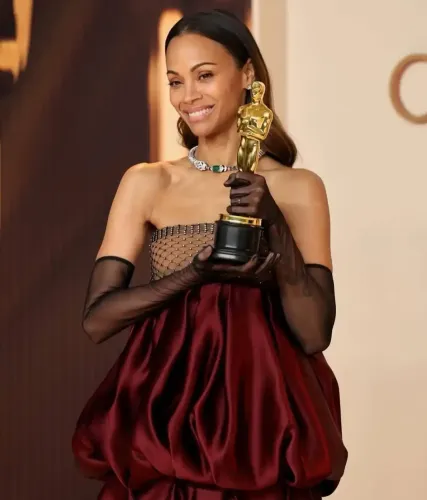
Months earlier, after winning the Oscar for Best Supporting Actress in 2025 for Emilia Pérez , she was asked about the film being 'hurtful for Mexicans' — she apologised for the hurt while disagreeing with the characterisation.
Hollywood actress Zoe Saldana has spoken out against what she describes as an 'incredibly limited and frustrating' industry practice — one where actors from marginalised communities are routinely singled out to answer questions about inclusivity, while their white male counterparts are not. The 48-year-old actress made the remarks at the Locarno Film Festival on 12 August, drawing wide attention for the directness of her critique.
What Saldana Said at Locarno
Speaking on a panel at the festival, Saldana described a pattern she has experienced repeatedly: waiting for her turn to be asked about her craft, only to receive a political question about Hollywood's diversity problem instead. 'One thing that's incredibly limiting, and frustrating, is when I'm the only person of colour or the only woman on stage, and that happens quite a lot for women and for people of colour. And I wait for my turn to be asked a question about my craft, and I'm asked the political question, ‘What do you think we need to do to make films more inclusive?’ I'm sorry, you don't ask the only person that comes from the marginalised community,' she said.
She continued: 'You ask the other 80 of them that are part of the gatekeepers, and you ask them if they know the answer because I think that we're making people of colour work double to be in a room.'
The Broader Pattern She Is Describing
Saldana did not cite specific press tours or name individual journalists in her remarks. Her argument, however, reflects a wider frustration voiced by many actors of colour: that the burden of solving systemic industry problems is disproportionately placed on those most affected by those problems, rather than on the decision-makers who have the power to change them.
Notably, this is not the first time Saldana has found herself at the centre of a politically charged media moment. Moments after winning the Oscar for Best Supporting Actress in 2025 — for her role in Emilia Pérez — she was confronted with a question about whether the film was 'really hurtful for us Mexicans.' She subsequently apologised for any hurt caused while maintaining that she personally does not share the view that the film is harmful to Mexican audiences.
Why This Matters in Hollywood
The entertainment industry has faced sustained scrutiny over representation both on screen and in positions of power. Saldana's remarks cut to a structural contradiction: diversity panels and press junkets frequently feature actors of colour as visible symbols of progress, yet the questions directed at them can inadvertently reinforce the expectation that marginalised individuals must educate and advocate — on top of their professional work — while those holding institutional power face no equivalent accountability.
Critics argue this dynamic is a form of labour extraction that goes largely unacknowledged in mainstream coverage of Hollywood's diversity conversation.
What Comes Next
Saldana has not announced any formal campaign or initiative off the back of her Locarno remarks. However, her comments have reignited a conversation about how the entertainment press engages with actors from underrepresented backgrounds — and who, ultimately, should be answering for the industry's gatekeeping failures.
Point of View
But the more pointed story is the one she doesn't quite name: it is not just journalists who are responsible, it is the festival and studio PR machinery that constructs these panels in a way that guarantees the dynamic she describes. When a panel seats one woman or one person of colour alongside several white men, the 'diversity question' becomes structurally inevitable. Her Oscar moment — where she was asked about Mexican hurt within seconds of a career high — illustrates how the press collapses an actor's identity into a political symbol the moment it is convenient. The industry celebrates Saldana's wins and then immediately conscripts her into unpaid advocacy work. That contradiction deserves more scrutiny than it typically receives.
NationPress
26 Sept 2026
Frequently Asked Questions
What did Zoe Saldana say at the Locarno Film Festival?
Zoe Saldana said it is 'incredibly limiting and frustrating' to be the only person of colour or woman on a panel and then be asked political questions about inclusivity rather than questions about her craft. She argued that industry gatekeepers — not those from marginalised communities — should be the ones answering for Hollywood's diversity failures.
Why is Zoe Saldana frustrated with political questions?
Saldana argues that the burden of solving Hollywood's inclusivity problem is routinely placed on actors from marginalised groups, who are asked to educate and advocate while those with actual decision-making power face no equivalent scrutiny. She says this forces people of colour to 'work double to be in a room.'
What happened when Zoe Saldana won the Oscar for Best Supporting Actress?
Moments after winning the Oscar for Best Supporting Actress in 2025 for her role in Emilia Pérez, Saldana was asked whether the film was 'really hurtful for us Mexicans.' She apologised for any hurt caused but maintained that she personally does not share the view that the film is harmful to Mexican audiences.
Who does Saldana think should answer questions about Hollywood inclusivity?
Saldana believes the 'gatekeepers' — the majority in positions of power who control hiring and production decisions — should be the ones asked how to make the industry more inclusive, rather than the actors who are themselves from underrepresented communities.
Did Zoe Saldana name specific incidents or journalists in her remarks?
No. Saldana did not cite specific press tours, films, or individual journalists when making her remarks at Locarno. Her critique was directed at the broader, systemic pattern she has observed across her career.