Kerala CM deadlock exposes Congress structural weaknesses in 2025
Synopsis
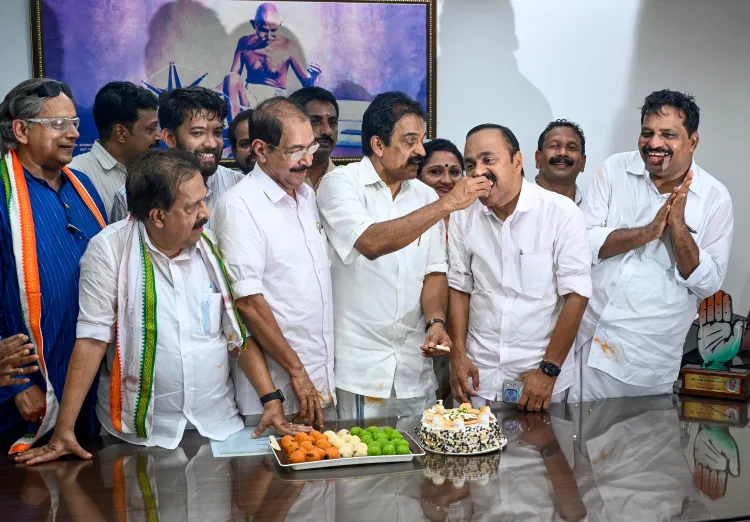
More than a week after the Congress-led UDF won Kerala, the party still cannot name a Chief Minister — torn between V. D. Satheesan's public mandate, Ramesh Chennithala's veteran clout, and K. C. Venugopal's high-command backing. The impasse, mirrored in Karnataka's unresolved succession battle, exposes a party that wins elections but struggles to govern itself.
Key Takeaways
The Congress-led UDF won the Kerala Assembly election but has not named a Chief Minister more than a week after the result as of 11 May 2025 .
Three contenders — V.
Satheesan , Ramesh Chennithala , and K.
Venugopal — remain in contention with no consensus in sight.
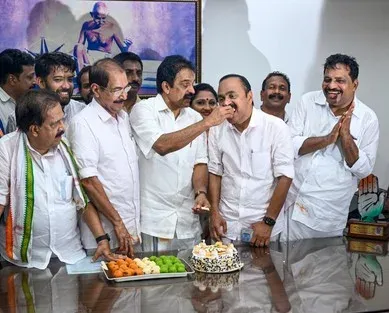
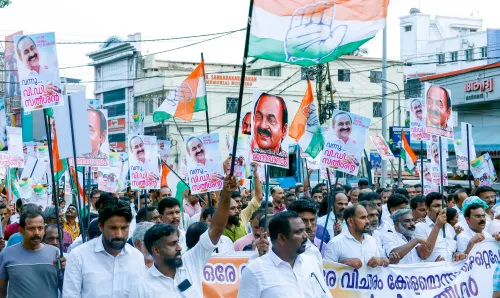
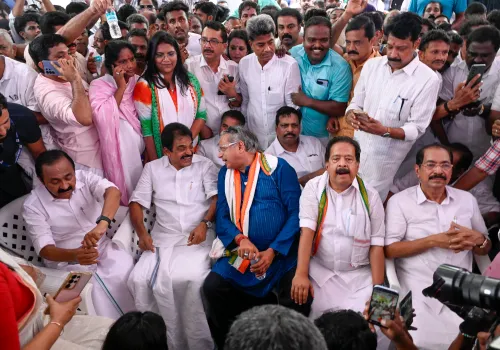
Internal dissent has surfaced through protest marches and social-media campaigns backing Satheesan against a perceived high-command imposition.
In Karnataka , Chief Minister Siddaramaiah and Deputy CM D.
Shivakumar remain locked in an unresolved succession standoff since the 2023 Assembly win .
The 2023 Rajasthan Assembly result — BJP 115 seats , Congress 70 — underscores the party's difficulty converting voter support into durable majorities.
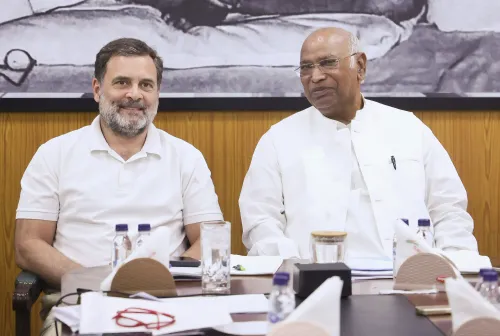
Congress President Mallikarjun Kharge and Rahul Gandhi are reportedly struggling to balance regional ambitions without triggering a public split.
The Indian National Congress's failure to name a Chief Minister in Kerala — more than a week after the Congress-led United Democratic Front (UDF) secured a strong anti-incumbency mandate — has once again laid bare the party's deep structural vulnerabilities. The impasse, still unresolved as of 11 May 2025, comes even as the party attempts to project itself as the principal national challenger to the Bharatiya Janata Party (BJP).
The Three-Way Contest in Kerala
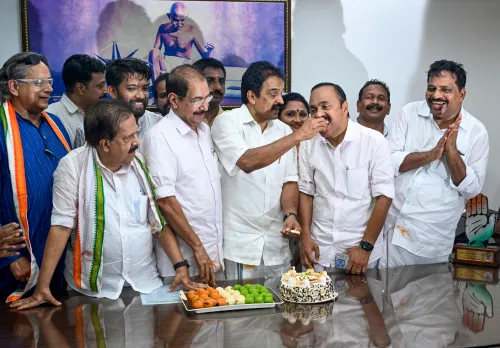
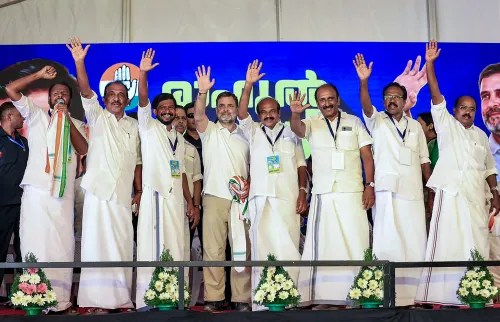
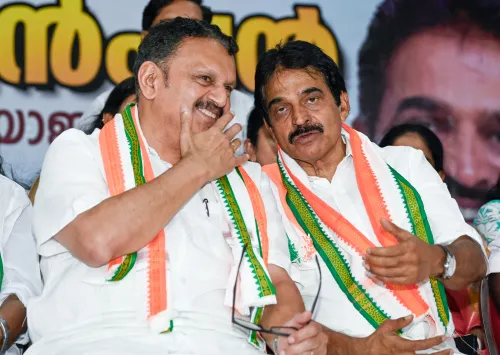
Three names dominate the Chief Minister sweepstakes in Kerala: V. D. Satheesan, the Leader of the Opposition and the most visible face of the UDF campaign; Ramesh Chennithala, a veteran with pan-Kerala clout; and K. C. Venugopal, widely regarded as a close aide of Congress leader Rahul Gandhi with strong organisational backing from the high command.
According to reports, Venugopal's national stature and proximity to the central leadership make him a preferred option for the Congress high command. However, the delay is not merely procedural — it reflects a party caught between the Congress Legislature Party's internal arithmetic and a public sentiment that associates the election mandate squarely with Satheesan.
Internal dissent has already surfaced through protest marches and social-media campaigns, with the Satheesan camp openly challenging what it characterises as a potential remote-control choice imposed from Delhi. The Congress leadership, for its part, reportedly fears that any perception of an externally imposed Chief Minister could erode the very goodwill the UDF has just earned at the ballot box.
The Punjab Precedent and Decision Paralysis
Reports suggest the central leadership remains haunted by the Punjab experience ahead of the 2022 Assembly elections, where projecting Charanjit Singh Channi as Chief Minister backfired, exposing factionalism and ultimately contributing to the party's rout. That trauma has reportedly made the high command reluctant to openly anoint a face even after votes have been counted and a mandate secured.
In Kerala, this caution has produced decision paralysis — raising uncomfortable questions about whether the party can govern decisively once in power, given that it cannot agree on who should lead before taking office.
Karnataka's Unresolved Succession Standoff
The Kerala impasse does not exist in isolation. The Congress is simultaneously grappling with a leadership standoff in Karnataka that has barely cooled since the party's 2023 Assembly win. Chief Minister Siddaramaiah and Deputy Chief Minister D. K. Shivakumar remain locked in a bitter contest over succession, with each faction pressing the central leadership to either anoint one candidate or at least set a clear timeline for a transfer of power.
The political formula of keeping both ambitions within the same cabinet — once sold as a masterstroke of balance — increasingly resembles what critics describe as a ticking institutional time-bomb. What Kerala and Karnataka share is a pattern: despite favourable mandates, the party's internal arithmetic is cluttered by multiple claimants and a reluctance to make unambiguous, early calls.
The Rajasthan Warning
Adding to the Congress's headache is the recent political reality in Rajasthan, where the party lost power to the BJP despite a sizeable vote share. The 2023 Assembly results handed the BJP 115 seats against Congress's 70, underscoring the party's inability to convert strong voter sentiment into a working majority.
For a national leadership trying to project Congress as the main opposition bloc, the Rajasthan outcome is a sobering reminder of how regional fissures, anti-incumbency, and the BJP's local social-engineering can neutralise even robust voter support. Rajasthan's subsequent civic-body elections, where Congress performed relatively well, offer some solace — but do little to offset the psychological impact of losing the Assembly.
High Command Under Pressure
Congress President Mallikarjun Kharge and Rahul Gandhi are reportedly attempting to balance regional egos, generational shifts, and national image — all while remaining wary of the remote-control tag that has dogged the party for decades. Their prolonged meetings and parleys are being read less as deliberation and more as delay tactics, critics argue.
Notably, the same leadership moved swiftly in Tamil Nadu, where the Congress pulled out of its alliance with the Dravida Munnetra Kazhagam (DMK) to back the TVK — a decision that helped place former cine star Vijay in the Chief Minister's chair, albeit at the cost of upsetting a longstanding ally. The contrast between the speed of the Tamil Nadu call and the paralysis in Kerala is not lost on political observers.
Whether the Congress high command can break the Kerala deadlock without triggering a public split — and whether it can simultaneously resolve the Karnataka succession question — will be a critical test of the party's organisational credibility ahead of the next cycle of state and national elections.
Point of View
But they rarely forgive the appearance of chaos. With Karnataka's succession clock ticking and Rajasthan already lost, the party's national opposition narrative is being undercut not by the BJP but by its own internal arithmetic. Kharge and Rahul Gandhi must decide whether consensus-building is a process or a permanent deferral.
NationPress
24 Sept 2026
Frequently Asked Questions
Why has Congress not named a Chief Minister in Kerala yet?
Congress has not named a Chief Minister in Kerala because the party is caught between three strong contenders — V. D. Satheesan, Ramesh Chennithala, and K. C. Venugopal — and the high command is reportedly reluctant to impose a choice for fear of public backlash and internal revolt. The delay has persisted for more than a week after the UDF's election victory.
Who are the main candidates for Kerala Chief Minister from Congress?
The three frontrunners are V. D. Satheesan, the Leader of the Opposition who led the UDF campaign; Ramesh Chennithala, a veteran with broad state-level support; and K. C. Venugopal, a Rahul Gandhi aide with strong high-command backing. No consensus had emerged as of 11 May 2025.
How does the Kerala deadlock compare to the Karnataka leadership crisis?
Both states reflect the same structural problem: Congress wins elections but struggles to agree on leadership. In Karnataka, Chief Minister Siddaramaiah and Deputy CM D. K. Shivakumar have been locked in a succession dispute since the 2023 Assembly win, with neither side willing to concede.
What happened in Rajasthan that is relevant to Congress's current challenges?
In the 2023 Rajasthan Assembly elections, the BJP won 115 seats against Congress's 70, costing the party government despite a competitive vote share. The loss is cited as evidence that intra-party factionalism and regional fissures can neutralise even strong voter support.
What is the remote-control criticism levelled at the Congress high command?
The remote-control criticism refers to the perception that the Congress high command in Delhi imposes Chief Ministers and key decisions on state units, bypassing local democratic processes. The Satheesan camp in Kerala has invoked this criticism to argue against a high-command-preferred candidate overriding the state mandate.