Kerala helicopter row: Same aircraft, different politics as govt changes
Synopsis
The helicopter hasn't changed — Kerala's politics has. The same aircraft lease the Left defended as essential is now being attacked by CPI(M) as excess under CM Satheesan. It's a textbook role reversal that the late Oommen Chandy predicted decades ago: in Kerala, the issue is rarely what is done, but who is doing it.
Key Takeaways
The monthly helicopter lease in Kerala was introduced by the Pinarayi Vijayan government ( 2016–2026 ) for emergency and disaster response.
Satheesan used the helicopter for a trip to Kochi in early August 2025 , including a hospital visit to his ailing father-in-law.
The CPI(M) , now in the Opposition, has questioned the use of the emergency helicopter during active flood conditions in Kerala .
The Congress government describes the trip as an official tour and defends the lease as an inherited administrative arrangement.
The episode echoes the late Oommen Chandy's observation that Kerala politics often hinges not on policy but on which party is implementing it.
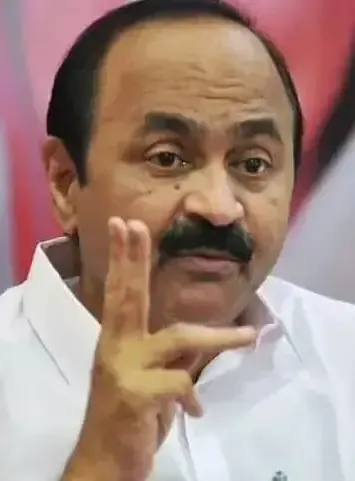
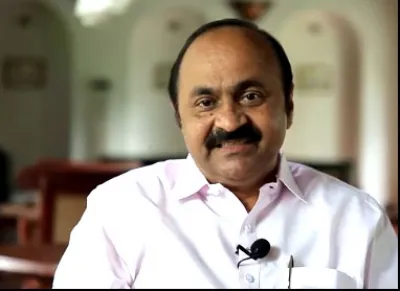
A government helicopter has emerged as the unlikely flashpoint of Kerala politics following Chief Minister V.D. Satheesan's aerial journey to Kochi, reigniting a debate that cuts to the heart of the state's political culture. The controversy, which surfaced in early August 2025, centres not on the helicopter itself but on who is sitting in the cockpit of power — and who is doing the criticising.
Background: How the Helicopter Lease Began
The monthly helicopter lease arrangement was introduced during the Pinarayi Vijayan administration (2016–2026), with the stated rationale of enabling rapid response to natural disasters, anti-Maoist operations, and other emergencies. At the time, the then-Opposition — including the Indian National Congress (INC) — raised sharp objections to the arrangement, questioning its necessity and cost.
A decade later, the political positions have inverted with striking precision.
The Satheesan Flight and the Controversy
The Congress-led government maintains that Chief Minister Satheesan's helicopter trip to Kochi was an official tour, during which he also visited his ailing father-in-law in hospital. The Communist Party of India (Marxist) (CPI(M)), now in the Opposition, has questioned whether a helicopter designated for emergency use should have been deployed under such circumstances — particularly as large parts of Kerala were battling flood conditions at the time.
Social media amplified the debate rapidly, with users on both sides circulating posts recalling that it was the Vijayan government that first opted for the leased helicopter despite sustained criticism from the then-Opposition. The same aircraft that the Left defended as an administrative necessity during its tenure is now being projected by voices in the CPI(M) ecosystem as an instance of governmental excess under the new dispensation.
The Oommen Chandy Principle
The episode has revived one of the most cited observations in Kerala's political memory, attributed to the late Oommen Chandy, who served as Chief Minister on two separate occasions. Chandy was known to remark: 'In Kerala, the issue is often not what is being done, but who is doing it.'
Throughout his years in office and in the Opposition, Chandy frequently argued that the Left opposed ideas — tractors, computers, private investment, administrative reforms — until it eventually embraced them itself. The objection, he maintained, was rarely about the policy; it was about who implemented it.
The helicopter has, by most assessments, joined that long list.
A Pattern Older Than Any Single Government
What makes this episode notable is the near-mechanical role reversal it demonstrates. The lease arrangement has not changed. The aircraft has not changed. The operational concept has not changed. What has changed is the party occupying the seat of power — and with it, the political valence assigned to the same object.
This is not the first time Kerala's political parties have swapped positions on a policy instrument once the electoral tide turned. Analysts note that the pattern recurs across successive governments, making it less a story about helicopters and more a story about the structural incentives of competitive politics in the state.
What Comes Next
The Satheesan government has given no indication it intends to revisit the helicopter lease, framing the arrangement as an inherited and operationally justified one. The CPI(M) is expected to continue pressing the issue, particularly if further non-emergency uses come to light. With Kerala still managing flood relief operations, the optics of aerial travel by top officials is likely to remain politically sensitive in the weeks ahead.
Point of View
Which makes neither side's current position particularly credible. What the episode actually reveals is a state political culture where accountability arguments are largely positional — activated or deactivated depending on electoral alignment. Oommen Chandy diagnosed this decades ago; the fact that his observation still circulates as a ready reference suggests the diagnosis has never been seriously contested, let alone treated.
NationPress
17 Sept 2026
Frequently Asked Questions
Why is Kerala CM V.D. Satheesan's helicopter trip controversial?
Chief Minister V.D. Satheesan used the state's leased helicopter for a trip to Kochi in early August 2025, during which he also visited his ailing father-in-law in hospital. The CPI(M) Opposition has questioned whether a helicopter designated for emergencies should have been used for this purpose, especially while parts of Kerala were dealing with floods.
Who introduced the helicopter lease in Kerala?
The monthly helicopter lease was introduced by the Pinarayi Vijayan -led CPI(M) government during its tenure from 2016 to 2026 . It was justified as necessary for rapid response to natural disasters and anti-Maoist operations. The Congress -led Opposition at the time had criticised the arrangement.
What is the Oommen Chandy quote about Kerala politics?
The late Oommen Chandy , a two-time Kerala Chief Minister, was known for the observation: 'In Kerala, the issue is often not what is being done, but who is doing it.' He used it to describe how the CPI(M) would oppose policies — from tractors to private investment — that it later adopted when in power.
How has the Congress responded to the helicopter controversy?
The Congress government has maintained that Chief Minister Satheesan's trip was an official tour and that the hospital visit was incidental. It has also pointed out that the helicopter lease itself was created and defended by the CPI(M) during its decade in power.
Is this the first time Kerala parties have reversed positions on a policy?
No. Political observers note that position reversals on policy instruments — from administrative tools to economic reforms — have been a recurring feature of Kerala politics across successive governments. The helicopter episode is the latest in a pattern that the late Oommen Chandy identified and commented on repeatedly during his political career.